
Why go
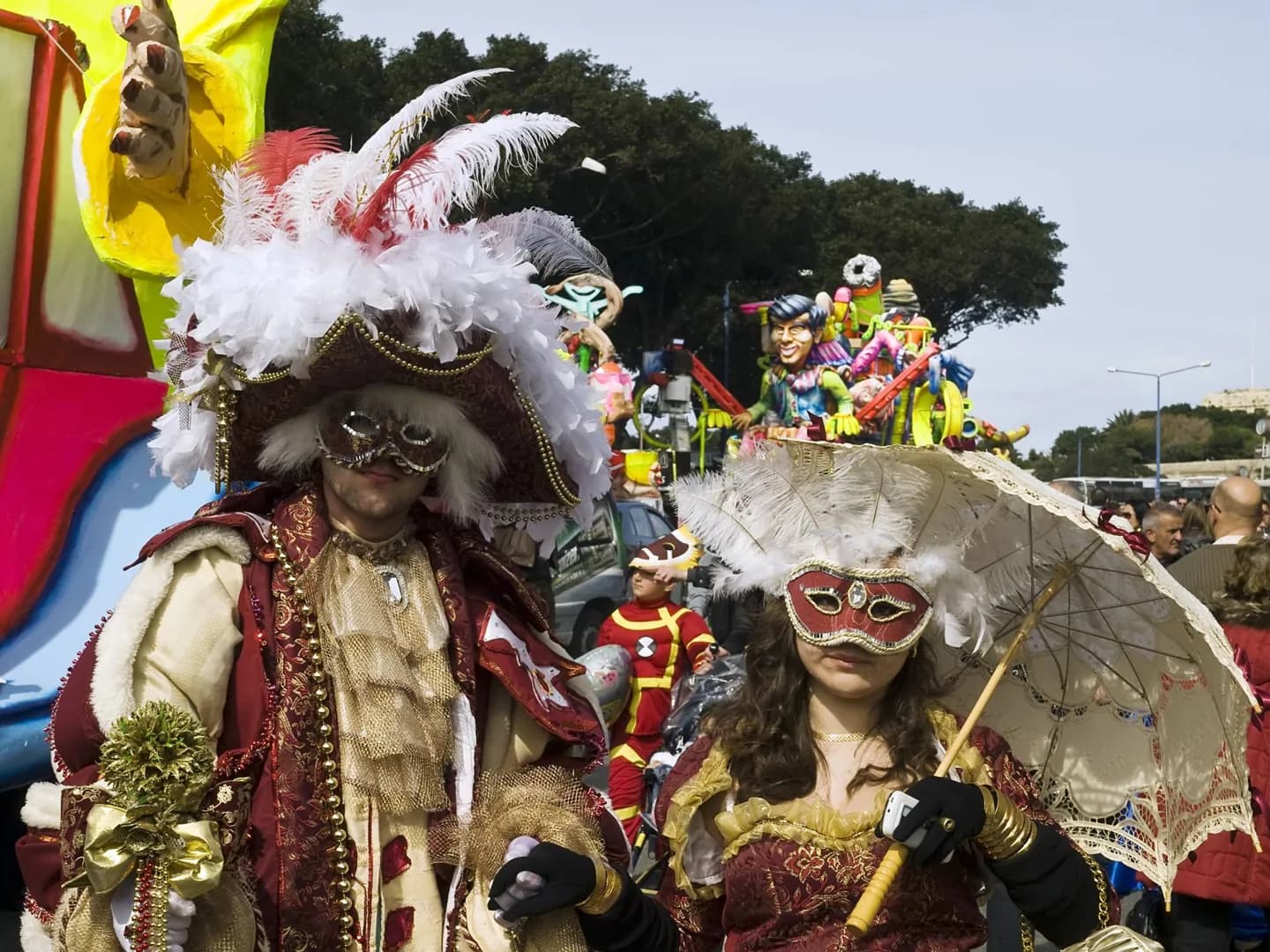
Festival traditions make sense of the decorations, processions and parish energy that can shape a visit. Carnival brings masks, floats, bands and costumed crowds before Ash Wednesday, while the Mnarja celebrations include an agricultural show at Buskett. Family customs such as il-quċċija also show how older symbolic rituals remain part of cultural memory.
The full story
Maltese traditions are closely tied to Catholic life, family milestones and the agricultural year. At a child's first birthday, il-quċċija places symbolic objects around the child; the object selected is traditionally read as a sign of a future path. Carnival, or il-karnival ta' Malta, has been part of the islands' calendar since the sixteenth century. It takes place in the week before Ash Wednesday and has included masked balls, costume competitions, allegorical floats, marching bands and King Carnival. The Feast of Saints Peter and Paul, known as Mnarja, combines religious celebration with rural culture. Its agricultural show at Buskett began in 1854 and remains a central part of the festivities. Check current dates locally, as festival programming changes each year.