
Why go
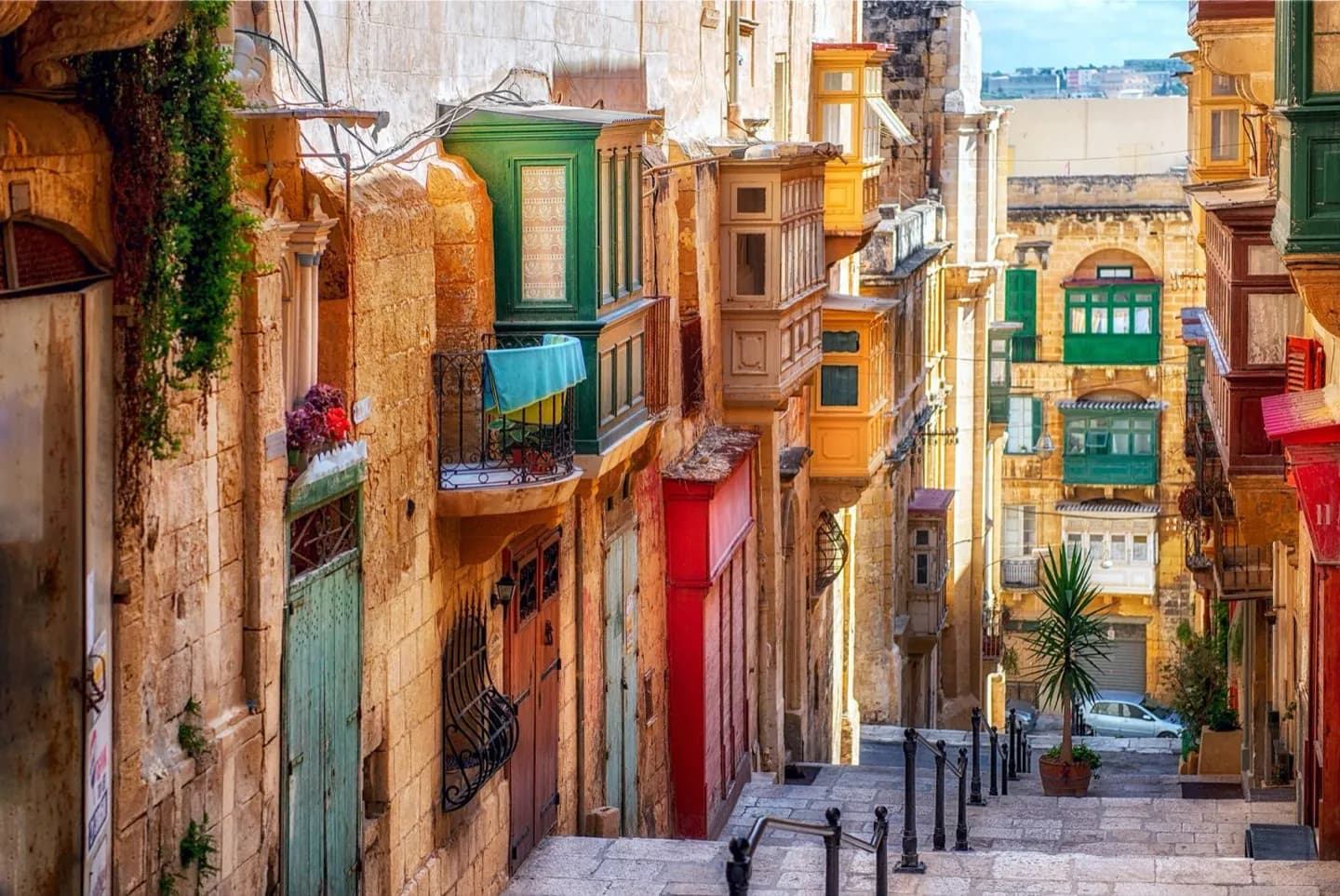
The islands are easiest to understand through their contrasts. Valletta faces the Grand Harbour, Mdina stands inland behind walls, and Ħaġar Qim and Mnajdra sit in open limestone country. Plan each as a distinct experience, with transfers and sun exposure in mind.
The full story
Malta is a Southern European archipelago in the Mediterranean, south of Sicily and between wider European and North African routes. Its position brought Phoenician, Roman, Muslim, Norman, Aragonese, Hospitaller, French and British rule, leaving a history that is unusually legible in a small area. Valletta is the modern capital, while Maltese and English are official languages. For visitors, the useful point is scale rather than a list of rulers. Harbour cities can occupy a full day of streets, churches and waterfront views; prehistoric temples need their own unhurried visit; and the coast is more exposed than the towns. The famous shipwreck tradition associated with Saint Paul remains a religious tradition, not a proven archaeological event. Let the island’s stones, street plans and shoreline set the order of your days.