
Why go
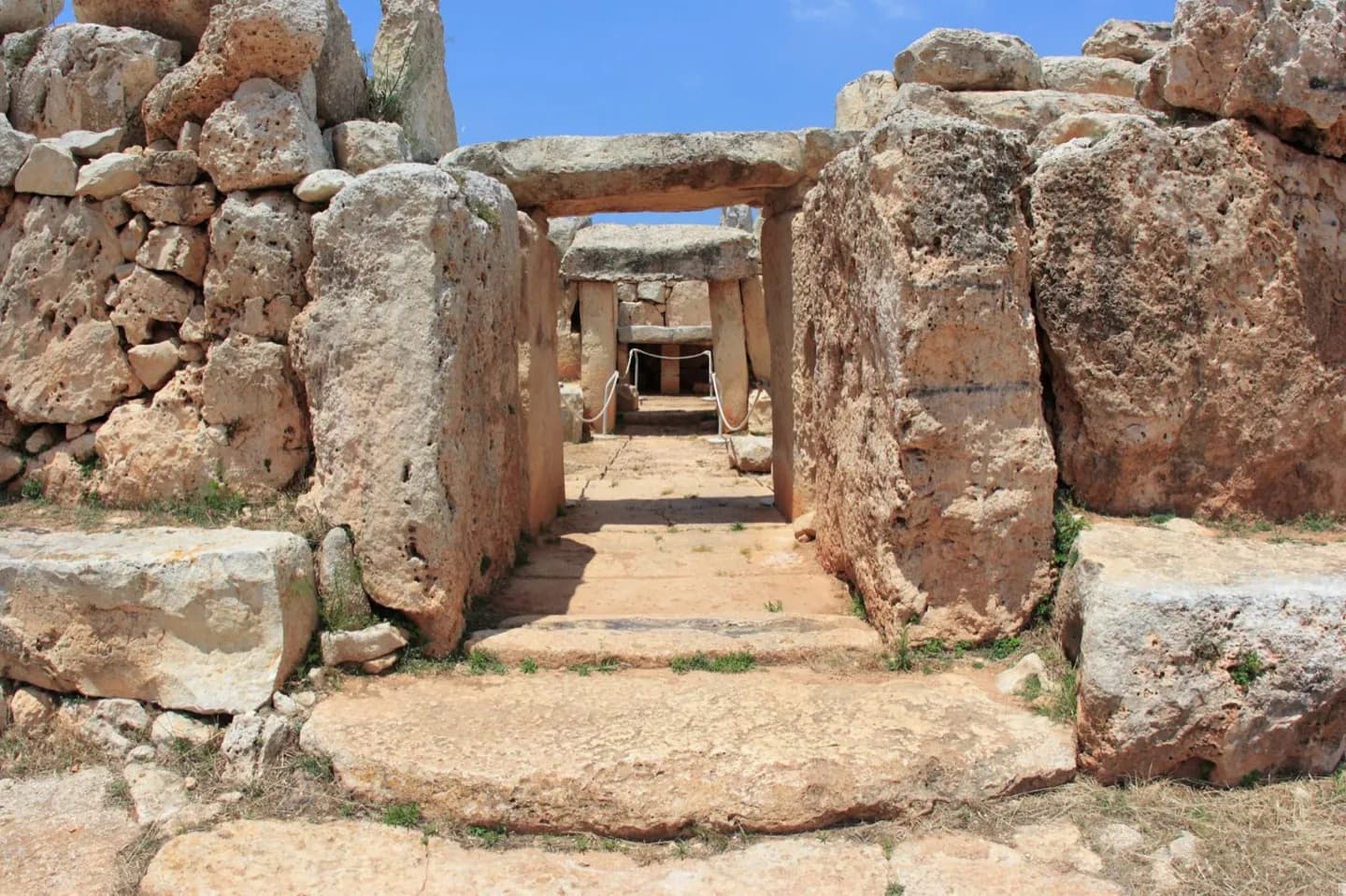
Ħaġar Qim is the place to study how Maltese temple builders shaped giant blocks into an ordered sequence of façade, forecourt and enclosed spaces. Its large surviving megaliths and weathered coastal setting make scale and conservation part of the experience. Visit with Mnajdra, but give each complex separate attention.
What to look for
- The main temple and three nearby megalithic structures show a varied complex rather than an isolated monument.
- A broad forecourt of irregular paving slabs leads toward the outer wall and interior chambers.
- The façade includes an exceptionally large stone, showing the builders’ command of scale.
The full story
Ħaġar Qim was built between about 3600 and 3200 BCE, with older northern remains nearby. The complex shares the broad Maltese temple vocabulary seen at Mnajdra, Tarxien and Ġgantija: a forecourt, monumental façade, oval chambers, semicircular apses and a central passage. Yet its plan changed as it was built, producing independent enclosures where an earlier arrangement might have continued. The visit works best through objects and surfaces. The paved forecourt still carries massive fallen blocks. Inside, the entrance sequence links chambers whose upright slabs and curved apses show deliberate engineering. The outer stones have endured long exposure to sea winds, and erosion is visible in the fabric. That vulnerability explains the protective shelter and makes the site more than a prehistoric ruin: it is also a record of what conservation must preserve for future visitors.
Useful to know
- Allow time for the temple itself and the nearby visitor interpretation, rather than visiting only for a photograph.
- The southern setting is exposed to sun, wind and sea air; wear suitable footwear for uneven archaeological ground.
- Check the official timetable before travel, especially if combining the site with Mnajdra.
Your next visit
Estimated · Declared scenario and planning estimates; no live opening, weather, queue or booking service.
Outdoor visit · 45–75 min
World planning estimate; admission, opening, visit duration and access need checking.