
Why go
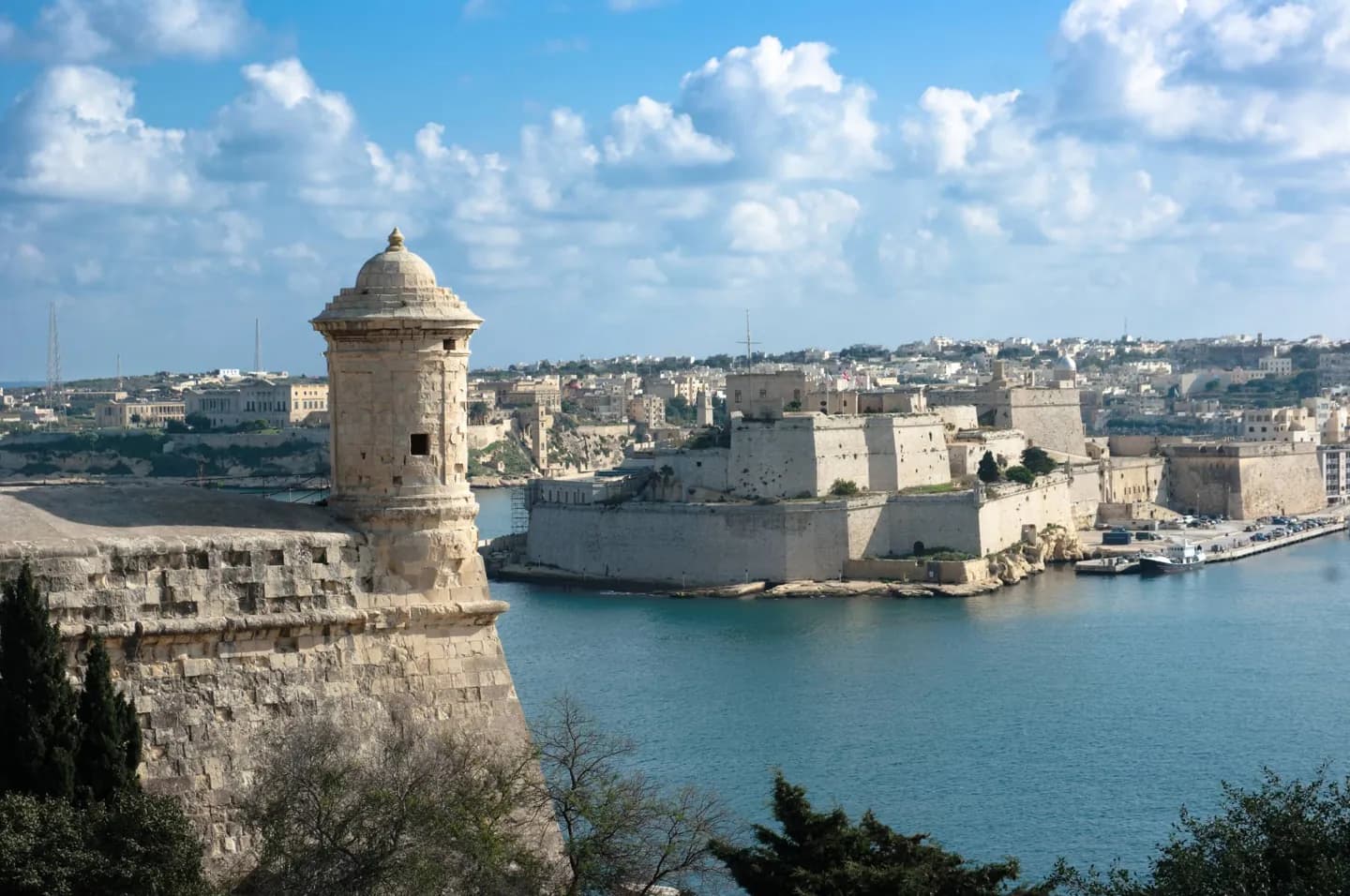
Cottonera shows the harbour landscape that preceded Valletta's rise as capital. Birgu, also called Vittoriosa, was the Knights' administrative base, and the surrounding defences connect the Three Cities through a shared military history. Comparing the individual cities reveals an older settlement beside later foundations, all shaped by the Grand Harbour.
What to look for
- Vittoriosa, Senglea and Cospicua are the three cities of Cottonera.
- Fort St Angelo occupies the site of the older Castrum Maris in Birgu.
- The Cottonera Lines enclose the cities alongside other harbour fortifications.
The full story
The Three Cities do not share a single foundation date. Birgu existed before the Knights arrived, while Senglea and Cospicua developed under the Order of St John. In 1530 the Order chose Birgu as its administrative centre, moving Malta's seat of power away from inland Mdina. Its position beside the Grand Harbour made fortification central to the settlement. Fort St Angelo rose on the site of the older Castrum Maris, and Senglea had Fort St Michael. During the Great Siege of 1565 these cities formed part of the island's defended harbour. Birgu's later title Vittoriosa commemorates that outcome. The construction of Valletta then shifted the capital again, in 1571, but did not erase this earlier urban landscape. Reading the Three Cities through that sequence makes the fortifications and their position across the water more meaningful than viewing them as decorative stone walls.
Useful to know
- Select one city as your main anchor and add another if your day allows.
- Use both Birgu and Vittoriosa when recognising place names on maps.
- Treat Valletta as a separate harbour visit rather than another street in the Three Cities.
Your next visit
Estimated · Declared scenario and planning estimates; no live opening, weather, queue or booking service.
Outdoor visit · 45–120 min
World planning estimate; admission, opening, visit duration and access need checking.