
Why go
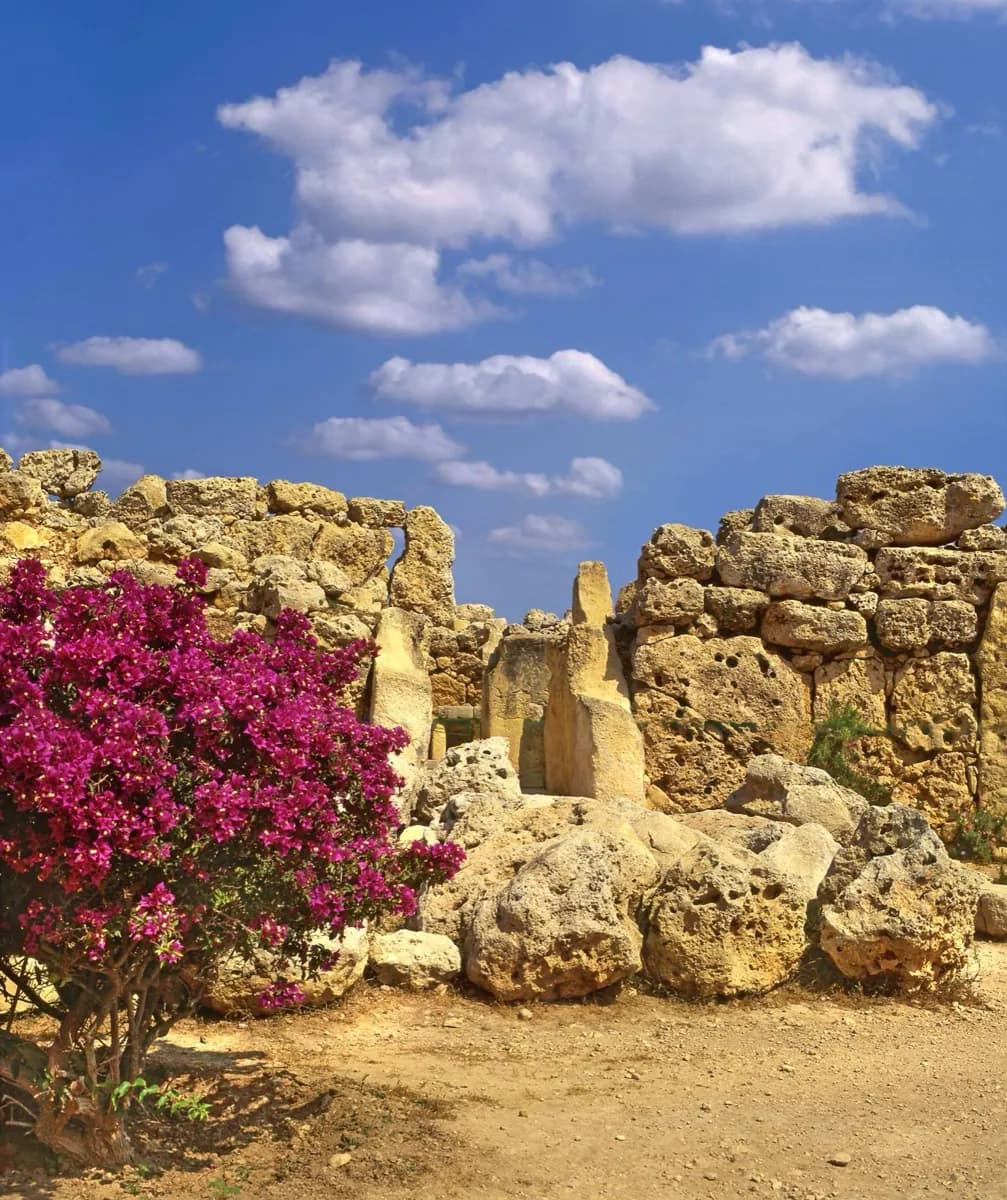
The scale of the blocks is striking, but the paired temples also reward looking at their layout. Curved chambers branch from a central passage, and a boundary wall encloses the complex. The Interpretation Centre helps turn the surviving stonework into an intelligible building plan before you follow the walkway through the site.
What to look for
- Two temples stand side by side within a common boundary wall.
- Semicircular chambers branch from central passages in a clover-leaf plan.
- The temples face southeast at the edge of the Xagħra plateau.
The full story
Ġgantija's name evokes giants, and Gozitan folklore attributes the temples to a giantess who carried her child while building them. The tale responds to something you can still see: the extraordinary size of the limestone blocks. Archaeology places the complex in the Neolithic, long before metal tools were available to its builders. Small spherical stones found at the site have been interpreted as possible aids for moving the large blocks, although they do not explain every construction technique. The southern temple is the older and larger of the pair. Its curved chambers once had finished surfaces, with traces of plaster surviving between blocks, so the present ruins reveal only part of their original appearance. Animal bones and altars support interpretations of ritual use, while more specific claims about fertility worship remain interpretations. Separating the giantess story from archaeological evidence lets both contribute without confusing folklore with a construction history.
Useful to know
- Start with the Interpretation Centre before examining the temple remains.
- Plan Ġgantija as a Gozo stop, with the island transfer separate from the site visit.
Your next visit
Estimated · Declared scenario and planning estimates; no live opening, weather, queue or booking service.
Outdoor visit · 45–75 min
World planning estimate; admission, opening, visit duration and access need checking.