
Why go
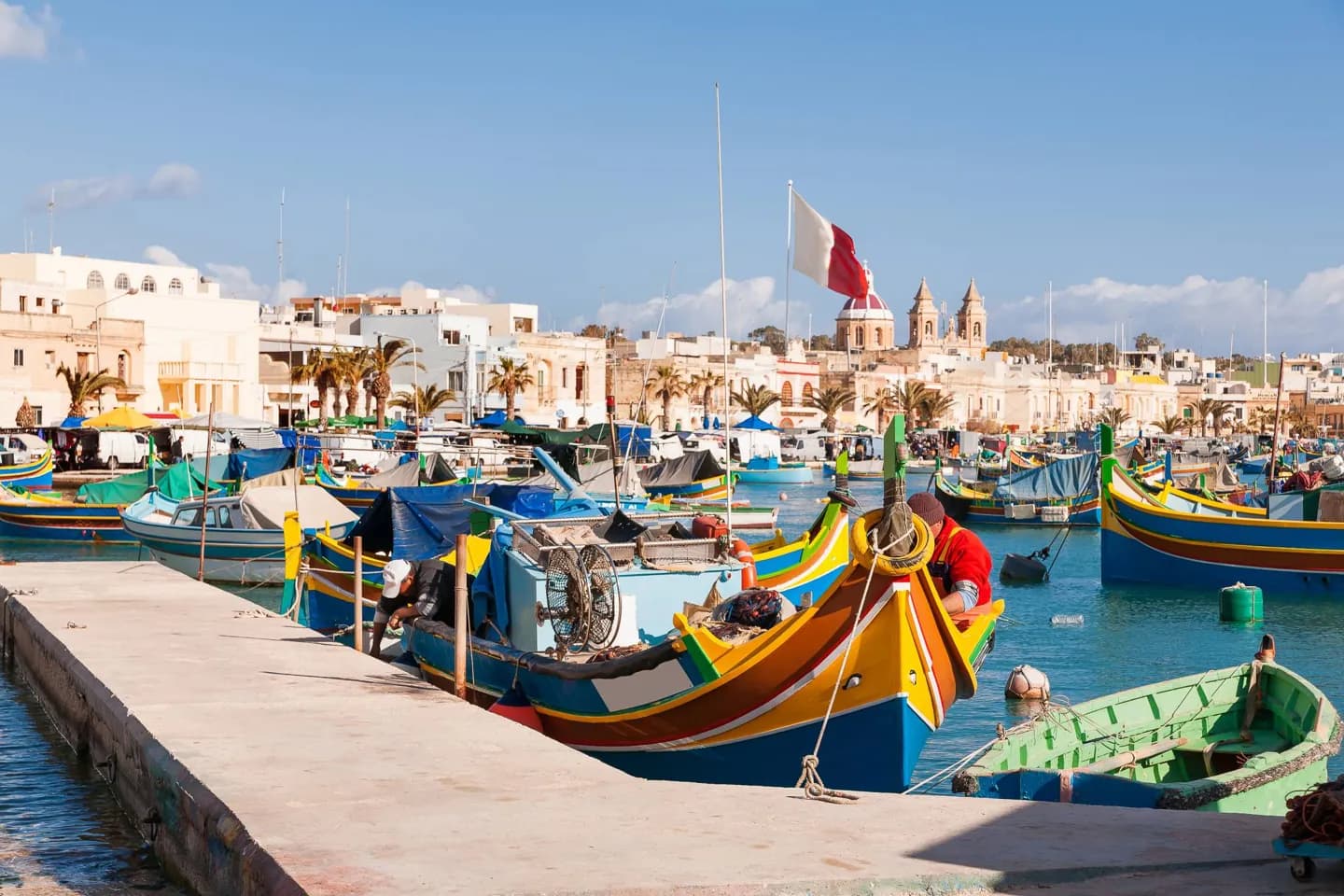
The boats are the main reason to pause here rather than pass through the southeast. Their painted eyes, traditionally believed to protect them from danger, give a concrete detail to look for among the bright hulls. The quay, parish church and fishing identity make a coherent village visit before any coastal detour.
What to look for
- Traditional luzzu boats bring strong colours to the sheltered harbour.
- Painted eyes on the boats express a protective maritime belief.
- The parish church stands behind the seafront village setting.
The full story
Marsaxlokk's name combines the word for port with the local word for southeast, describing both the harbour and its position on Malta. Its sheltered water served more than the fishing village. During the Great Siege of 1565, the Ottoman fleet used the harbour as an anchorage. Above the northern arm of the bay, Tas-Silġ preserves a different sequence of activity, with prehistoric remains followed by a sanctuary associated with Astarte and Hera and later Christian use. Those layers explain why this coastline matters beyond the colourful boats, although the archaeological site should not be assumed to offer casual entry. The village was once part of Żejtun, linking the fishing waterfront to an inland settlement. That relationship makes the two places a useful contrast: the same southeastern area expressed through a harbour community and an older town behind the coast.
Useful to know
- Walk the harbour before deciding on a meal or an extension along the coast.
- Plan Delimara or St Peter’s Pool as a separate coastal stop.
- Check current market arrangements if the market is your main reason to visit.
Your next visit
Estimated · Declared scenario and planning estimates; no live opening, weather, queue or booking service.
Outdoor visit · 30–75 min
World planning estimate; admission, opening, visit duration and access need checking.