
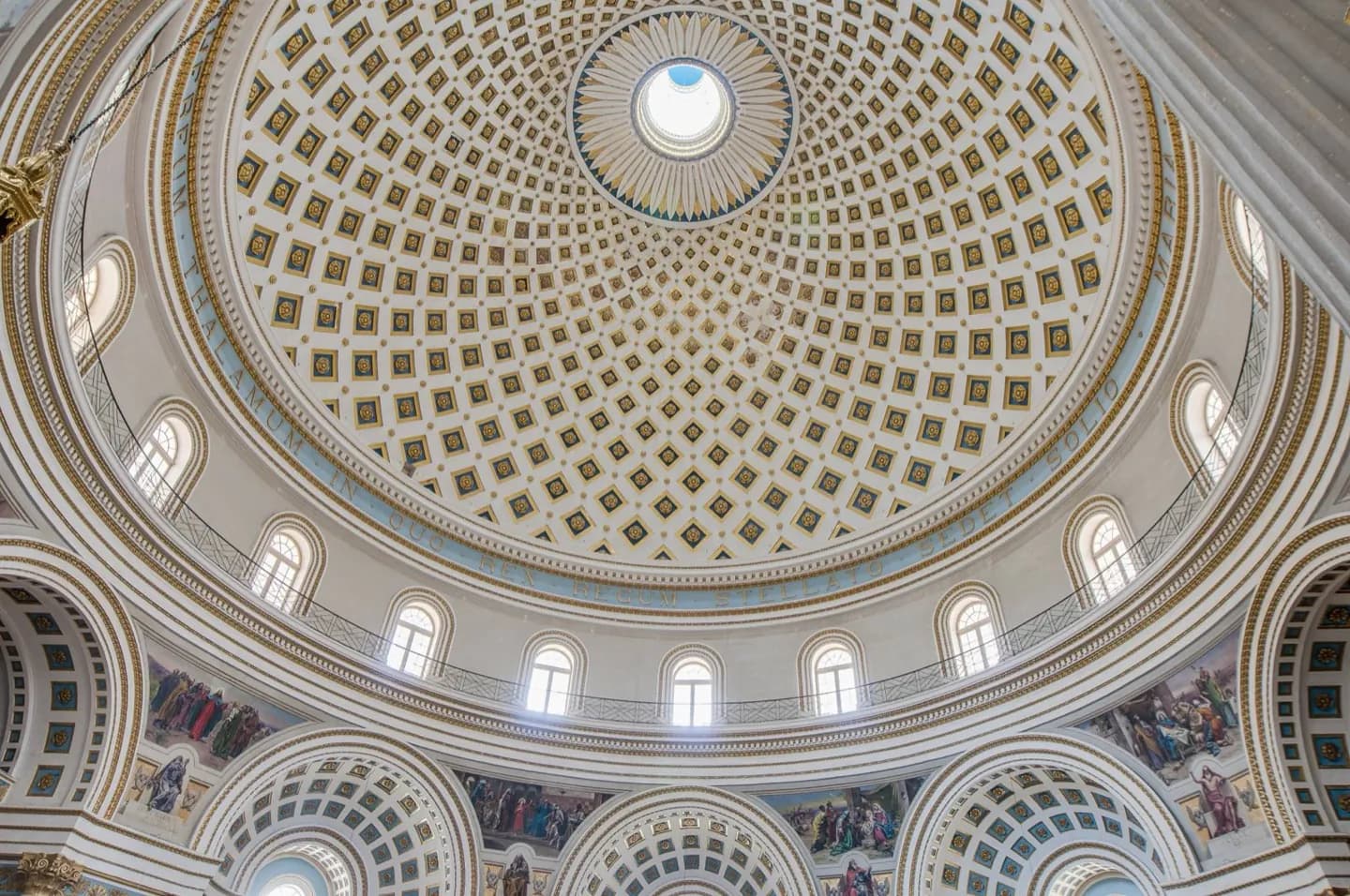
Why go
Stand beneath the dome to understand how the church gathers its whole interior around one circular space. The classical portico gives little warning of the scale inside. Paintings and the replica of the unexploded wartime bomb add details worth examining after the first upward look, rather than turning the visit into a single photograph.
What to look for
- A patterned dome crowns the circular interior.
- The columned portico leads into a broad circular church.
- The displayed bomb represents the type that pierced the dome in 1942.
The full story
The rotunda grew around an earlier parish church during the nineteenth century. Keeping the older building inside the construction site allowed worship to continue while the replacement took shape. Giorgio Grognet de Vassé drew on the Pantheon in Rome for the circular plan and classical frontage, giving Mosta a very different silhouette from Malta’s more familiar paired church towers. In April 1942, a German bomb passed through the dome during an air raid and fell inside without exploding. The event became central to the church’s wartime memory. The object displayed today is a replica, not the original bomb. Looking between that display and the dome connects a visible architectural structure with an episode that the parish still commemorates. The building is therefore both a large engineering work and a continuing place of local religious life.
Useful to know
- Check visitor access separately from Mass times.
- Confirm which visitor areas your admission includes before entering.
- Combine the church with a street visit in Mosta rather than rushing straight back to the coast.
Your next visit
Estimated · Declared scenario and planning estimates; no live opening, weather, queue or booking service.
Indoor visit · 30–60 min
World planning estimate; admission, opening, visit duration and access need checking.