
Why go
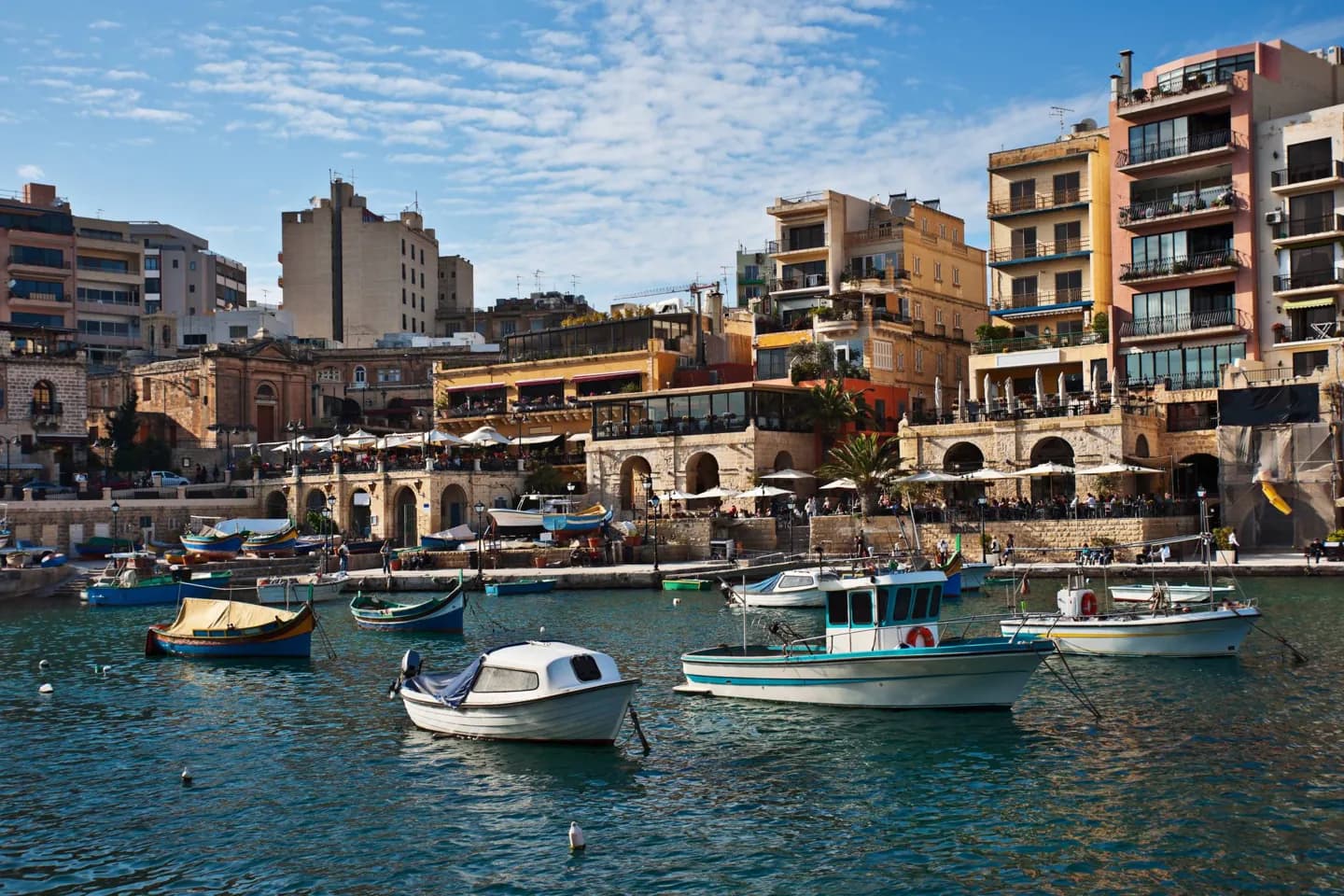
Spinola and Balluta bays make the coast the natural starting point, while Paceville is the anchor for nightlife. The surviving Spinola Palace setting adds a historical reference to a town now strongly shaped by tourism. A waterfront visit works as a continuation from Sliema, with an evening stop as a separate choice.
What to look for
- Spinola, Balluta and St George’s bays divide the coastal town into distinct settings.
- Spinola Palace recalls an earlier stage of development beside the bay.
- Paceville concentrates the town’s nightlife businesses.
The full story
Before hotels and nightclubs reshaped St Julian's, the area around Spinola Bay had a fishing and agricultural identity. Spinola Palace, built in 1688 and enlarged in 1733, marks an earlier stage of coastal development. Its surviving setting helps place the bay in a history longer than the present tourism economy. The town also took time to gain an independent parish. Residents sought that status in 1854, but it was granted only after a later application in 1891. That sequence connects the coastal settlement with the growth of a resident community, rather than only with visitors. The name honours St Julian, its patron saint. Walking between the palace setting and the developed bays lets you recognise the older town beneath its later use. Paceville represents another layer again, with nightlife concentrated in a district rather than spread evenly along every bay.
Useful to know
- Start with the bays if your priority is a coastal walk.
- Continue from Sliema along the waterfront for a linked coastal outing.
- Make Paceville an intentional evening stop rather than the focus of a history walk.
Your next visit
Estimated · Declared scenario and planning estimates; no live opening, weather, queue or booking service.
Outdoor visit · 30–75 min
World planning estimate; admission, opening, visit duration and access need checking.