
Why go
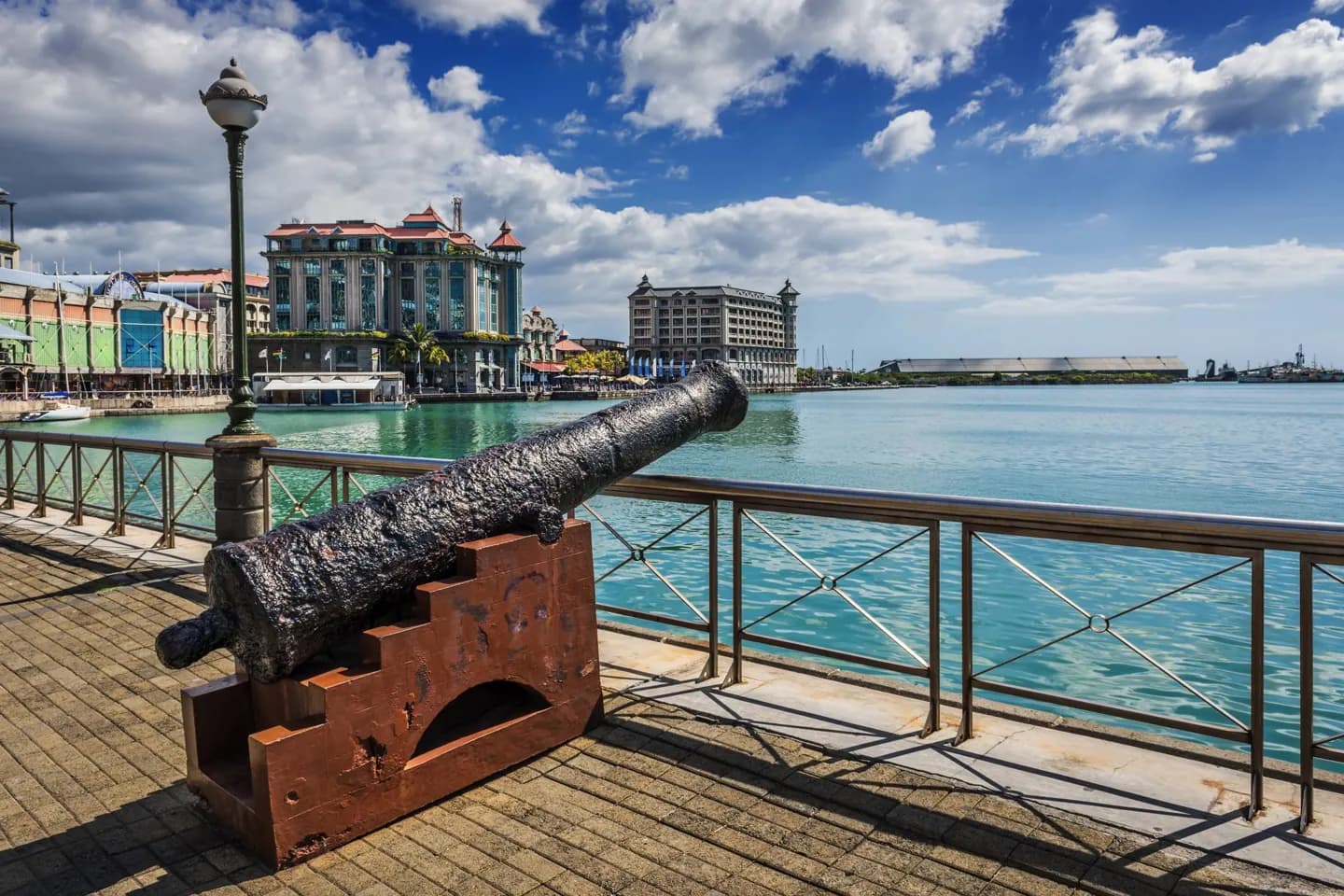
Visit Aapravasi Ghat to connect the island’s sugar history with the journeys of indentured labourers. In Port Louis, the harbour and colonial buildings also make sense of the island’s role on Indian Ocean routes and the long French and British contest for it.
The full story
The Dutch established a colony in 1638, brought sugar cane and exploited ebony, then abandoned Mauritius in 1710. France took control in 1715, renamed the island Isle de France and developed Port Louis as a naval and shipbuilding centre under Mahé de La Bourdonnais. The French won the Battle of Grand Port in 1810, but British forces took the island later that year. The transfer allowed many settlers to keep their property and helped French language and customs endure under British rule. Enslaved people had been brought from Africa and Madagascar. After slavery was abolished in 1835, planters turned to indentured labour, mainly from India, for work on sugar estates and elsewhere. Aapravasi Ghat, beside the Port Louis harbour, preserves part of the immigration depot through which many of those workers entered. Labour conflict remained part of the island’s story: police killed workers during the 1943 Belle Vue Harel sugar estate strike. Mauritius gained independence in 1968 and became a republic in 1992.
Useful to know
- Pair Aapravasi Ghat with a harbour walk in Port Louis to place the immigration depot in its port setting.