
Why go
Knowing when not to drive can save time and stress. Public transport and walking suit most central sightseeing, while a car becomes more valuable for destinations beyond convenient rail and tram corridors. Understanding hook turns, parking constraints and toll-road choices also makes the final urban approach safer and helps determine whether accommodation parking is worth arranging.
The full story
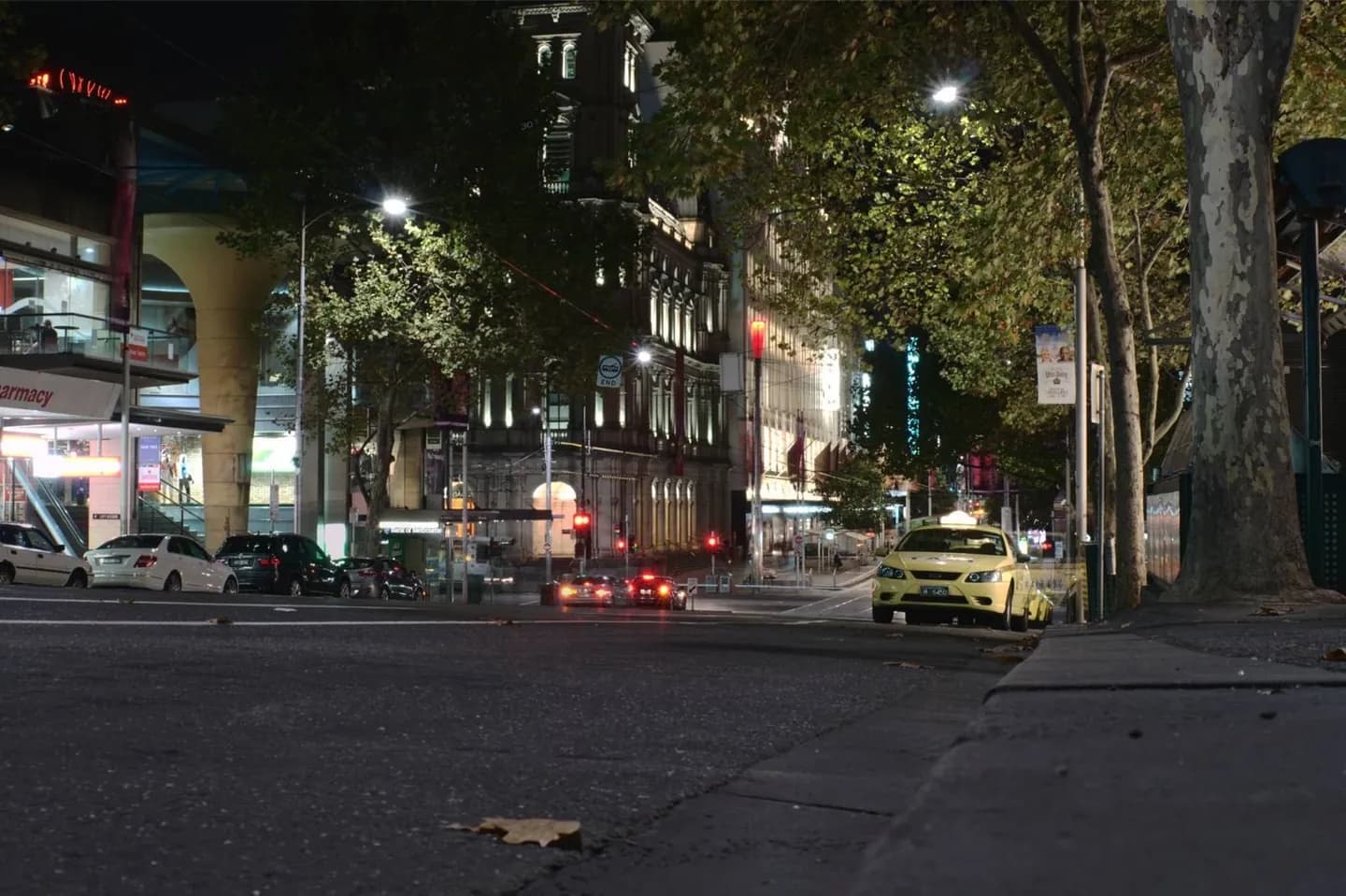
Melbourne follows Australian left-side driving, but the city centre introduces a distinctive complication: at selected intersections, vehicles turning right wait from the left lane so trams can pass. These hook turns are signed, and unfamiliar drivers should understand the sequence before reaching one. Tram corridors also require care around stops, passengers and tracks. Beyond the CBD, a car can be practical for scattered suburban destinations and regional landscapes, but congestion and parking still affect timing. The central grid is compact enough that driving between nearby attractions rarely improves a sightseeing day. A sensible plan is to walk and use public transport in the inner city, reserving a vehicle for an excursion whose stops are poorly connected otherwise. Road rules, toll arrangements, parking controls and construction conditions are current operational details, so consult official guidance rather than relying on old instructions.
Useful to know
- Learn Melbourne's hook-turn rules before entering central tram streets.
- Check parking signs carefully; restrictions vary by place and time.
- Leave the car outside the CBD when a direct public-transport option works.