
Why go
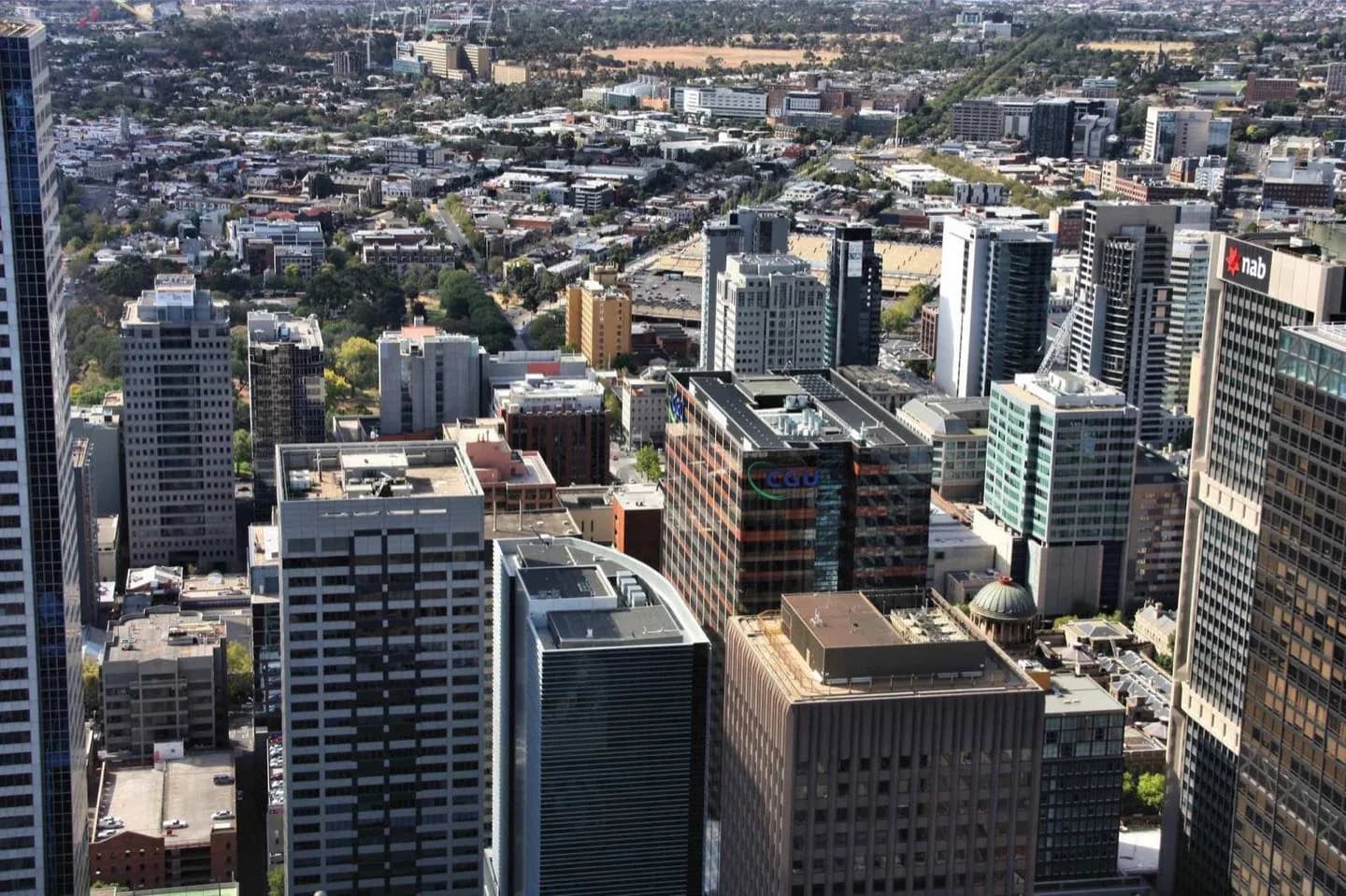
Melbourne works especially well for travellers who like to move between major galleries, sporting culture, markets, gardens and small urban discoveries in one day. The centre is easy to understand on foot, while trams extend the same trip toward Carlton, South Melbourne and the bayside suburbs.
What to look for
- The CBD grid meets the Yarra at Flinders Street and Federation Square.
- Victorian arcades, bluestone lanes and contemporary buildings sit within a few blocks.
- Large parks and gardens soften the centre's southern and eastern edges.
The full story
Melbourne stands on the traditional lands of the Wurundjeri Woi-wurrung and Bunurong peoples of the Kulin Nation, whose connections to the Birrarung, or Yarra River, long predate the colonial city. European settlement expanded rapidly after 1835, and the wealth of the nineteenth-century gold rush financed grand civic buildings, arcades, gardens and railway infrastructure. The resulting city is best read as layers rather than a single architectural period. Bluestone lanes and churches sit near Federation-era institutions, postwar towers and ambitious contemporary public buildings. The Hoddle Grid still shapes central movement, but Melbourne's identity also lives beyond it: in Carlton's institutions, the sporting precinct east of the centre, the markets and warehouses to the north and west, and neighbourhood shopping streets reached by tram. Following those transitions reveals more than racing through a checklist of landmarks.
Useful to know
- Use the Yarra and the CBD grid as orientation anchors.
- Group central sights on foot, then use public transport for outer neighbourhoods.
- Keep an indoor alternative ready because conditions can change quickly.