
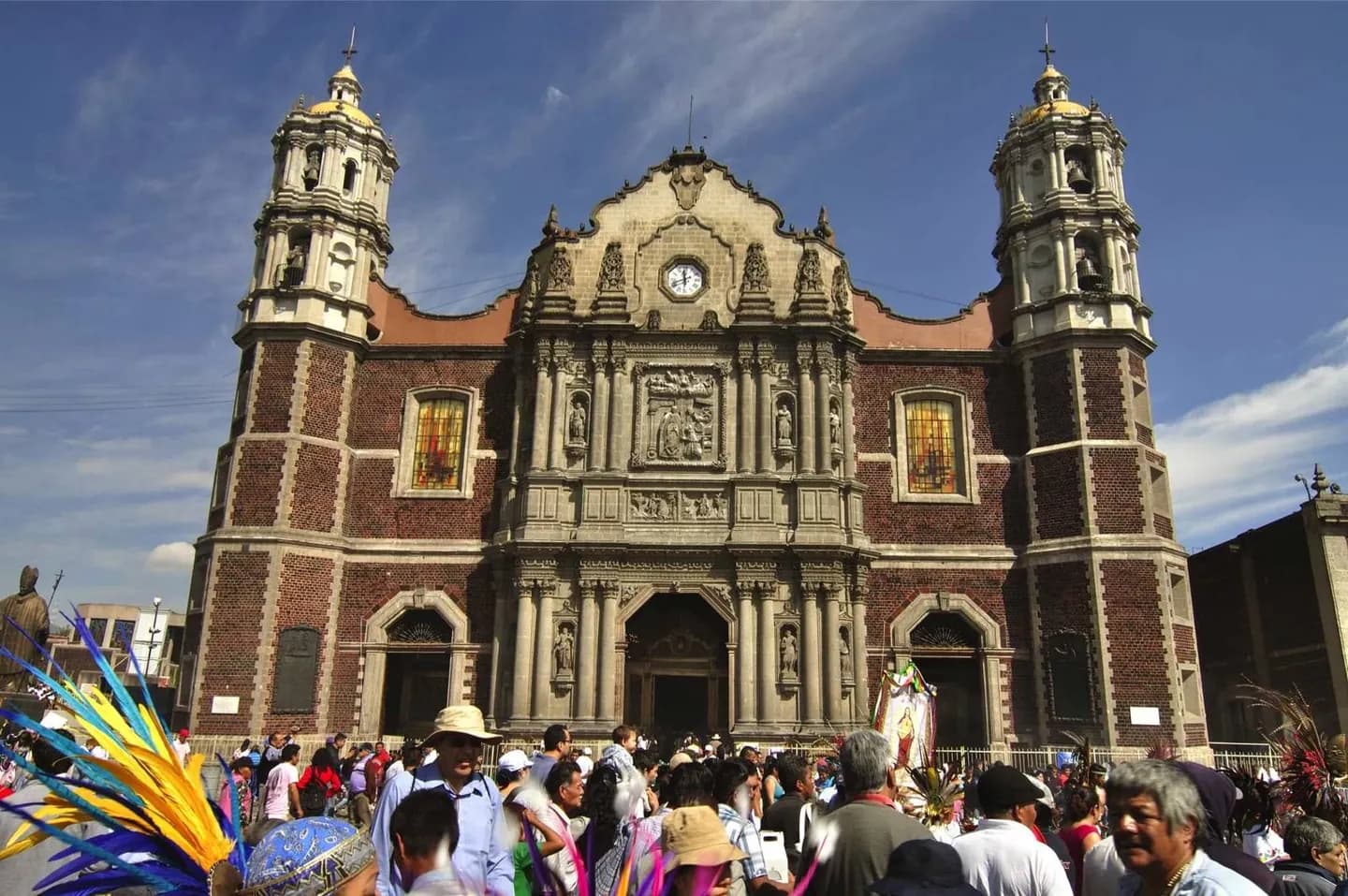
Why go
of Guadalupe appeared in front of Juan Diego Cuauhtlatoatzin. This site is also known as La Villa de Guadalupe or, in a more popular sense, simply La Villa. The new Basilica houses the original tilma (or apron) of Juan Diego that shows the icon of Our Lady of Guadalupe. Thus it is an important pilgrimage site and is.
What to look for
- Notice how Basilica of Our Lady of Guadalupe relates to the surrounding streets and skyline.
- Look for surviving details that reveal the site's principal historical layer.
The full story
visited by several million people every year, especially around December 12, Our Lady of Guadalupe's Feast day. The Basilica is part of the Historic Centre of Mexico City, which was added to the UNESCO World Heritage List in 1987. Old basilica Officially known as the Templo Expiatorio a Cristo Rey, the construction of the old basilica began in 1531 and was not finished until 1709. It is characterized by its doric interior and marble statues of Juan Diego and Fray Juan de Zumárraga. The church was granted basilica status by Pope Pius X in 1904. Modern basilica The modern basilica was built between 1974 and 1976 by the Mexican architect Pedro Ramírez Vázquez. It is a circular building constructed in such a way as to allow maximum visibility for the image to those inside. The structure is supported by 350 pylons that prevent the basilica from sinking with the rest of the ground. The Basilica is considered as the second most important sanctuary of Catholicism (this based upon the number.
Useful to know
- Allow enough time to see Basilica of Our Lady of Guadalupe and its immediate setting without rushing.
- Check current official access information before entering any managed interior.
Your next visit
Estimated · Declared scenario and planning estimates; no live opening, weather, queue or booking service.
Outdoor visit · 30–45 min
World planning estimate; admission, opening, visit duration and access need checking.