
Why go
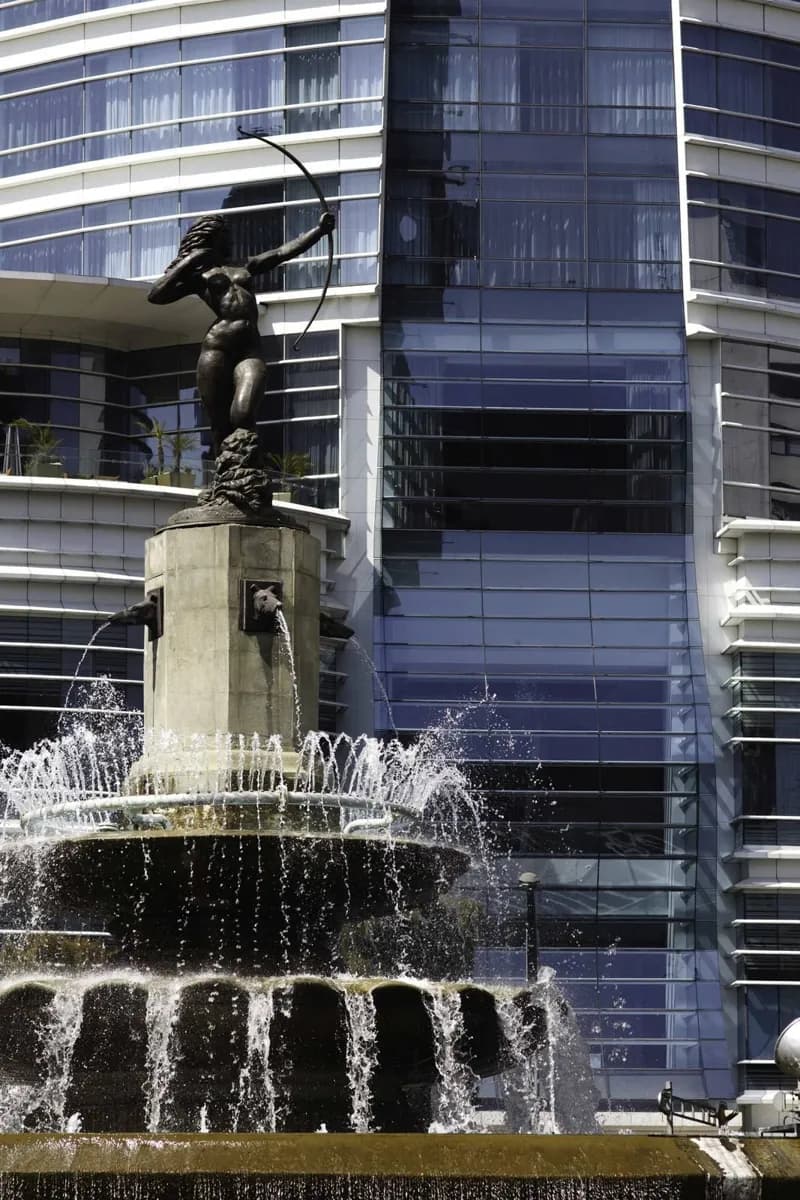
Pause here to read Reforma as an outdoor gallery of civic monuments. Juan Fernando Olaguíbel's archer, designed with architect Vicente Mendiola, adds a compact modern counterpoint to the avenue's older commemorative statues, while the traffic circle frames useful views along the boulevard.
What to look for
- See the archer silhouetted against Reforma's towers.
- Compare the fountain with nearby monuments along the boulevard.
- Use the roundabout as a visual waypoint between Juárez and Chapultepec.
The full story
The sculpture was originally titled The Arrow Thrower of the North Star, a name that points to the star targeted by the raised bow. Sculptor Juan Fernando Olaguíbel and architect Vicente Mendiola completed the fountain in 1942, when public art was reshaping Mexico City's principal avenue. Its unveiling quickly became a debate about nudity in public space. A metal covering was added to the figure and later removed, turning the work's reception into part of its history. The fountain also changed location as Paseo de la Reforma and its traffic system evolved. Those moves explain why the monument belongs to both the artistic and urban history of the capital. Today the bronze figure, stone basin and surrounding towers create a compact lesson in how Reforma layers monuments from different eras along one continuous civic axis.
Useful to know
- View it from the surrounding sidewalks and marked crossings.
- Late afternoon gives softer light, but the traffic circle stays busy.
- Combine it with a walk along Paseo de la Reforma.
Your next visit
Estimated · Declared scenario and planning estimates; no live opening, weather, queue or booking service.
Outdoor visit · 10–20 min
World planning estimate; admission, opening, visit duration and access need checking.