
Why go
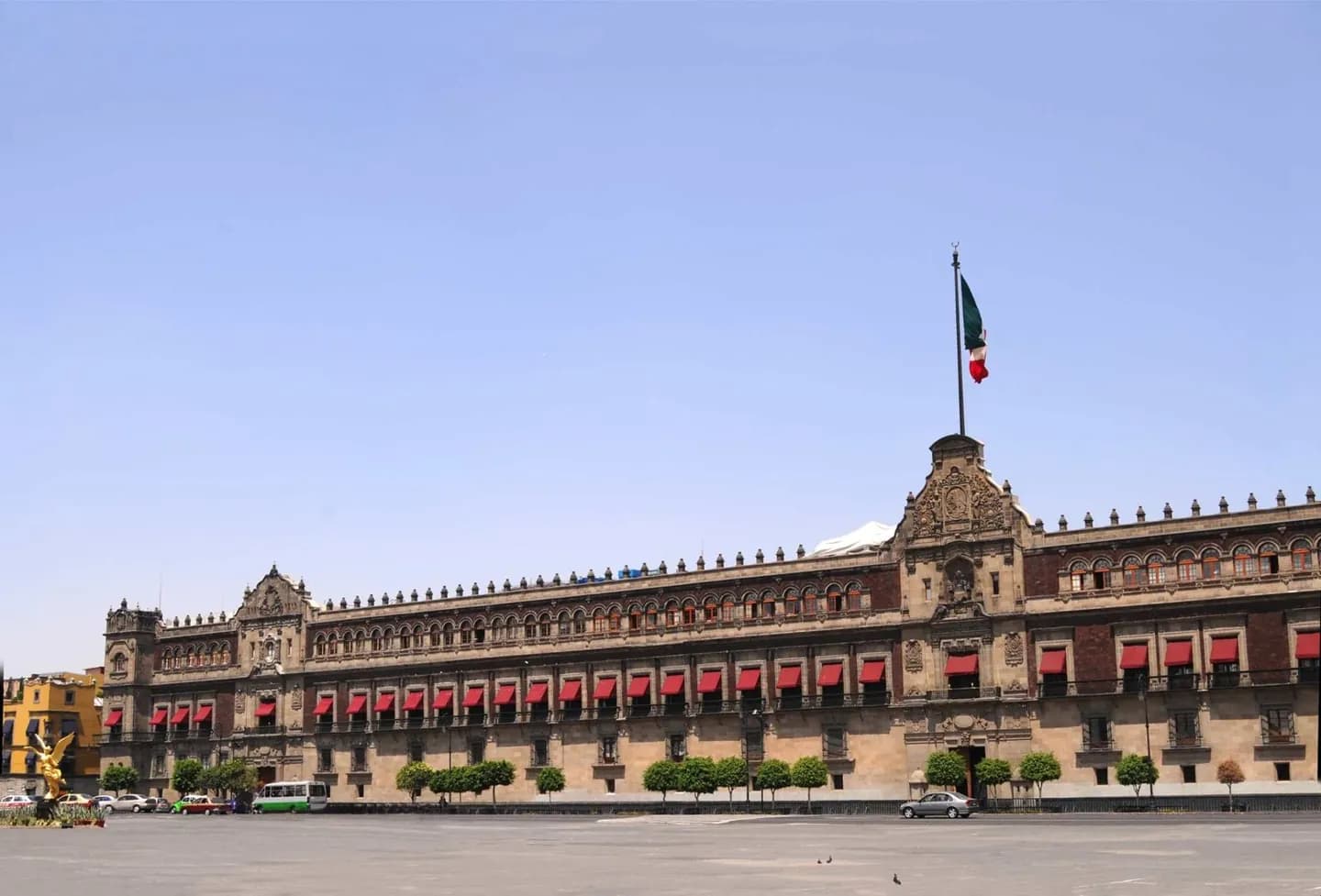
This site has been a palace for the ruling class of Mexico since the Aztec empire, and much of the current palace's building materials are from the original one that belonged to Moctezuma II. Description The facade is bordered on the north and south by two towers and include three main doorways, each of which lead to a.
What to look for
- Notice how National Palace relates to the surrounding streets and skyline.
- Look for surviving details that reveal the site's principal historical layer.
The full story
different part of the building. The southern door leads to the Patio of Honor and presidential offices (no public access). The northern door is known as the Mariana Door, named in honor of Mariano Arista who had it constructed in 1850. The area next to this door used to be the old Court Prison, with courtrooms and torture chambers. It is now occupied by the Finance Ministry. It contains the Treasury Room, constructed by architects Manuel Ortiz Monasterio and Vicente Mendiola. The iron and bronze door is the work of Augusto Petriccioli. Above the central doorway, facing the Zócalo, is the main balcony where just before 11pm on September 15, the president of Mexico gives the Grito de Dolores, in a ceremony to commemorate Mexican Independence. The central door leads to the main patio which is surrounded by Baroque arches. Only the balustrade of this area has been remodeled, conserving the murals by Diego Rivera that adorn the main stairwell and the walls of the second floor. In the stairwell.
Useful to know
- Allow enough time to see National Palace and its immediate setting without rushing.
- Check current official access information before entering any managed interior.
Your next visit
Estimated · Declared scenario and planning estimates; no live opening, weather, queue or booking service.
Outdoor visit · 30–45 min
World planning estimate; admission, opening, visit duration and access need checking.