
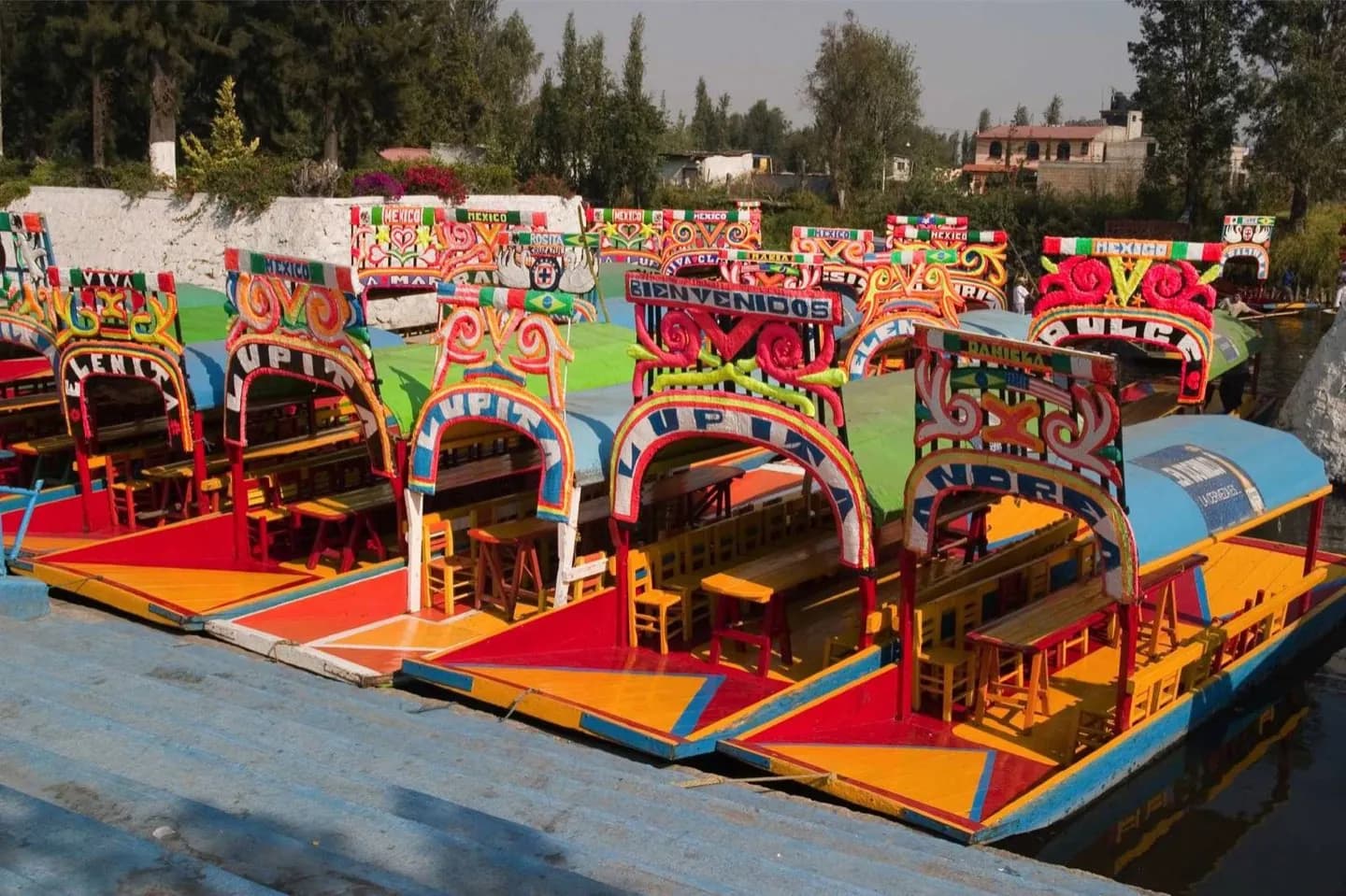
Why go
better known for its extended series of canals — all that remains of the ancient Lake Xochimilco. Xochimilco has kept its ancient traditions, even though its proximity to Mexico City influence that area to urbanize. Today, agriculture is an important but minor activity—the canals representing only a small fraction of their former extent, Chinampería (chinampa-related activities). It was.
What to look for
- Notice how Xochimilco relates to the surrounding streets and skyline.
- Look for surviving details that reveal the site's principal historical layer.
The full story
declared a World Heritage site by UNESCO in 1987. After the Mexican independence, Xochimilco became part of Mexico State. In 1850 the first steam railroad line between Mexico City and Xochimilco was inaugurated, increasing commerce between the cities. The main transport were trajineras until the first electric interurban tram was introduced in 1908; this tram service continues today as the Xochimilco Light Rail, with the popular name el tren ligero ( light train ) and is one of Mexico City's electric surface transport system, financially supported by the government's Sistema de Transporte Eléctrico (STE). The Niño Pa Xochimilco is home to one of the best-known “Niño Dios” images in Mexico, called the Niño Pa (also written Niñopa or Niñopan), which was created in the 16th century. This image originally belonged to an indigenous chief called El Viejo. It is said that this image goes about at night to visit people in their dreams and to check the crops of the community. Some claim to have found mud on the image’s.
Useful to know
- Allow enough time to see Xochimilco and its immediate setting without rushing.
- Check current official access information before entering any managed interior.
Your next visit
Estimated · Declared scenario and planning estimates; no live opening, weather, queue or booking service.
Outdoor visit · 30–45 min
World planning estimate; admission, opening, visit duration and access need checking.