
Why go
Look past the palace’s formal front to its defensive position at the end of the Rock. The arcades, later state rooms and surviving military features make more sense when you know the Grimaldis could not simply replace a stronghold with an open Renaissance palace.
The full story
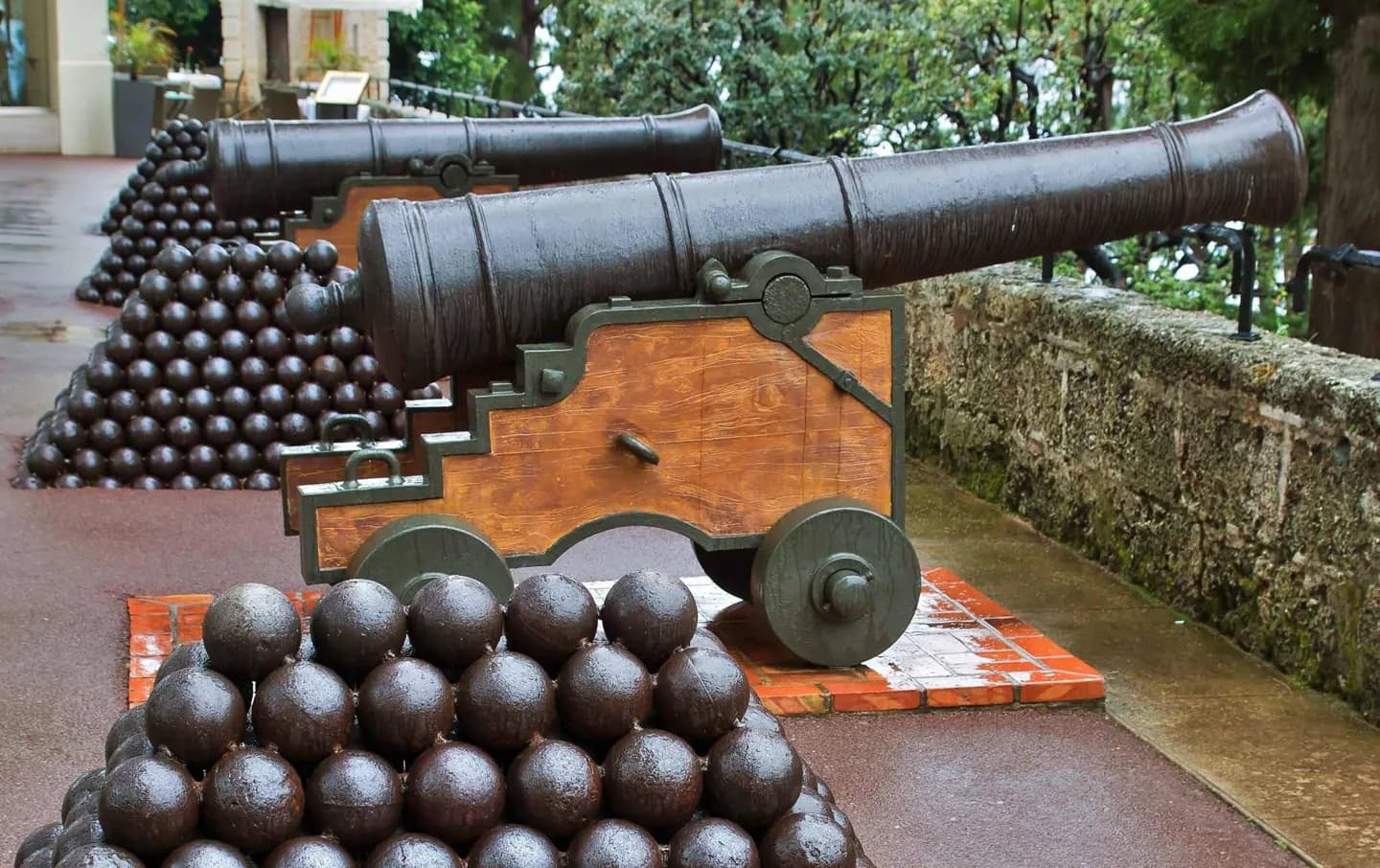
After a Genoese siege in 1506–07 damaged the fortified residence, Lucien I repaired it and added a wing that later housed state rooms. Under Honoré I, the courtyard gained two arcades with white marble balustrades. Their upper level became the Gallery of Hercules, decorated in a later reign with scenes from the hero’s labours. Yet the household still needed protection. All Saints Tower watched the end of the promontory, while the Serravalle Bastion carried cannon. Passages cut through the rock linked the defences, and a cistern beneath the courtyard stored water for a siege. The building’s mixture of courtly space and heavy fortification reflects Monaco’s exposed position between larger powers. In 1641, Honoré II expelled the Spanish garrison with French support, changing Monaco’s political alignment while the palace remained its seat.