
Why go
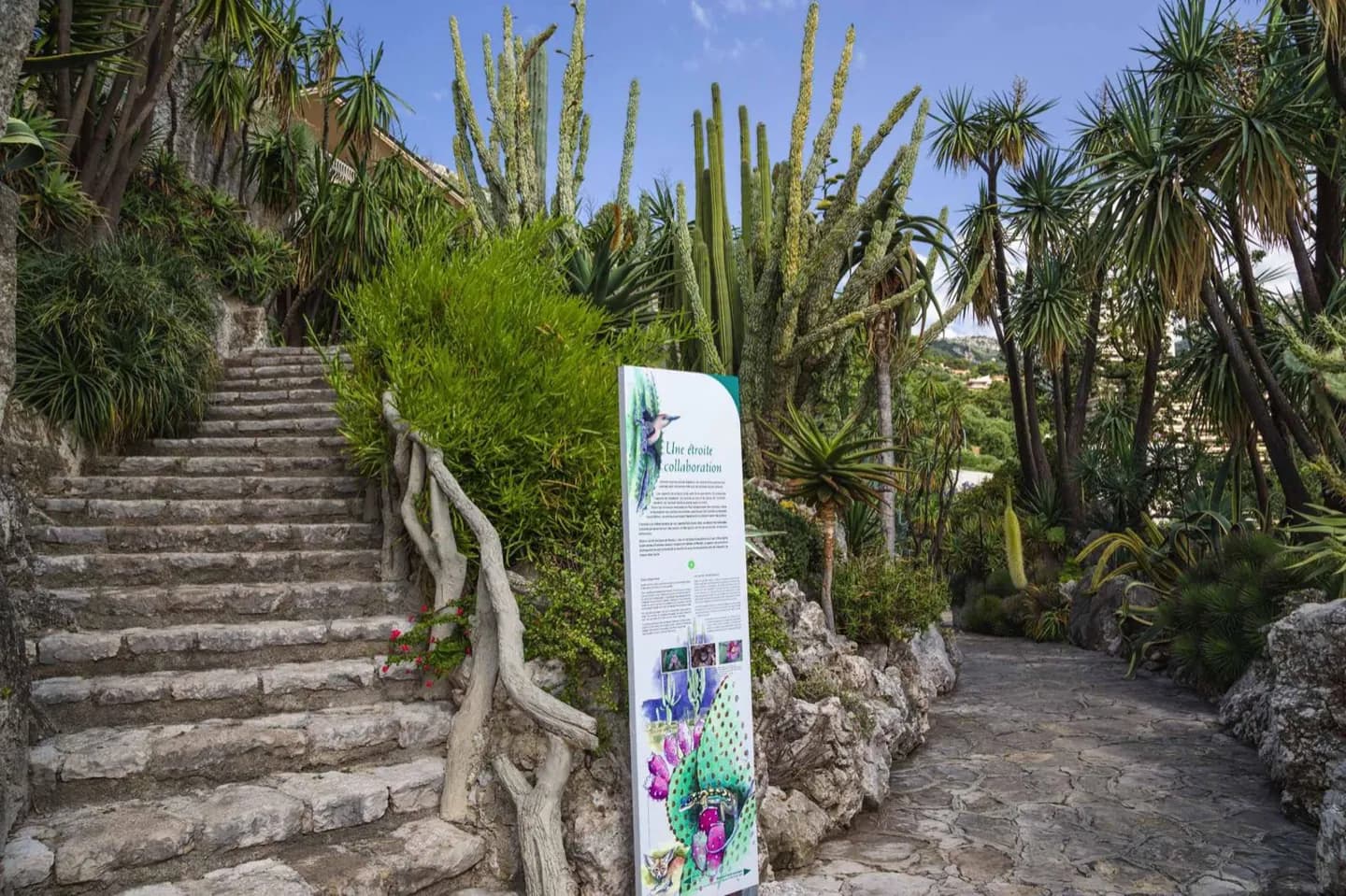
The appeal is the combination of plants and geology: cacti and other succulents grow above a natural cave with formations, while prehistoric finds connect the rock to a much longer human story. This makes it a distinctive stop beyond the coastal landmarks.
What to look for
- Cacti and other succulents cover the cliffside garden.
- The natural cave contains stalactites, stalagmites and columns.
- Prehistoric finds are displayed in the Museum of Prehistoric Anthropology.
The full story
The Jardin Exotique opened in 1933 as a cliffside setting for a large collection of succulent plants, especially cacti. Below the planted terraces lies a natural cave whose mineral formations include stalactites, stalagmites and columns. Evidence of prehistoric human activity has been found there. The Museum of Prehistoric Anthropology, founded by Prince Albert I in 1902, displays material from this deeper past. The garden therefore offers more than a plant collection: it moves from sunlit terraces to the geology beneath Monaco’s rock, linking botanical display with the principality’s interest in archaeology. The cave was opened to visitors later than the garden and has been experienced through guided access. That difference matters because the terraces and the underground chambers are distinct parts of the site, with different physical demands.
Useful to know
- Check current access to the garden, cave and museum separately before travelling.
- Expect a hillside setting; allow time for the change in level if cave visits are offered.