
Why go
The building itself rises above the sea, while the galleries trace Prince Albert I’s research and the aquarium brings marine ecosystems close. It is a good counterpart to the palace and gardens nearby: the same Rock seen through ocean science.
What to look for
- The museum façade stands above the sea-facing cliff.
- Displays connect Prince Albert I with his research yacht L’Hirondelle.
- The aquarium presents Mediterranean and tropical marine life.
The full story
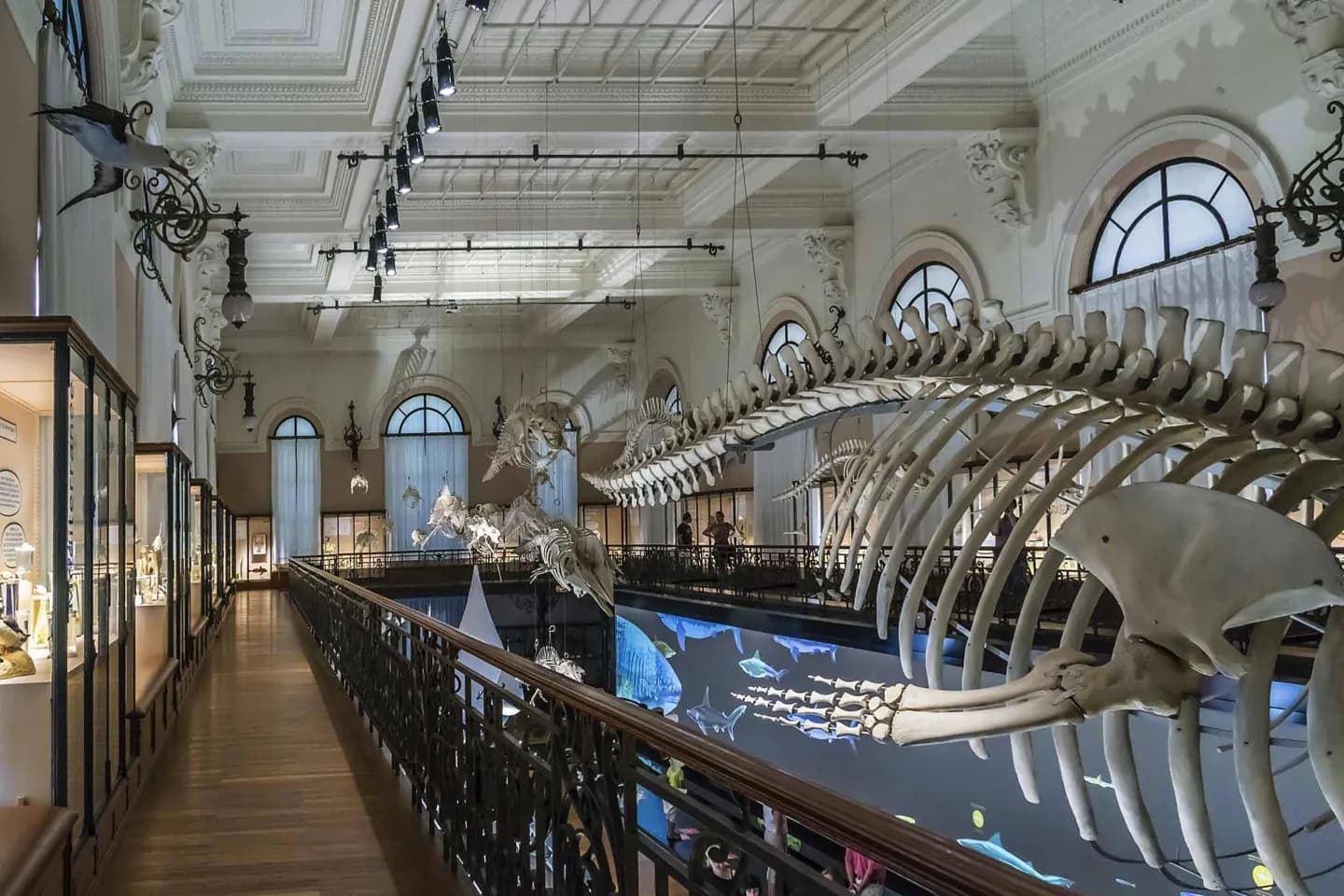
Prince Albert I opened the Oceanographic Museum in 1910 as part of his commitment to studying and explaining the sea. The monumental building occupies the cliff edge of Monaco-Ville, making its subject visible before visitors enter. Its collections include marine specimens, models and equipment, as well as displays linked to Albert’s research voyages. Jacques-Yves Cousteau later directed the museum for three decades. The aquarium adds living Mediterranean and tropical ecosystems to that historical account. Together, the building, collections and tanks show how oceanography became part of Monaco’s identity beyond the familiar palace and casino. The sea-facing façade is therefore part of the museum’s argument rather than a decorative backdrop. It places the collections above the very environment that Albert’s expeditions sought to understand, giving the visit a strong link between setting and subject.
Useful to know
- Allow time for both the galleries and aquarium rather than treating it as a quick viewpoint.
- Combine the museum with a walk through nearby Saint Martin Gardens.