
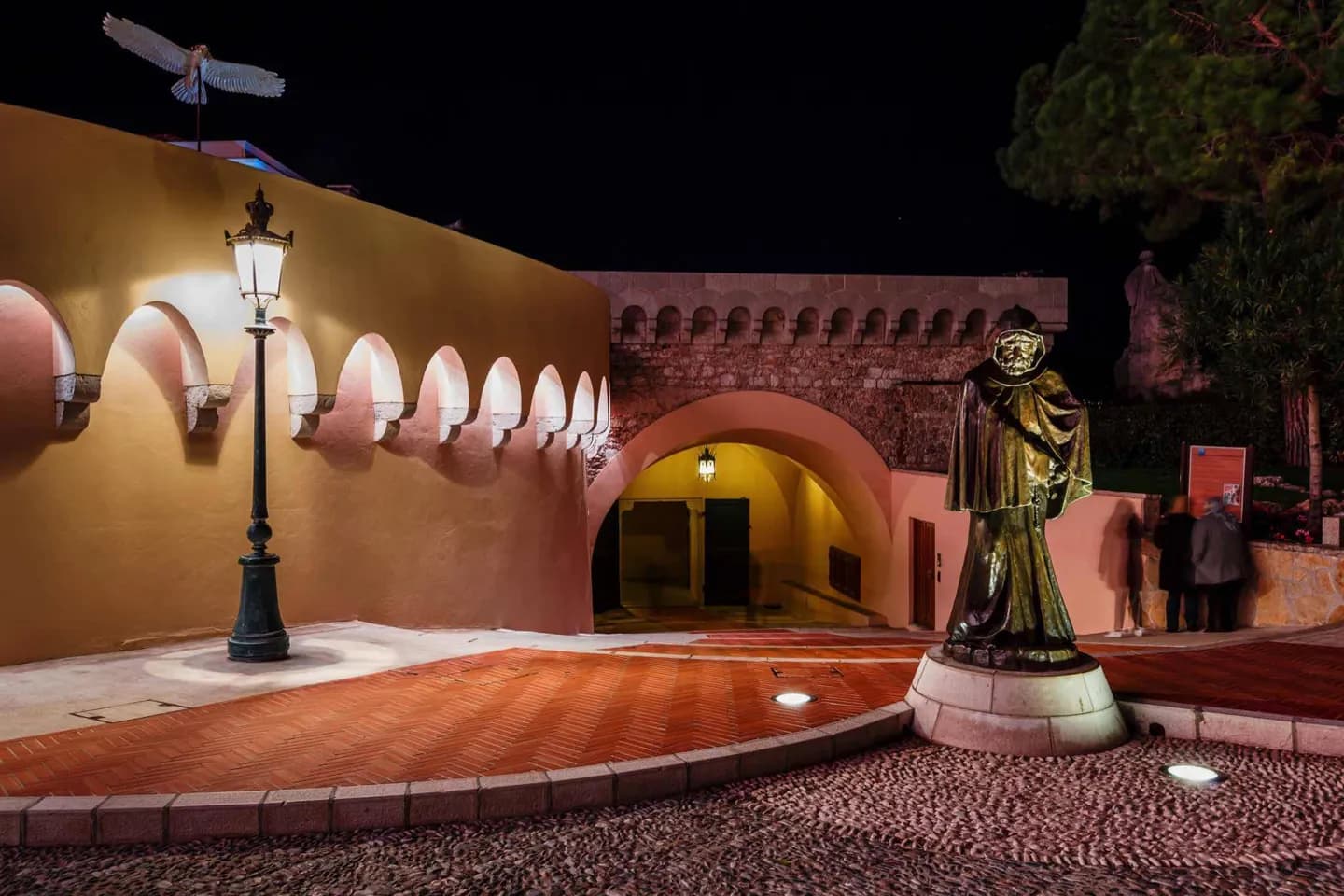
Why go
This account makes the palace more than a formal residence: its high position recalls the fortress seized in 1297 and fought over for generations. It also explains why Monaco’s rulers repeatedly sought protection from larger neighbours while retaining their own state.
The full story
Genoese settlers established a fortress on the Rock in 1215 to guard the harbour. In 1297 Francesco Grimaldi and his followers took it; tradition says he entered disguised as a monk. The capture was not permanent, and control remained contested for more than a century. The family secured the Rock in the fifteenth century, and Honoré II adopted the title of prince in the early seventeenth. The site’s position explains why these events centred on the Rock. From above the harbour, a fortress could watch approaches by sea and land. Monaco’s rulers later moved between Spanish and French spheres of protection, while the French Revolution interrupted Grimaldi rule. The family returned in 1814. In 1861, after the loss of Menton and Roquebrune, a treaty with France recognised the smaller principality’s sovereignty. The palace therefore represents both a medieval defensive position and the continuity of a ruling house whose territory and alliances changed substantially around it.