
Why go
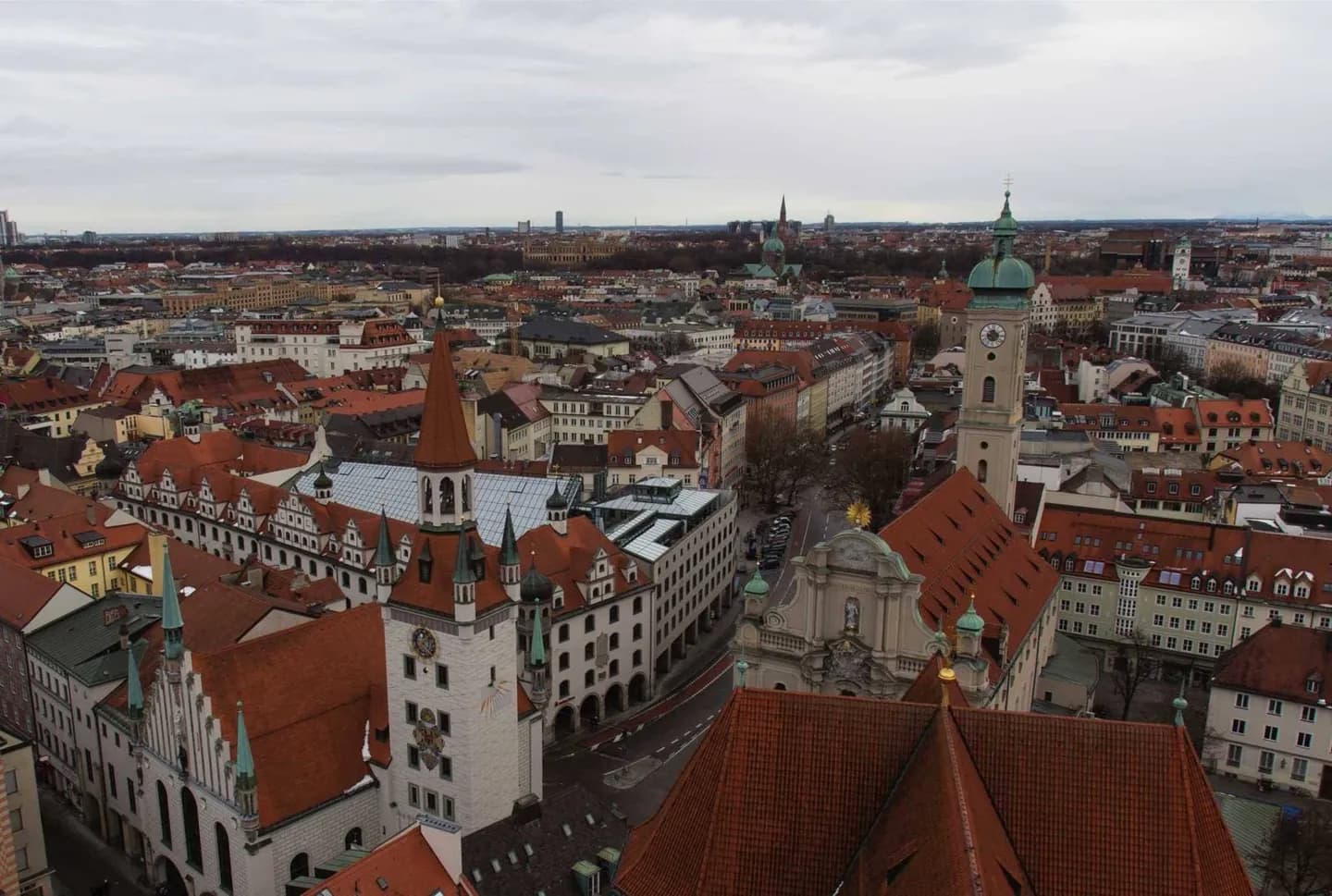
This overview helps you connect the Residenz, nineteenth-century avenues, industrial museums and postwar landmarks before choosing individual stops. It explains why Munich can feel ceremonially grand around Odeonsplatz, intimate in the old town and boldly experimental at Olympiapark without becoming three unrelated cities.
The full story
Munich grew from a medieval settlement on the salt route into the seat of the Wittelsbach rulers, and that courtly role still structures the centre. Marienplatz anchors the older street plan, while the Residenz and Odeonsplatz open into a more ceremonial landscape of gardens, churches and avenues. During the nineteenth century, royal patronage pushed the city outward through Brienner Straße, Ludwigstraße and the museum quarter around Königsplatz. The twentieth century left more difficult political memories as well as major shifts in design and technology. The Deutsches Museum made science and engineering central to the city's public identity, while the tent roofs of the 1972 Olympic site presented a deliberately open architectural image. Reading these layers together is more useful than searching for a single Munich style: brick Gothic towers, Rococo interiors, Neoclassical axes and modern structures all mark different ambitions for the same city.