
Why go
From the 11th to 13th centuries, Bagan was the capital of a kingdom that helped shape Burmese language and Theravada Buddhism. More than two thousand religious monuments survive from a much larger building program. The value of a visit is in comparing individual structures with the broad plain around them, rather than trying to see every temple. Choose a few sites and leave room to understand the wider setting.
What to look for
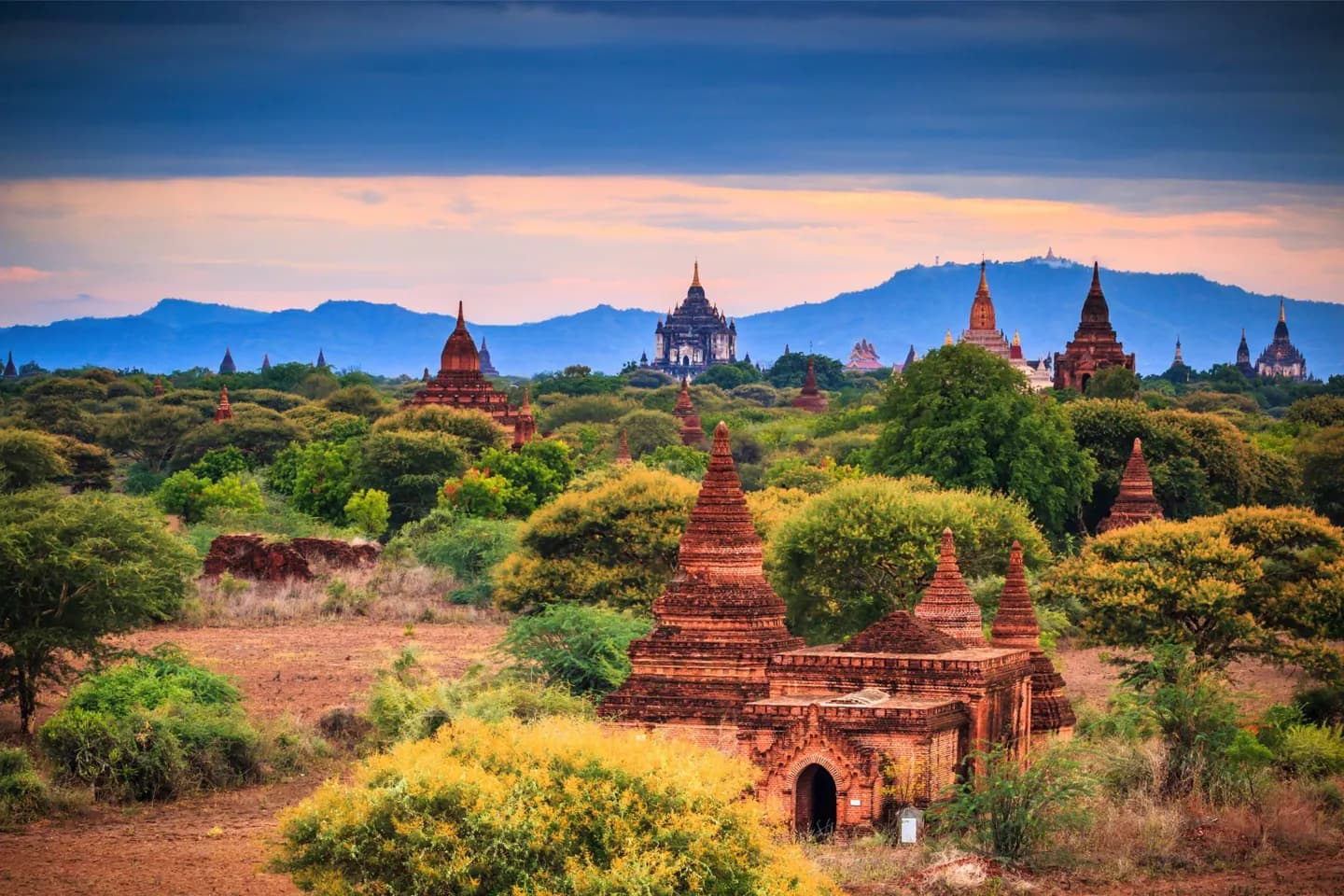
- Temples and pagodas extend across the Bagan plain.
- Surviving monuments date chiefly from the Pagan kingdom's great building period.
- The Irrawaddy valley provides the setting for the former capital.
The full story
Bagan grew from a settlement in the Irrawaddy valley into the center of the Pagan kingdom. In the 11th century, Anawrahta helped consolidate a realm that linked much of the valley and nearby regions. Rulers and wealthy donors built temples, pagodas and monasteries on a remarkable scale; more than two thousand structures remain. That building program reflects both religious devotion and the wealth of a powerful capital. Burmese language and culture gained influence in Upper Myanmar during the kingdom's rule, and Theravada Buddhism spread more widely, although other religious practices remained part of life. By the late 13th century, political and financial strains, together with outside attacks, contributed to the kingdom's collapse. The plain still makes this long history legible: individual monuments belong to a former capital whose religious landscape outlasted its political power.
Useful to know
- Select a manageable group of monuments rather than trying to cover the whole archaeological zone.
- Check current access rules for individual temples before setting out.