
Why go
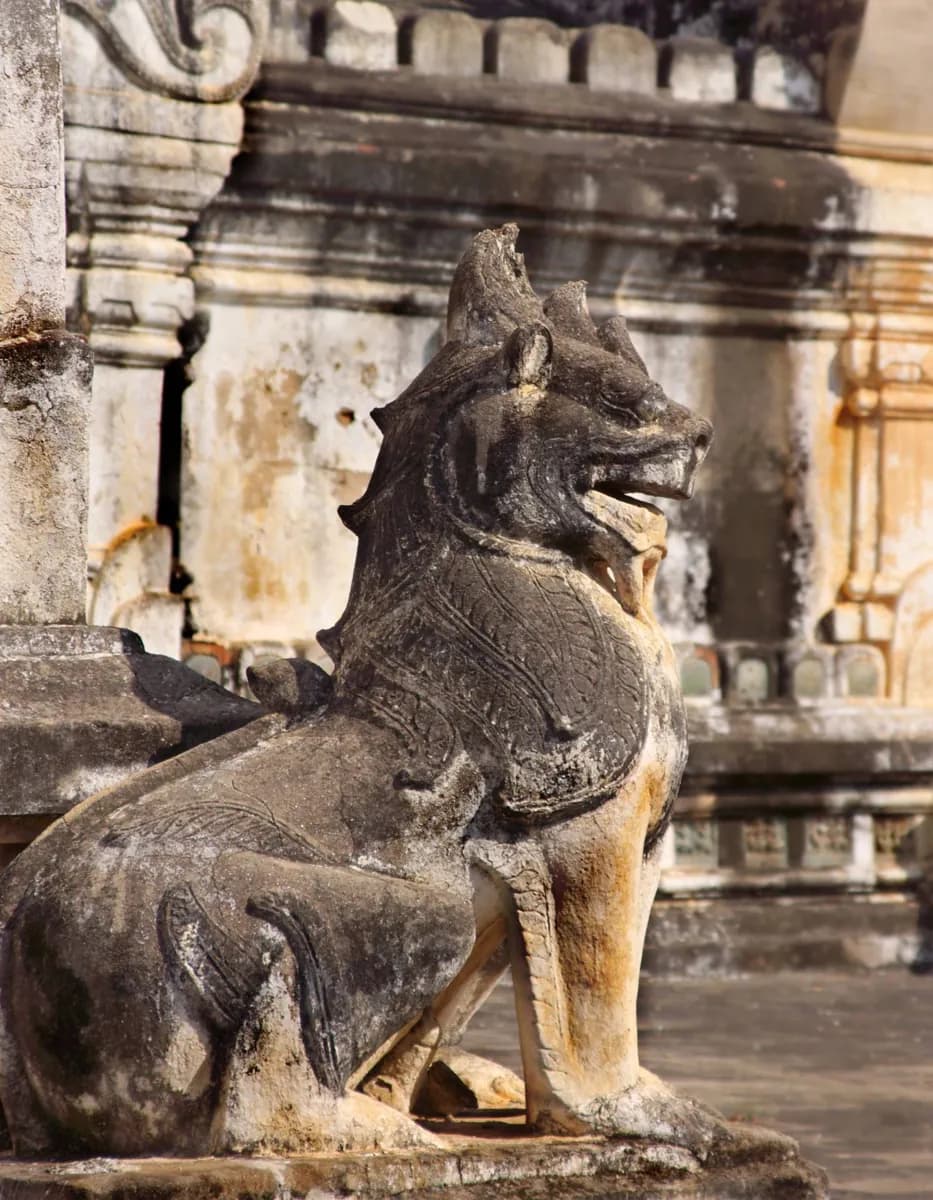
Bagan’s rulers supported a huge temple-building culture as Theravada Buddhism spread, though other traditions remained. After the kingdom broke apart in the late thirteenth century, Ava, Hanthawaddy, Shan states and Mrauk U shaped different regions. That political division helps explain why the surviving monuments and literary traditions are spread across Myanmar rather than centered on one capital.
The full story
Bagan expanded across the Ayeyarwady valley in the eleventh century under Anawrahta and later rulers. The temple plain records the patronage of kings and wealthy donors, along with the growing reach of Theravada Buddhism. Other Buddhist, Hindu and local religious practices continued beside it. The kingdom weakened after Mongol invasions in the late thirteenth century. Power then shifted among the Shan states, Ava in Upper Myanmar, Hanthawaddy in Lower Myanmar and Arakanese rulers to the west. None simply replaced Bagan as an identical empire. They drew on different trading routes and regional loyalties, even as Burmese literature and religious reform continued to develop. Mrauk U’s monuments belong to the western kingdom that consolidated much of the Arakan coast in the fifteenth century. The spread of historic sites across these regions reflects the centuries when political power was divided.