
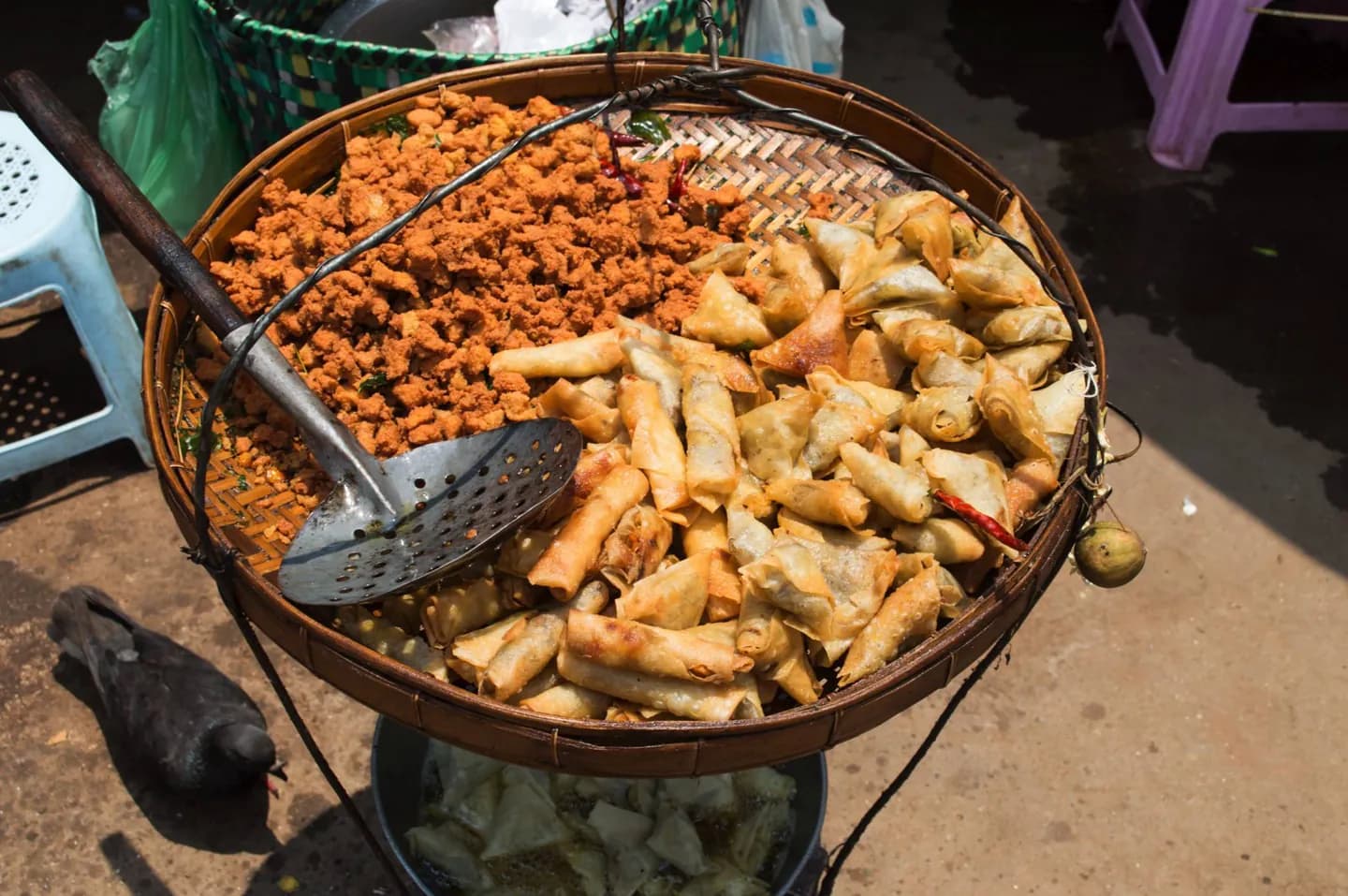
Why go
Mohinga gives a visitor one familiar starting point, while athoke salads show how a single dish category can use noodles, ginger, tomato or fermented tea leaves. Coastal cooking around Myeik and Dawei draws on the sea; inland kitchens use freshwater fish and shrimp. Comparing those ingredients is more useful than expecting the same menu everywhere.
The full story
Burmese cuisine is one part of a wider food landscape made by the country's many communities. Mohinga, a fish based noodle soup often eaten at breakfast, is among its best known dishes. Rice anchors many other meals, accompanied by vegetable, fish or meat dishes. Fish products include sauce and ngapi, a fermented paste, while freshwater fish can be served fresh, dried or preserved. In coastal cities such as Sittwe, Mawlamyine, Myeik and Dawei, seafood has a natural prominence. Inland areas, including Mandalay, draw on different supplies and traditions. Athoke is a broad term for salads built around a main ingredient: noodles, potato, ginger, tomato and lahpet, fermented tea leaves, are all examples. That range makes a tea leaf salad quite different from a noodle salad even though both share the name. Regional and ethnic traditions add further variation, so the most revealing comparison is between actual dishes and places, not between one national recipe and another country's food.