
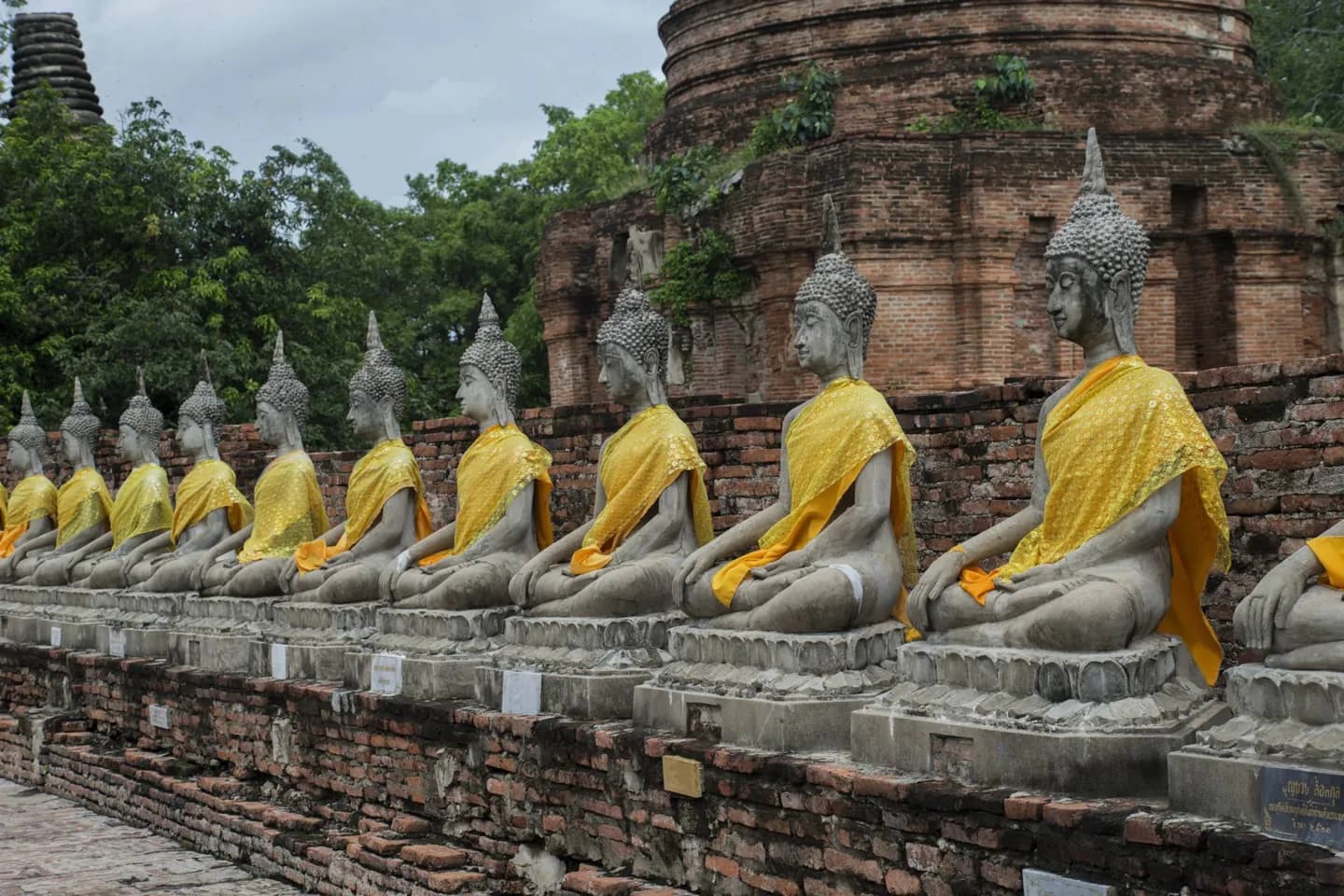
Why go
Shwedagon Pagoda and the temples of Bagan are easier to understand as active religious places than as monuments alone. Theravada Buddhist practice often exists alongside reverence for nats, or spirits. Other faiths have their own communities and places of worship. Keeping those traditions distinct helps visitors read the country beyond its most visible pagodas.
The full story
Theravada Buddhism has a long history in Myanmar and is especially visible in monasteries, pagodas and public festivals. The former Pagan kingdom helped spread it through the Irrawaddy valley, leaving the temple landscape at Bagan. Religious life is more varied than that landscape suggests. Nat worship, centered on spirits and their shrines, has persisted alongside Buddhist practice; the two traditions should not be treated as identical. Christian communities, including many among Kachin, Chin and Karen groups, and Muslim and Hindu communities also belong to Myanmar's history. Shwedagon in Yangon is both a major Buddhist landmark and a place of devotion, so a visit there calls for attention to people worshipping as well as to the structure itself. At Bagan, the great number of temples reflects generations of donors and religious practice, not simply the ambition of one ruler. These examples offer a starting point, not a single account of belief across a country with many ethnic and religious traditions.