
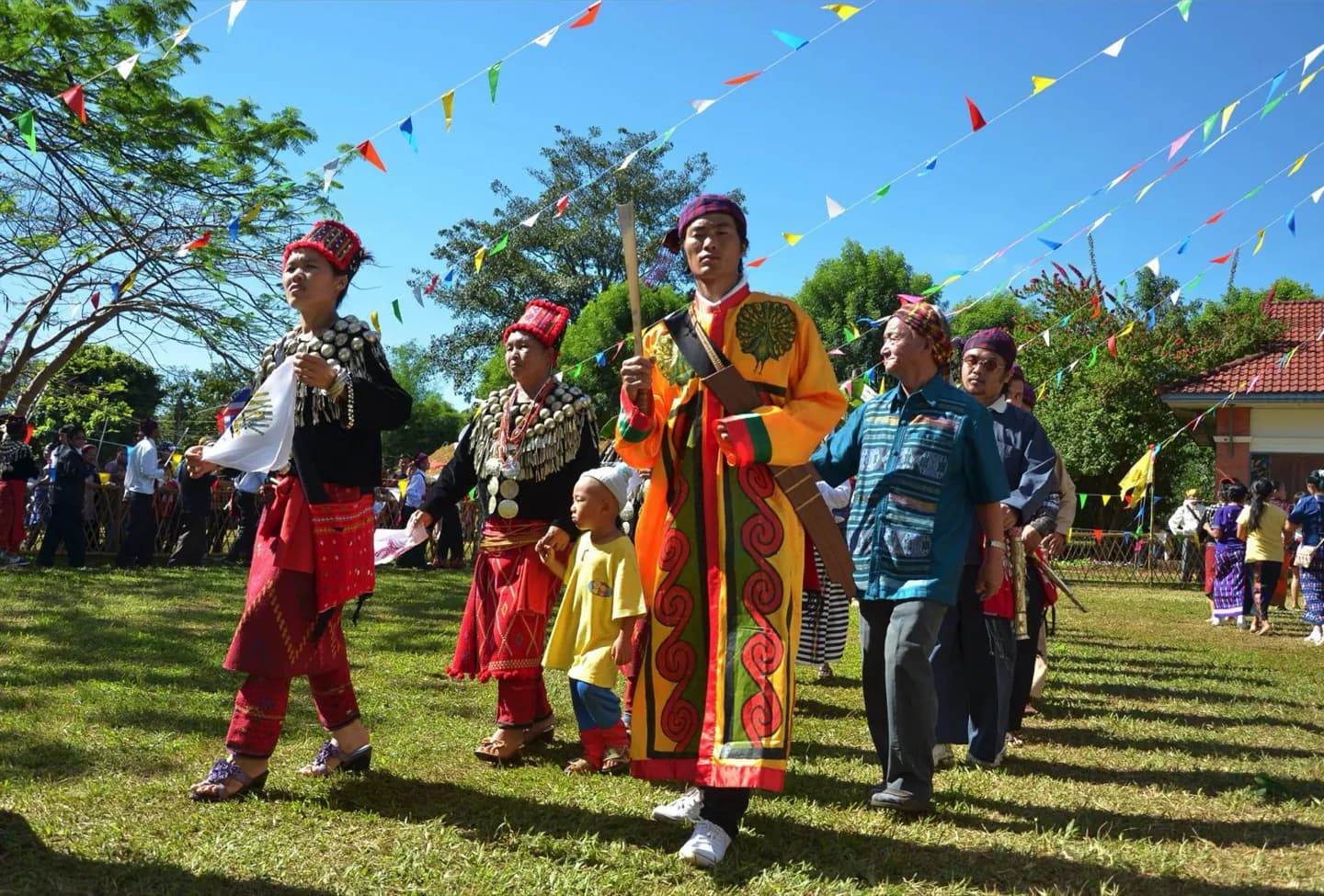
Why go
A monastery or pagoda festival can reveal the ties between worship, family and community more clearly than a list of customs can. The shinbyu novice ceremony marks an important passage for many Buddhist boys, while nat traditions add another layer to some local practice. These are traditions to recognize, not events to assume every village shares.
The full story
Myanmar's cultural traditions differ across regions and communities. In many Buddhist villages, the monastery has long been a place of religious learning and community life. Families support monks, and a boy's shinbyu ceremony may mark his temporary entry into the monastic order. Pagoda festivals bring worship and gathering together, while some communities also maintain shrines or rituals associated with nats, the spirits of local tradition. These practices help explain why a pagoda is more than an architectural stop. They should not be projected onto every household or ethnic group. The legacy of neighboring cultures also appears in language, food and performance: Yama Zatdaw, a Myanmar telling of the Ramayana, reflects Indian, Thai and Mon influences. British rule left another visible layer, especially in the architecture of central Yangon. Looking at a village monastery, a festival ground and Yangon's streets as different settings makes the country's cultural variety easier to grasp.
Useful to know
- Treat a monastery or festival as an active community setting and follow instructions given on site.
- Ask locally before making a festival or ceremony the focus of a visit.