
Why go
A meal can reveal both daily routine and regional differences. Try dal bhat for its grain, lentils, vegetables and pickles; compare it with filled momo or a hill grain dish. Tea and festival foods show other parts of the table that a single restaurant menu may miss.
The full story
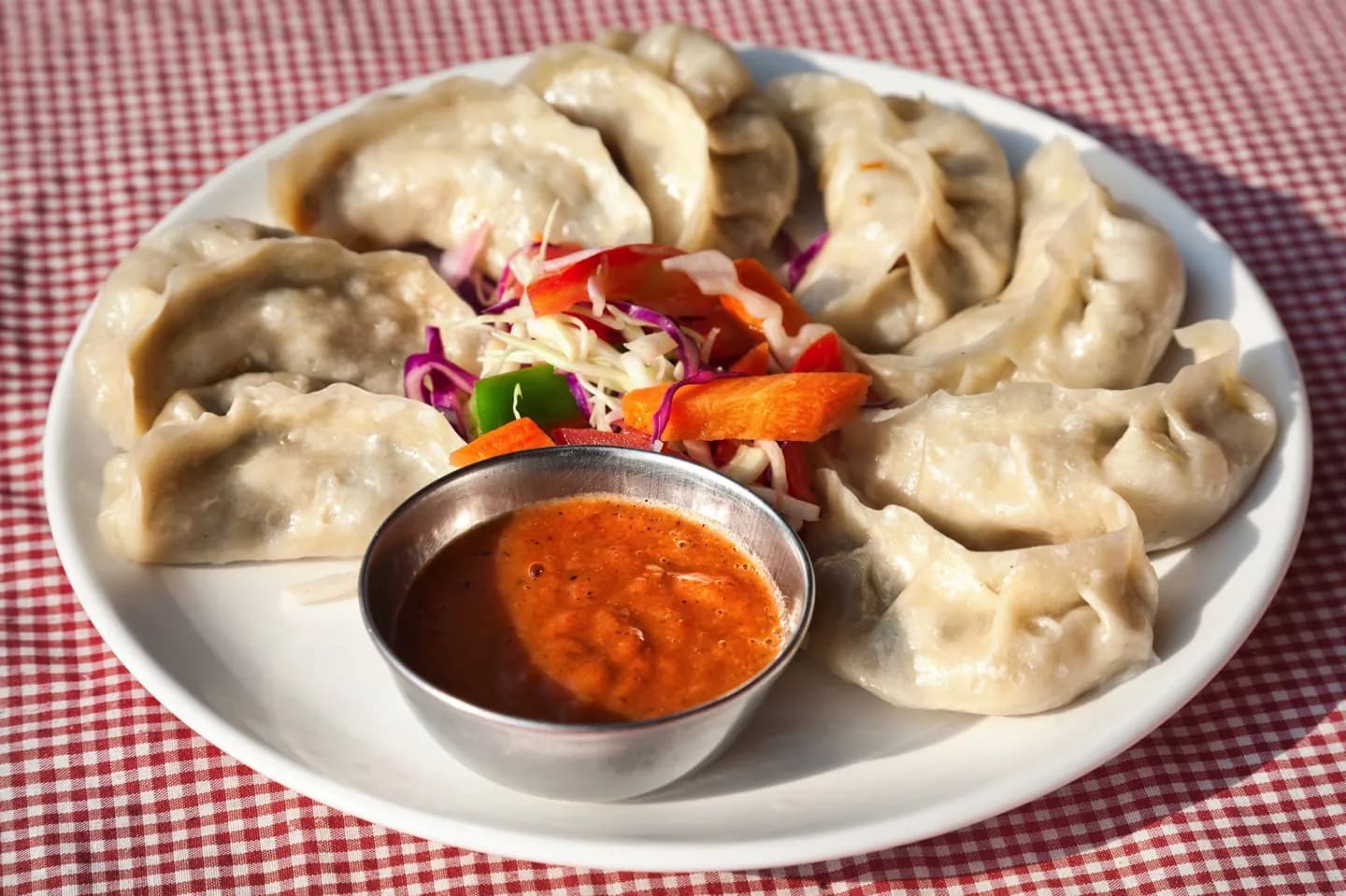
Dal bhat tarkari is a useful first order because its parts are easy to recognise: lentils, a grain and cooked vegetables, often sharpened by achaar. Yet the grain can change, and the same plate can carry different local greens, pickles and sides. Momo brings a different food tradition into view: filled dumplings associated with Tibetan influence and adapted across Nepal. In hill and mountain areas, potatoes, breads and porridge-like grains can matter as much as rice. Sel roti, a ring-shaped fried bread, is linked to festive eating rather than an everyday meal. Drinks add another layer. Milk tea, sometimes spiced, is widespread; locally made alcohol such as raksi appears in some communities and occasions. These examples are starting points, not a claim that every household eats alike. Compare what is on the plate in Kathmandu, the hills and the lowlands, and ask which dish or ingredient belongs to the area.