
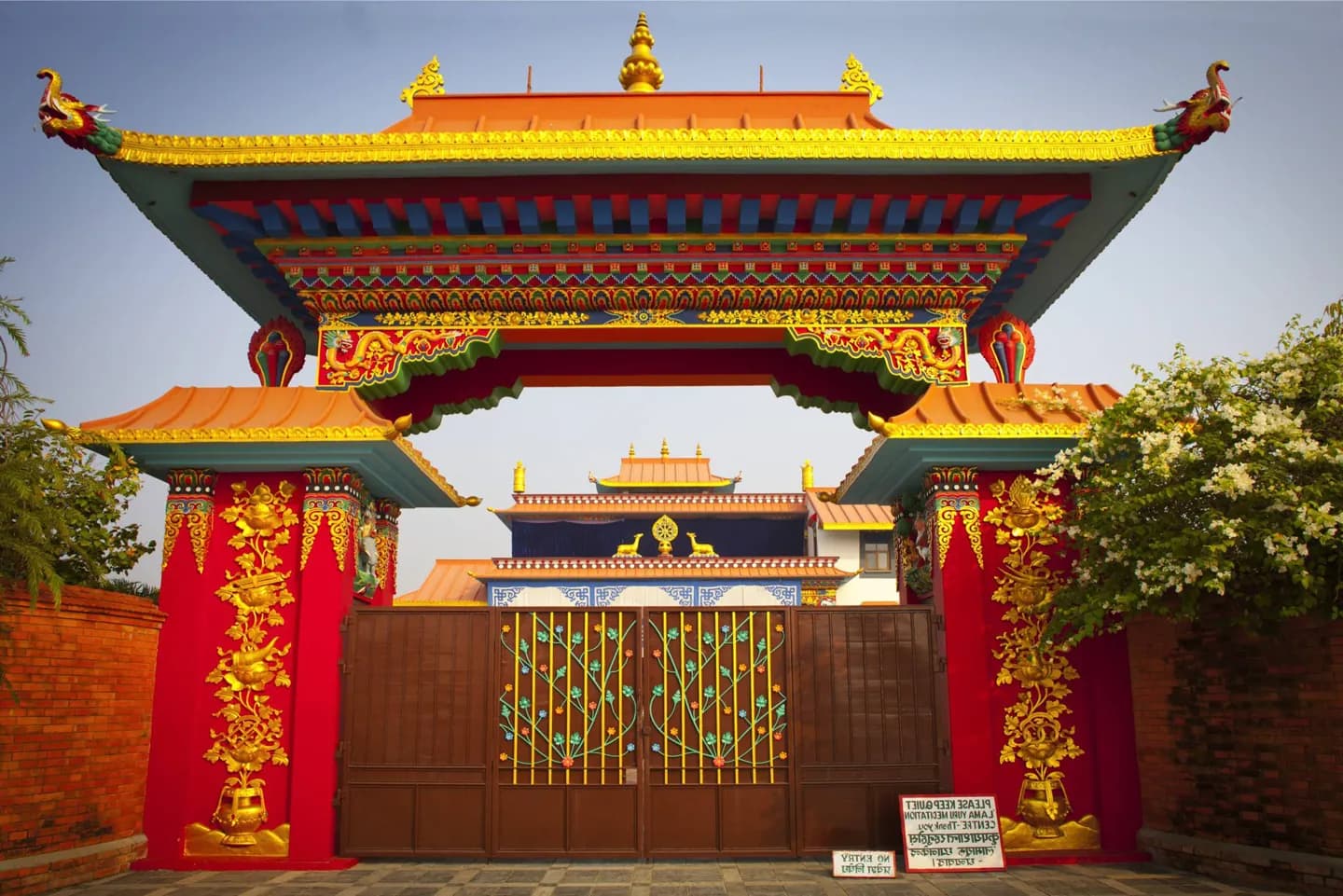
Why go
The Mayadevi Temple area, the Ashoka pillar and the sacred pond give the visit a historical core; monasteries show how Buddhist communities from different traditions engage with it. This is a broad sacred destination, so choose the places you want to understand rather than treating Lumbini as one quick monument stop.
What to look for
- The Mayadevi Temple marks the birthplace revered in Buddhist tradition.
- An Ashoka pillar connects the pilgrimage site to ancient royal patronage.
- The sacred pond and monastery areas extend the visit beyond one building.
The full story
Buddhist tradition places the birth of Siddhartha Gautama at Lumbini, making it one of the places associated with the Buddha's life. The sacred core gathers several layers of that memory. The Mayadevi Temple focuses attention on the birthplace tradition, while the pond appears in accounts of Queen Mayadevi and the infant Buddha. A pillar attributed to Emperor Ashoka gives the site an ancient marker of pilgrimage and royal recognition. Archaeological work has also found earlier structures beneath later building phases, a reminder that the sacred area was used and rebuilt across many centuries. Beyond the core, monasteries reflect the breadth of Buddhist traditions that come to Lumbini. A useful visit therefore moves from the traditional birth site to the wider religious landscape, noticing how historical evidence, inherited accounts and present worship meet without treating them as the same kind of claim.
Useful to know
- Plan a walking route around the sacred core and allow additional time for the monastery areas.
- Observe worship quietly and check access rules at each active religious building.