
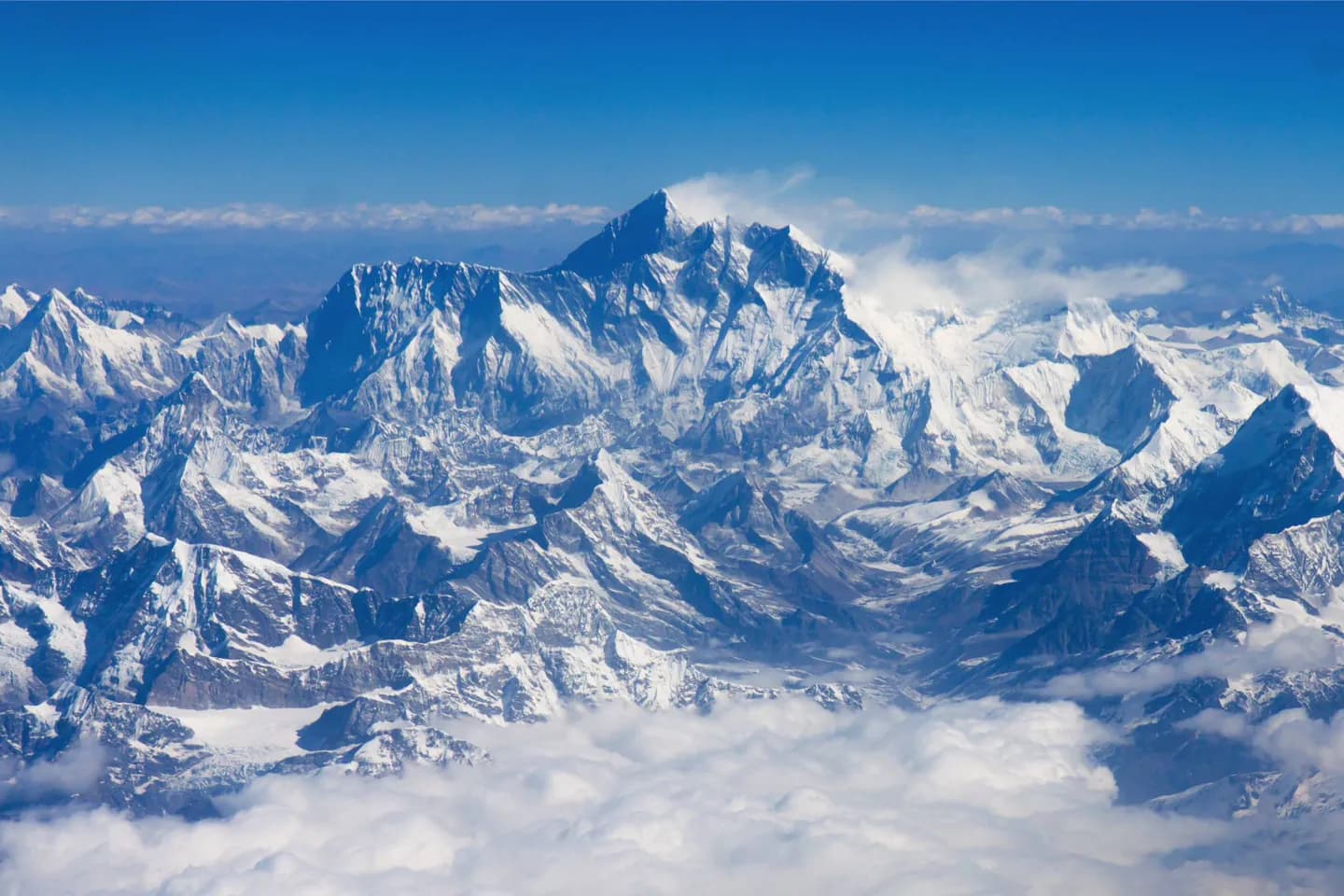
Why go
The mountain gives context to treks through Sagarmatha National Park, where Sherpa settlements, glacial valleys and other high peaks shape the experience. Learn the names Sagarmatha and Everest, then decide whether the region's trails suit your time, fitness and altitude preparation. Summit climbing is a separate expedition.
The full story
Everest rises on the border between Nepal and Tibet within a massif that includes Lhotse and Nuptse. In Nepal it is also called Sagarmatha; the English name came from nineteenth-century surveying and the naming decisions of the British survey establishment. That naming history is useful on a Khumbu journey because maps, local accounts and international climbing stories can refer to the same mountain differently. The summit's fame can obscure the landscape below it: valleys cut by rivers and glaciers, high passes, and communities whose lives are connected to the mountain corridor. Trekkers experience this setting over multiple days, often through Sagarmatha National Park, rather than by visiting a single viewpoint labelled Everest. The mountain's height also changes what a journey demands. Routes toward it involve sustained ascent and altitude decisions; a summit attempt requires specialist expedition planning far beyond ordinary travel.