
Why go
Regional eating gives a more precise picture of Nepal than a list of national favourites. Compare a grain-based hill meal with Newar preparations around the Kathmandu Valley, then notice how the warmer Terai brings different crops and preserved ingredients into the kitchen. Ask what is local to the place you are visiting.
The full story
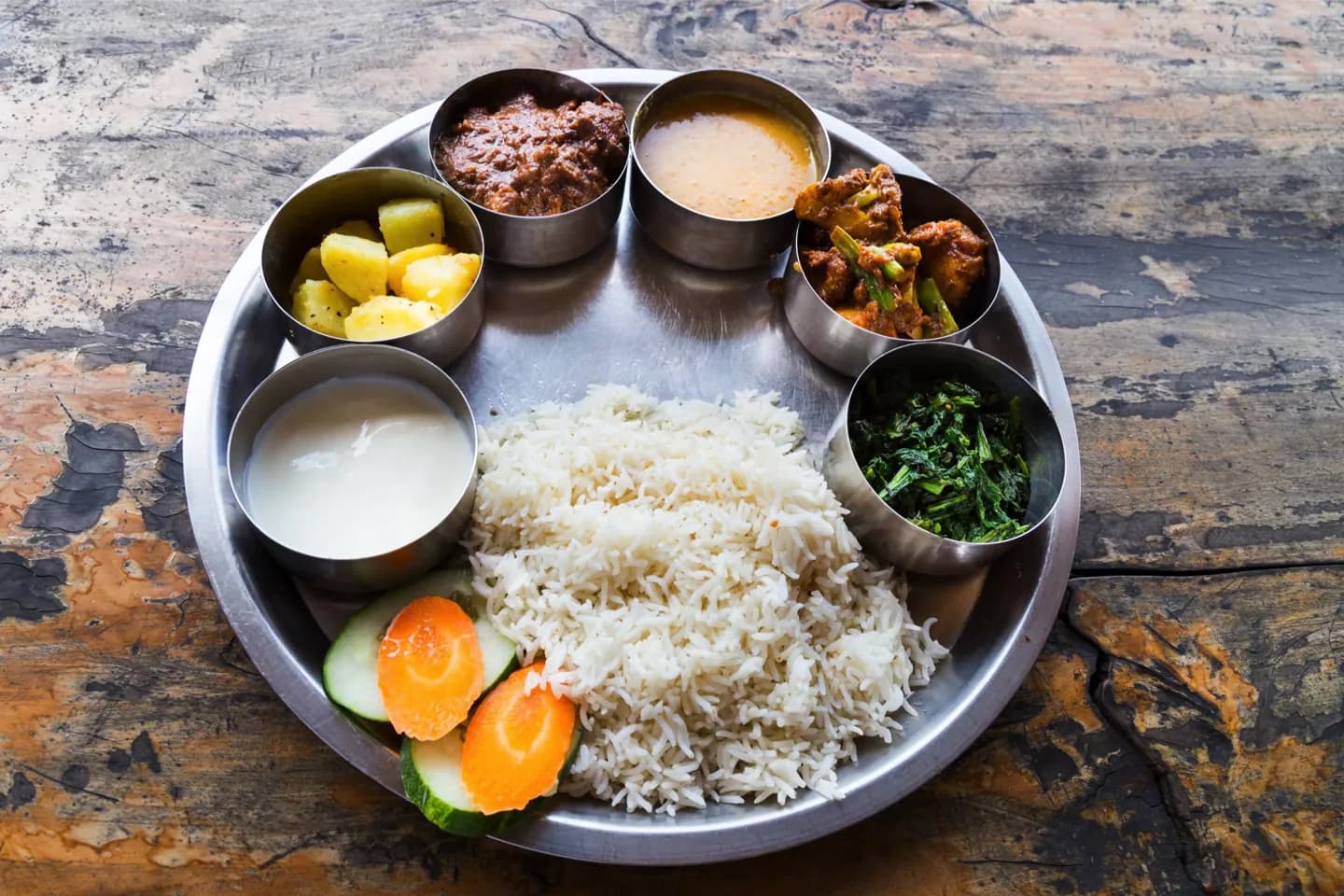
The hills do not always offer the same conditions for irrigated rice as the lowlands, so meals may lean on wheat, maize, millet, buckwheat or barley. Cooked greens and preserved vegetables such as gundruk help carry food through the year. In the Kathmandu Valley, Newar food has its own combinations of beaten rice, pickles, yogurt and festival sweets; it is more revealing to try a named dish than to assume every valley meal resembles a hill dal bhat plate. In the Terai, Tharu and Maithil food traditions use taro, flatbread, fish and other lowland ingredients. These are living traditions with variation between households and restaurants, not rigid menus tied to every member of a community. The practical comparison is simple: start with the staple you recognise, then ask which grain, pickle or side dish belongs to the area.