
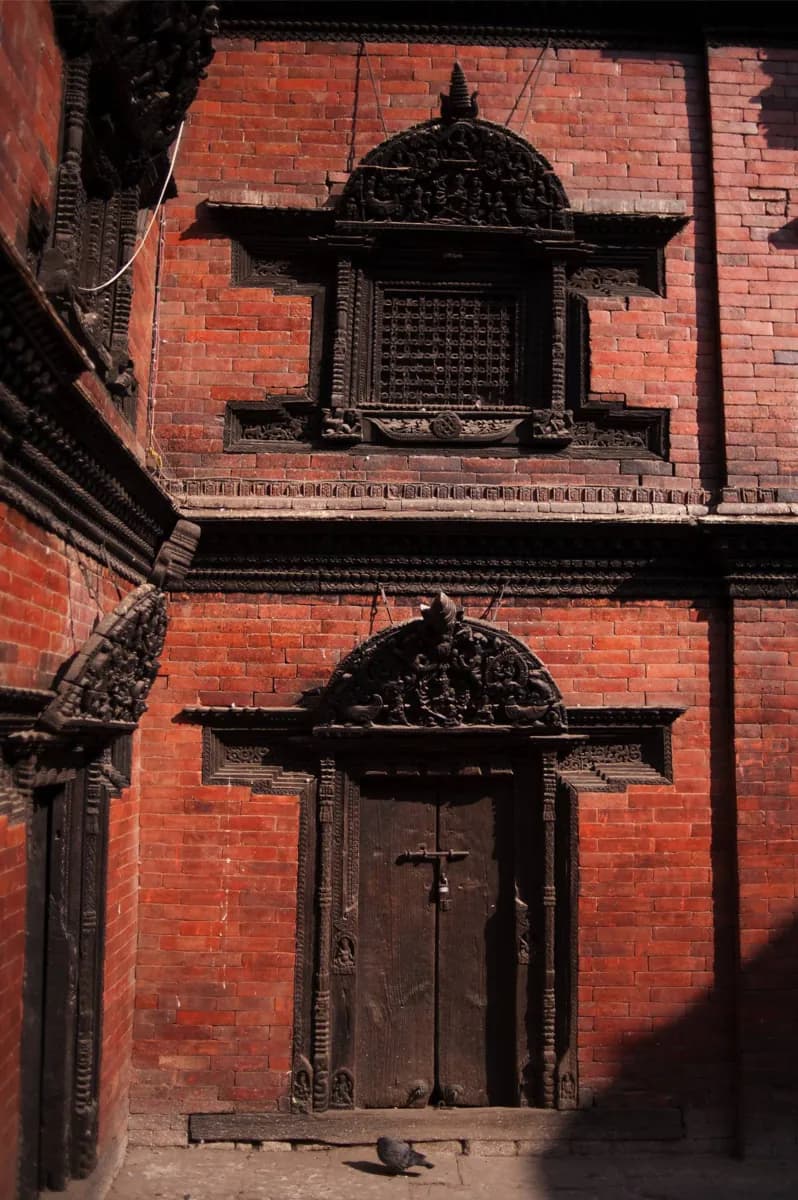
Why go
Trade and court patronage helped the valley towns grow under Malla rulers. The realm later divided among Kathmandu, Patan and Bhaktapur. Visiting more than one center lets you compare how neighboring cities expressed royal power and urban identity. The differences become clearer across several city walks.
The full story
Malla rulers shaped the Kathmandu Valley over several centuries, though their rule was neither uniform nor uninterrupted. Early in the period, trade supported the growth of the towns that became Kathmandu, Patan and Bhaktapur. Jayasthiti Malla brought much of the valley under one rule in the late fourteenth century and codified laws that affected social life. After that consolidation, the valley did not remain a single court. In the late fifteenth century it divided into the kingdoms of Kathmandu, Patan and Bhaktapur. Their rulers competed from cities close enough to visit on the same trip but distinct enough to reward comparison. That history gives a reason to linger at more than one royal square: each was a center of its own kingdom, not an outlying quarter of Kathmandu. Move from one city to another with the division in mind, and the repeated pattern of courts and civic spaces becomes easier to understand.