
Why go
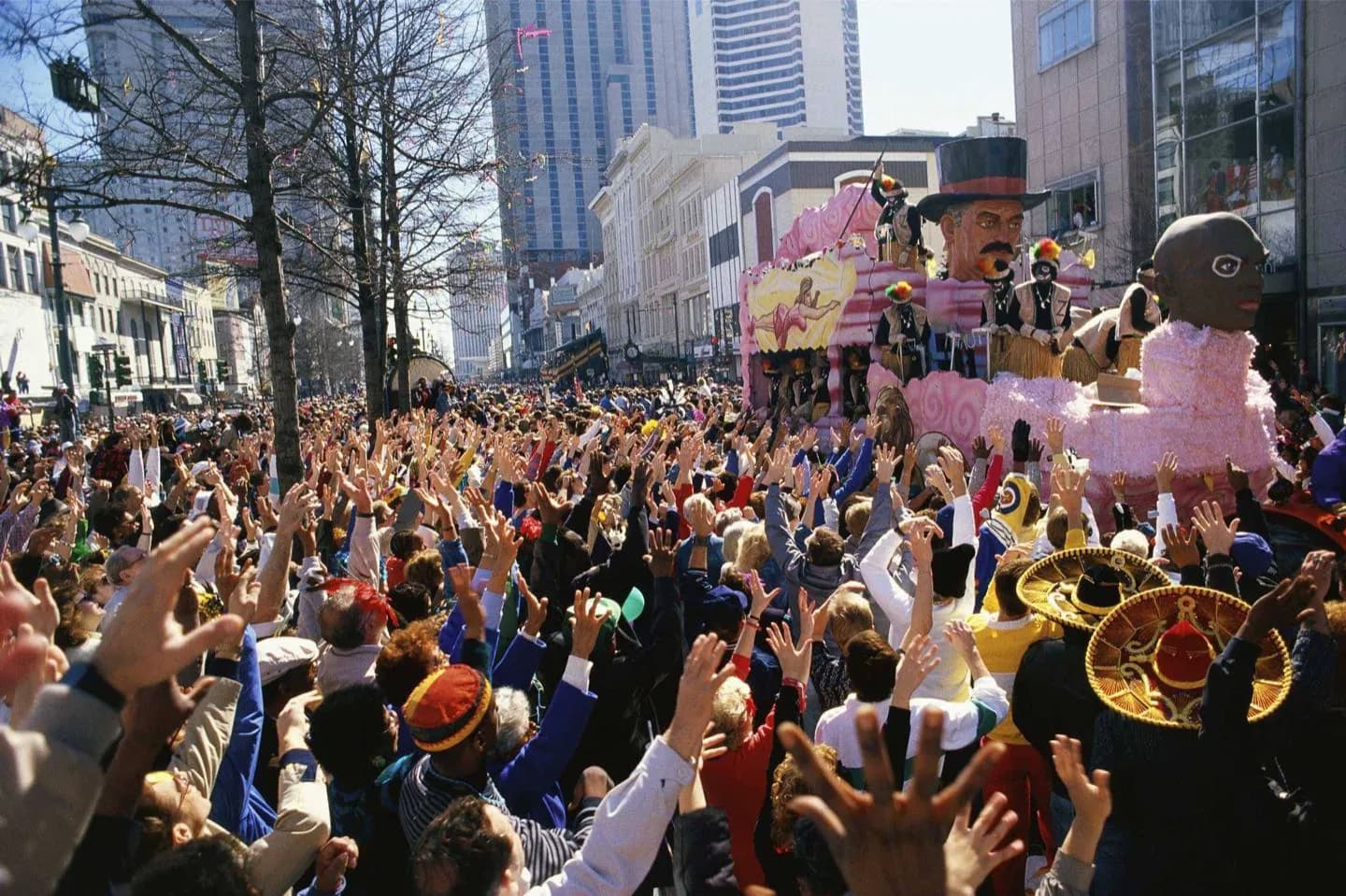
Knowing the structure changes how you experience Carnival. Krewes organize distinct parades, routes shape neighborhood movement, and costumes, throws and marching groups carry histories of class, race and community. Plan around official schedules and local rules, then leave room for the unscripted street life between events.
The full story
Carnival begins before Mardi Gras Day and builds through weeks of parades, balls and neighborhood events. Krewes organize parades with their own histories, themes and membership traditions. Many major processions follow Uptown routes along St. Charles Avenue rather than passing through the narrow French Quarter. Throws from floats, marching bands, dance groups and costumed spectators turn the route itself into the event. The season also includes traditions rooted in Black New Orleans, including Zulu and the work of Mardi Gras Indians, whose hand-sewn suits and community practices carry histories that deserve more than a passing spectacle. On Mardi Gras Day, celebrations spread across neighborhoods and end before the solemn start of Lent. Dates, routes and rules change each year, so use official parade information, protect time for transport disruptions, and treat barriers and private property respectfully.