
Why go
Broadway is a useful street to follow in selected stretches because its diagonal route creates distinctive intersections and links the Financial District, Times Square, Columbus Circle and the Upper West Side. Its changing width and relationship to the grid make a neighborhood walk more legible.
The full story
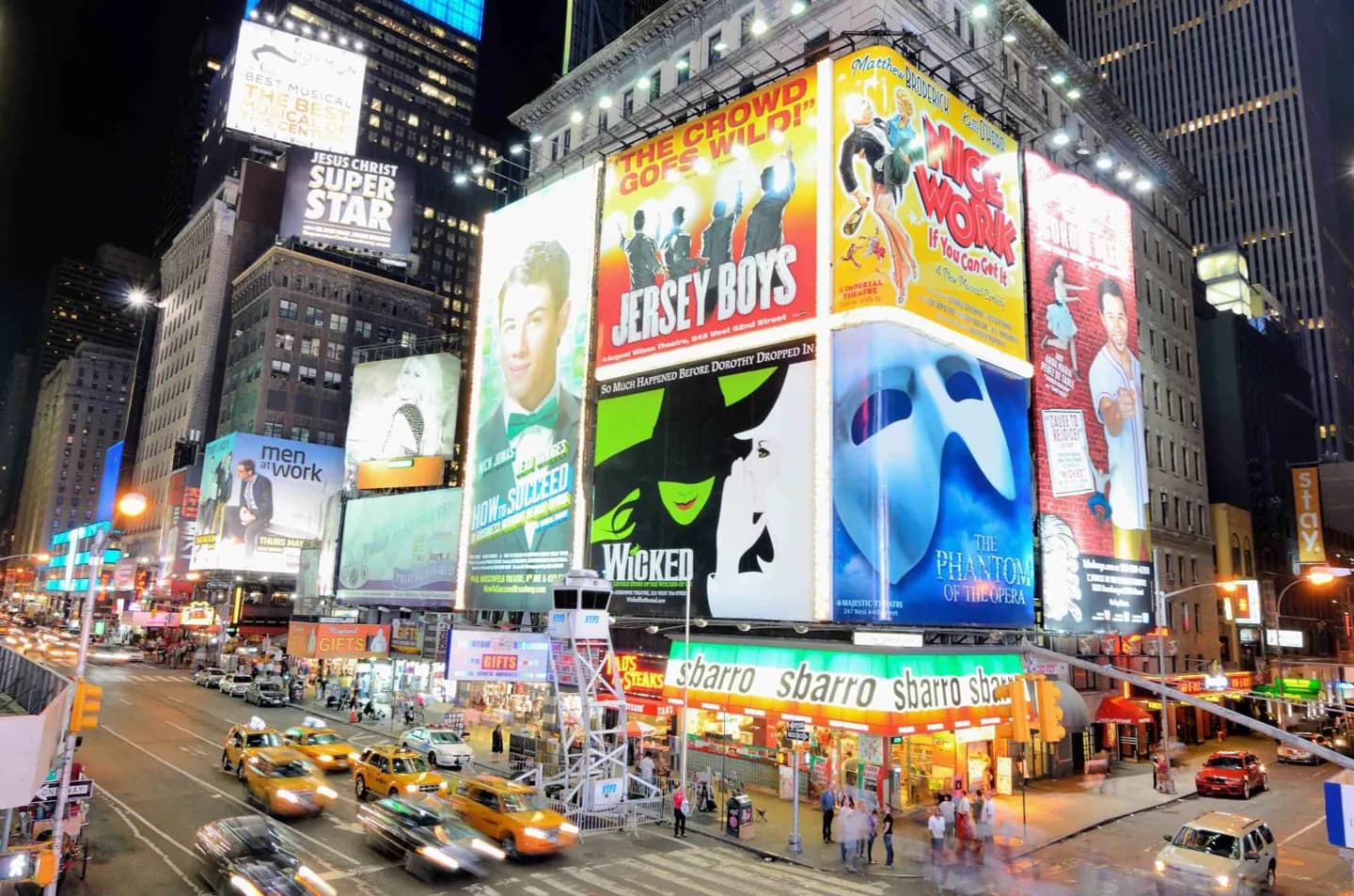
Broadway runs through Manhattan and continues into the Bronx, cutting diagonally across the island's regular street grid. That angle creates several of the city's most recognizable junctions, including Times Square, Herald Square and Columbus Circle. At the southern end, Broadway meets Bowling Green near the Alexander Hamilton U.S. Custom House; farther north from Columbus Circle, it becomes a broad Upper West Side boulevard with landscaped center islands. The street's value is visual and geographic: follow one segment to see how the diagonal repeatedly reshapes Manhattan's otherwise rectilinear avenues. It is also the name attached to the Midtown theater district, although the road itself extends far beyond the theater concentration and carries a much wider civic geography through distinct neighborhoods and historic urban patterns.
Useful to know
- Choose a stretch with a purpose, such as the Financial District, Times Square to Columbus Circle, or the Upper West Side.
- At Columbus Circle, use the change in street width and the nearby Central Park entrance as a natural transition point.