
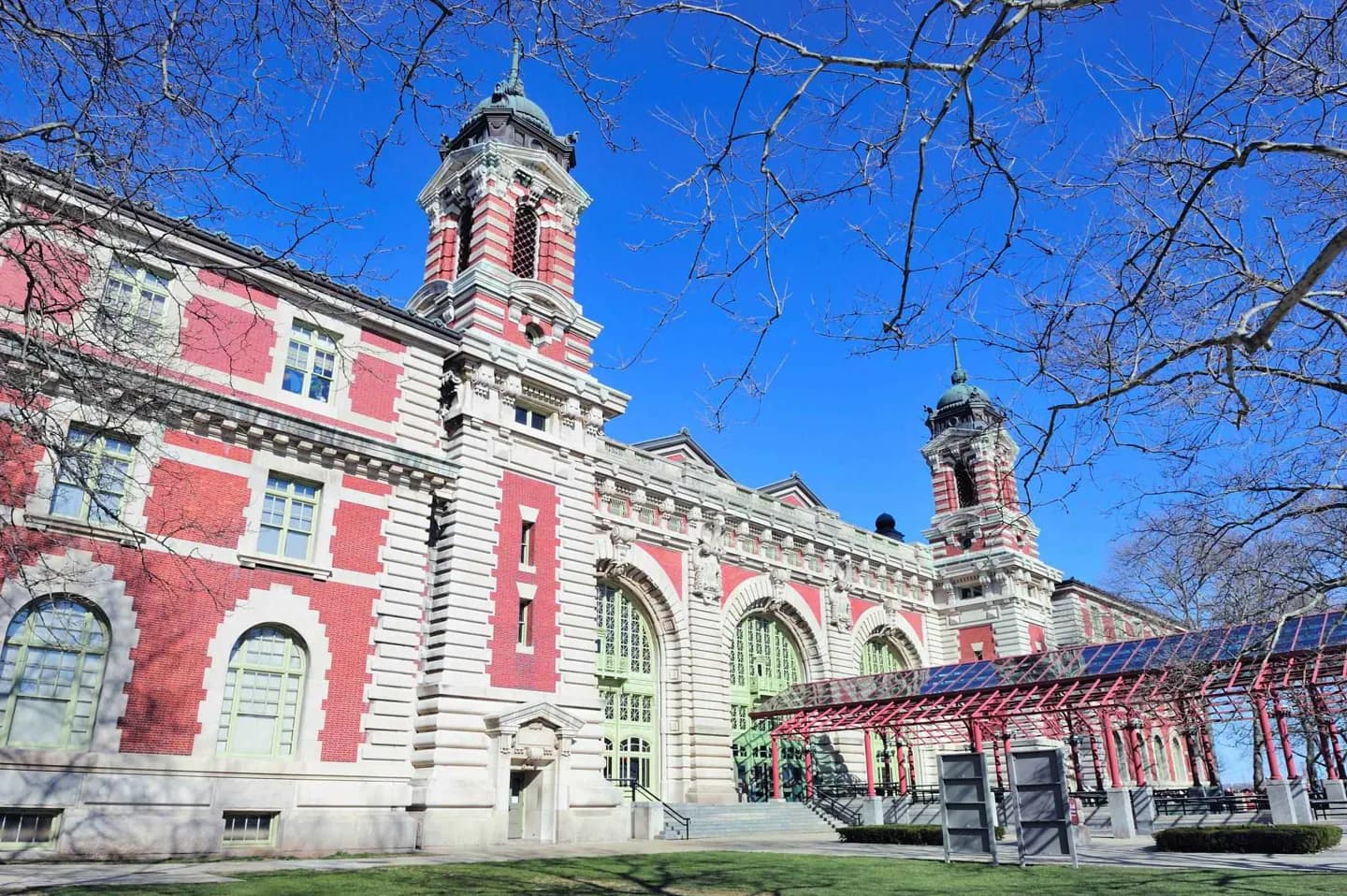
Why go
Ellis Island gives its museum setting unusual weight: more than 12 million immigrants passed through the inspection station between 1892 and 1954. The reclaimed landscape and divided New York–New Jersey geography add a physical dimension to the immigration story beyond the exhibits.
The full story
Ellis Island was the nation's busiest immigrant inspection station from 1892 to 1954, when more than 12 million immigrants entered the United States through it. The island grew substantially through land reclamation between 1892 and 1934, so the modest natural island and the later-built grounds tell different parts of the story. It became part of the Statue of Liberty National Monument in 1965 and has housed an immigration museum since 1990. Most of the island lies in New Jersey under a 1998 Supreme Court decision, although the original island and contiguous areas remain part of New York. Its position in Upper New York Bay makes arrival by water part of understanding why this site was used for federal immigration processing and why the harbor setting matters.
Useful to know
- Plan it as a ferry visit from Lower Manhattan or Liberty State Park, and allow for the crossing as well as the museum.
- The former hospital complex on the south side is not a general walk-around area; focus a first visit on the museum side.