
Why go
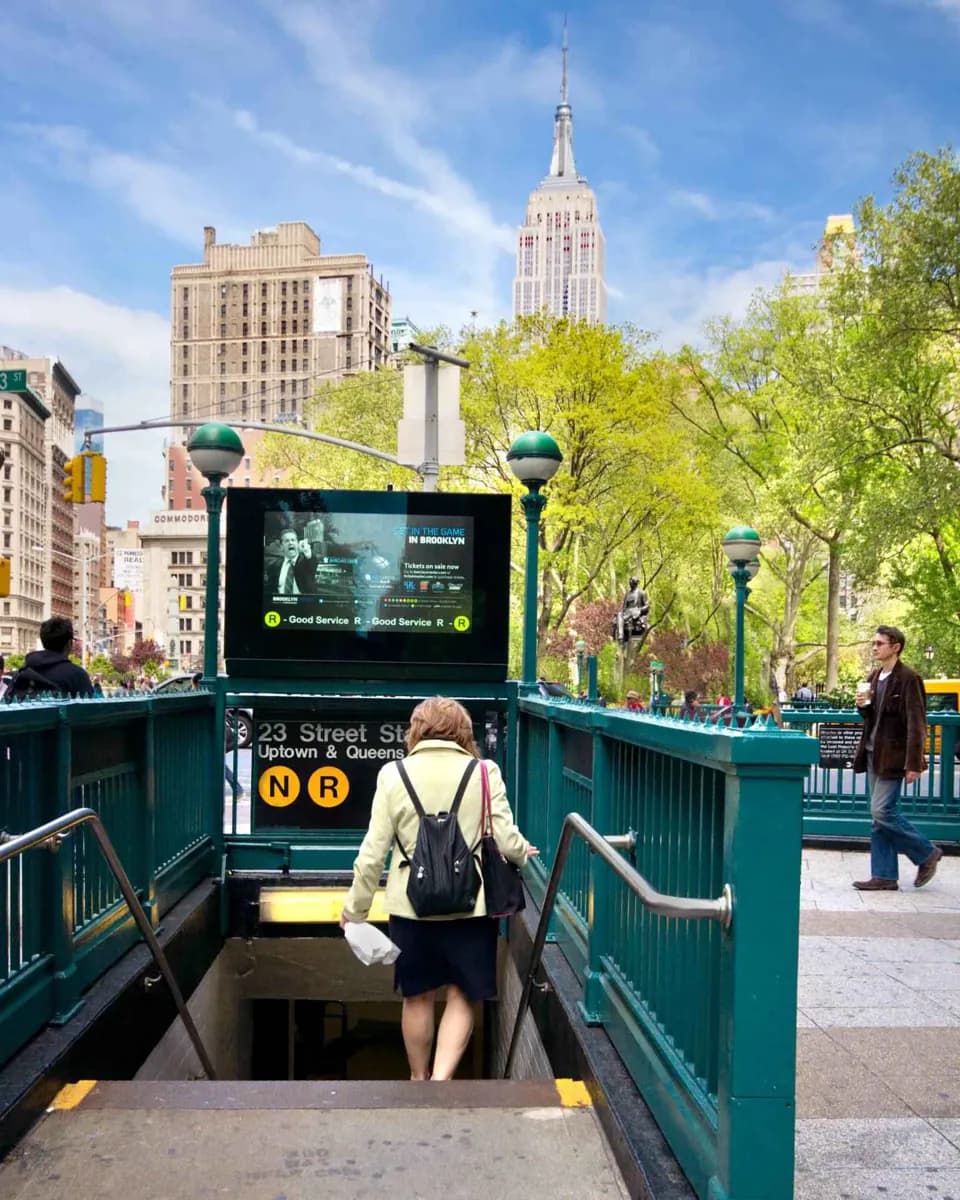
For longer city journeys, the subway usually saves more time than surface travel and connects far beyond the landmark core. Its complexity is manageable once a visitor distinguishes direction, local service, and express service. Stations themselves are part of the experience: they open directly onto neighborhood streets and make the city’s density immediately visible.
The full story
The subway is built for a city of long distances and dense neighborhoods. Signs at the platform and on the train identify the route and direction, but local and express trains may use different tracks. An express train skips selected stations, while a local makes every stop, so the faster train is useful only when it serves the destination. Stations can also have separate entrances for different directions, particularly at smaller stops. Check before passing through the turnstile, because crossing to the other platform may not be possible inside the station. Stations are ventilated from the street and can feel colder in winter or warmer in summer than the trains themselves. Use the official map and real-time service information for payment and service changes, then keep valuables close and stay aware of surroundings when traveling late.