
Why go
A little orientation makes the city far easier to use. The harbor explains its early growth, the boroughs explain its scale, and the subway and commuter rail explain why landmarks that look close on a map can belong to very different days. Its layered populations also make neighborhood choice part of the experience.
The full story
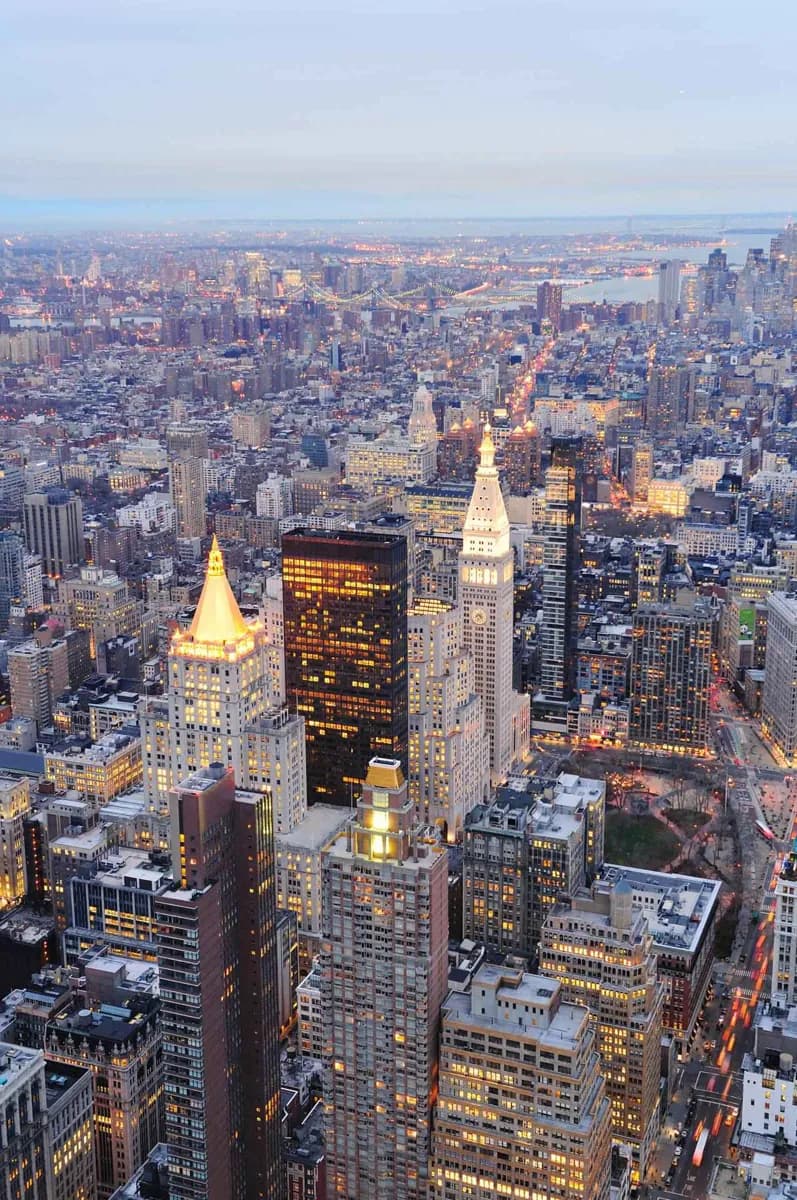
New York City is not simply Manhattan. Its five boroughs are separate counties within one municipal city, joined by bridges, tunnels, ferries, and rail lines. Manhattan's towers are the most familiar image, but the city spreads across islands and mainland terrain around New York Harbor. The Hudson River separates much of the city from New Jersey; the East River is a tidal strait between Manhattan and Long Island. The city became a major entry point to the United States, and successive migrations helped create the dense mix of languages, businesses, and neighborhood identities visitors encounter now. For a short stay, think in clusters: Midtown's landmarks and terminals, Lower Manhattan's port and civic history, or a borough neighborhood with its own park, food, and street life. That approach leaves time to notice the city instead of spending the day crossing it.