
Why go
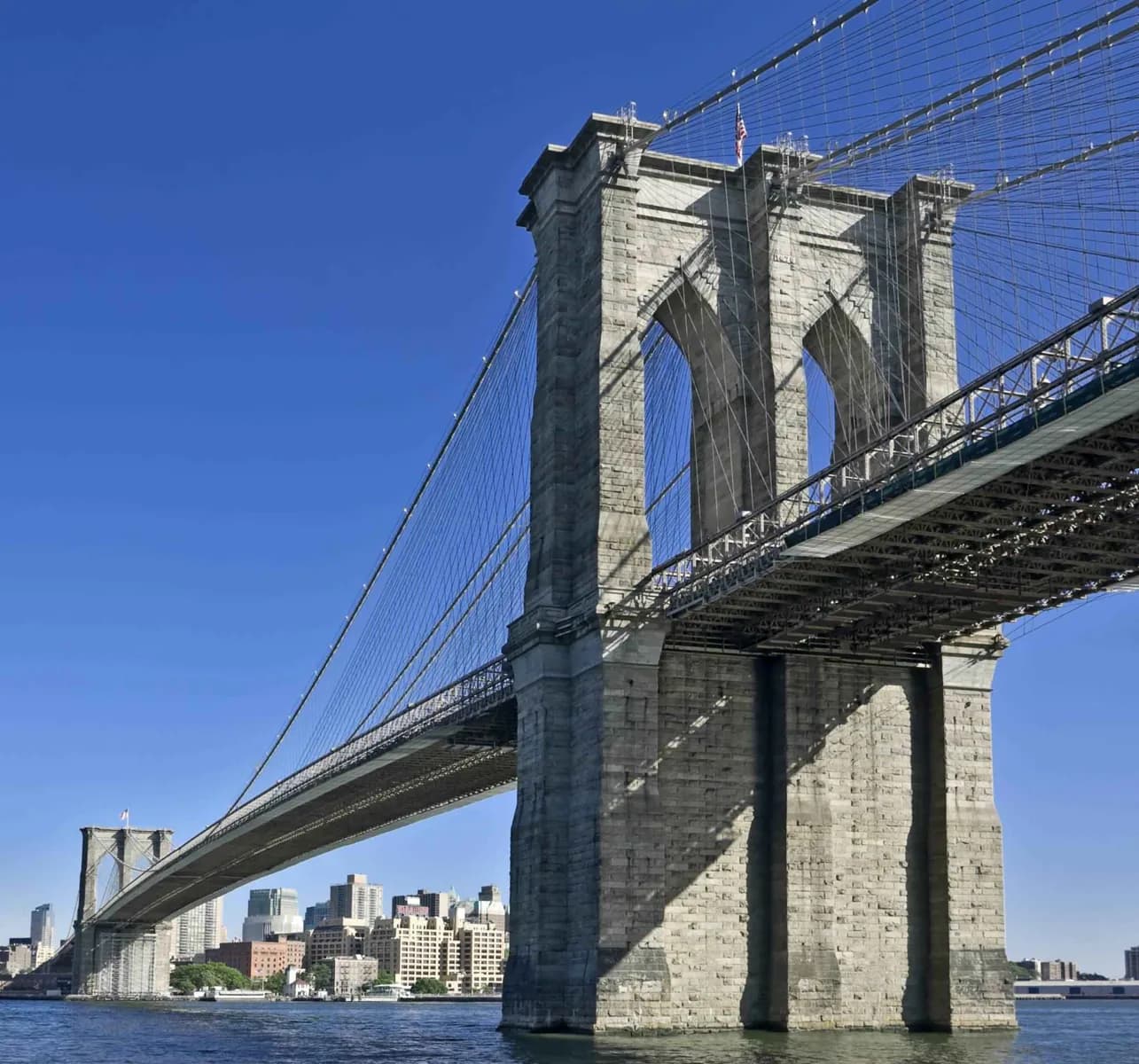
Walking the promenade brings the bridge’s engineering into view at human scale. The towers are more than skyline silhouettes: their arches frame the crossing, while suspension cables and diagonal stays reveal the structure’s unusual hybrid design. The reward is both the river outlook and an understanding of how the two boroughs were connected.
What to look for
- Stone arches frame the elevated pedestrian promenade.
- Diagonal stays supplement the bridge’s sweeping suspension cables.
- The separate protected bicycle path distinguishes cycling from the pedestrian crossing.
The full story
Construction began in 1869 under John Augustus Roebling, who died after an accident while surveying the site. His son Washington took charge, but work beneath the river soon brought another crisis. The towers were built above caissons: large timber chambers supplied with compressed air, where workers excavated the riverbed as the structures sank. Many developed decompression sickness, then known as caisson disease. Washington was also injured and continued supervising from an apartment overlooking the works. This history gives the masonry towers a less obvious significance. Their foundations depended on dangerous work in spaces hidden far below today’s promenade. When the bridge opened in 1883, it was the world’s longest suspension bridge and the first built with steel wire. Its combination of suspension cables and supporting diagonal stays remains visible to anyone crossing on foot.
Useful to know
- Pair the crossing with Brooklyn Bridge Park for a second perspective on the river and towers.
- Review NYC DOT advisories before departure when construction could narrow the promenade.
Your next visit
Estimated · Declared scenario and planning estimates; no live opening, weather, queue or booking service.
Outdoor visit · 10–15 min
Public-space walk and exterior observation only; no interior, garden, tower or ticketed admission included. Durations and walking are estimates. Check temporary restrictions and park or market opening times.
Outdoor visit · 15–25 min
World planning estimate; admission, opening, visit duration and access need checking.