
Why go
Washington Square provides a clear starting anchor before the streets turn toward the more residential West Village and Hudson-side blocks. The layout is readable on foot: angled routes, smaller buildings and university surroundings reveal different urban patterns. Its links to artists and social movements add depth to the streetscape rather than replacing it with a list of famous residents.
What to look for
- Washington Square Park anchors the neighborhood near New York University.
- Angled streets in the western Village depart from Manhattan’s perpendicular grid.
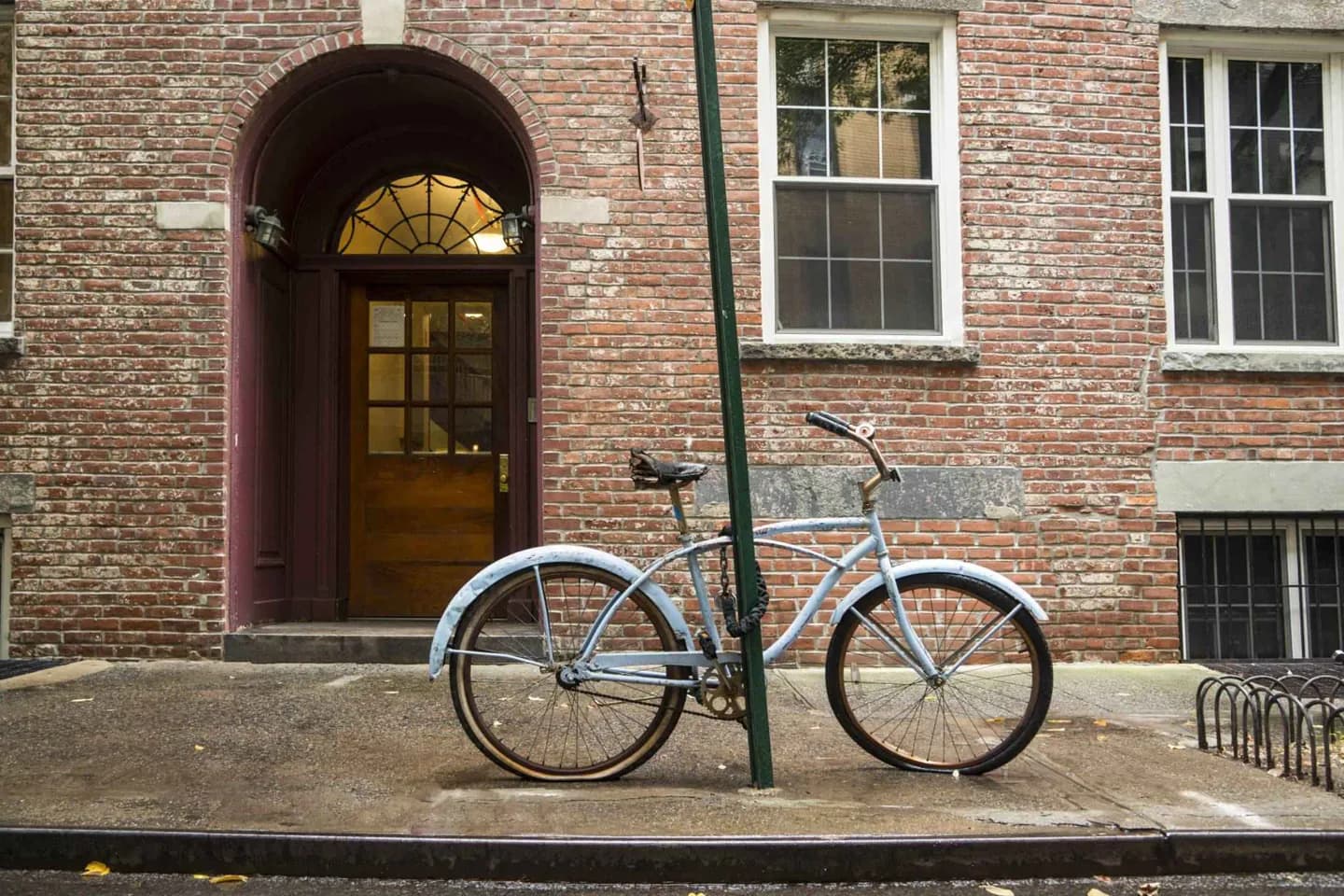
- Residential side streets contrast with the university-centered blocks around the square.
The full story
Greenwich Village grew from a rural settlement north of Manhattan’s early European town. Its older street pattern survived as the city expanded around it, unlike the regular grid imposed on much of the island through the Commissioners’ Plan of 1811. The angled streets are therefore a durable clue to the neighborhood’s development, not merely a picturesque exception to the city’s usual layout. The Village later became associated with artists, Bohemian life, the Beat movement, counterculture and the modern LGBT movement. New York University and the New School added institutional presences alongside homes and studios. Subsequent gentrification and commercialization changed the circumstances that once drew many artists here. A walk is most revealing when these histories are held together: the smaller residential blocks and university surroundings remain visible, while cultural associations explain why this relatively compact neighborhood occupies such a large place in New York’s identity.
Useful to know
- Begin at Washington Square and choose a western walk through the smaller side streets.
- Use street names and a map through the irregular layout instead of relying only on numbered-street directions.
Your next visit
Estimated · Declared scenario and planning estimates; no live opening, weather, queue or booking service.
Outdoor visit · 30–45 min
World planning estimate; admission, opening, visit duration and access need checking.