
Why go
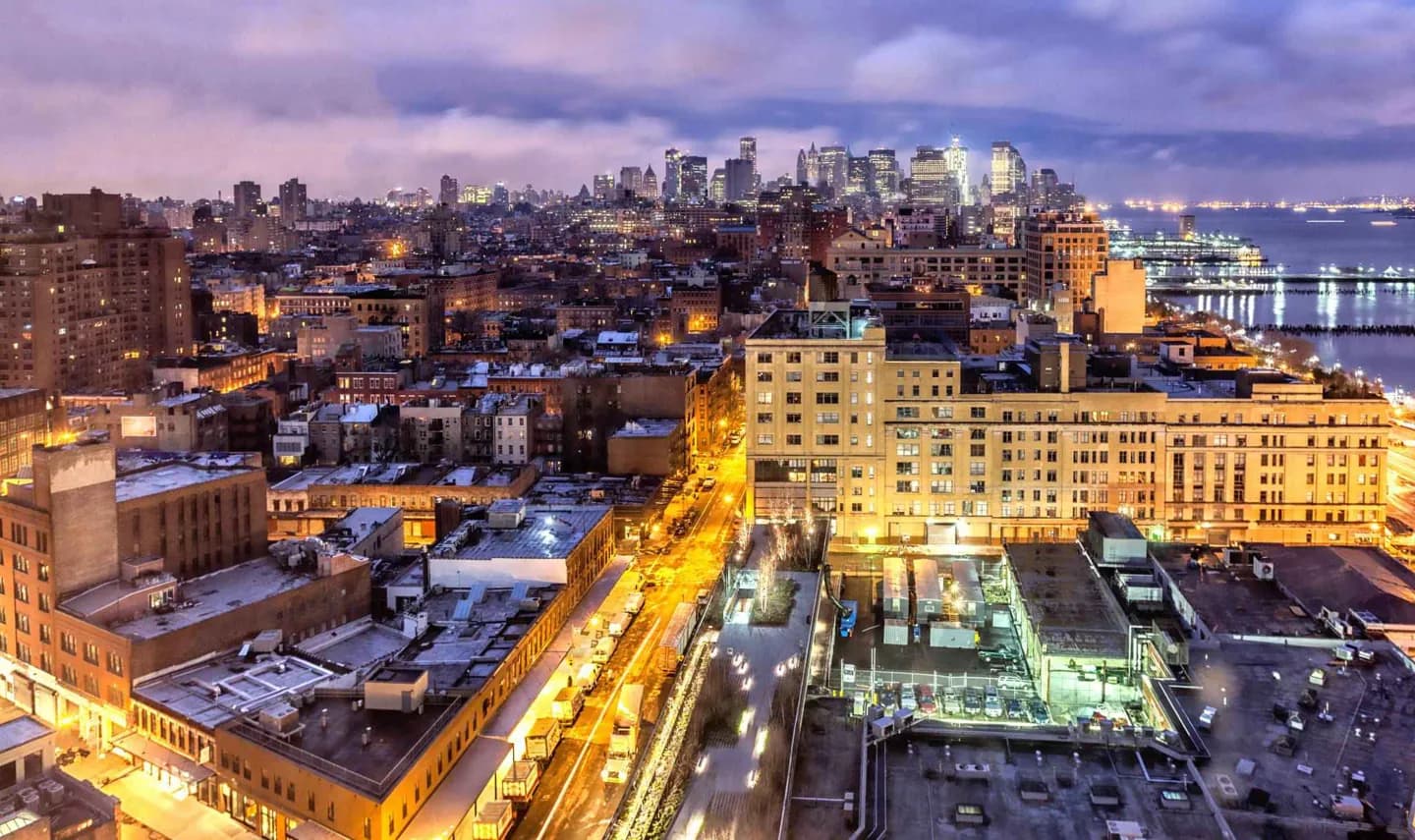
Metal awnings and irregular streets give the district a texture that differs from Midtown’s grid and towers. Its position between the West Village, Chelsea and Hudson waterfront makes it a useful walking connection, while the surviving market architecture explains the name. The interest is in reading reused buildings and street surfaces as well as entering individual venues.
What to look for
- Belgian-block streets preserve the former market district’s texture.
- Metal awnings remain a visible feature of the industrial buildings.
- Irregular junctions reveal the meeting of Greenwich Village streets and Manhattan’s grid.
The full story
The district’s irregular street pattern arose where the older Greenwich Village layout met the grid established by the Commissioners’ Plan of 1811. During the mid-nineteenth century, housing and industry developed together here: rowhouses stood among workshops, freight facilities and heavier manufacturing. That mixture preceded the more specialized market district suggested by its present name. Two markets helped reshape the area after the Civil War. Gansevoort Market began trading regional produce on former freight yards in 1879, and West Washington Market moved meat, poultry and dairy transactions to the riverfront in 1884. By the early twentieth century, slaughterhouses and packing plants had made meat processing a dominant activity. The Belgian-block paving, utilitarian building forms and metal awnings belong to that working environment. Their survival gives today’s shops, dining and culture a physical connection to the older economy rather than a purely nostalgic neighborhood name.
Useful to know
- Combine the district with the West Village, Chelsea or Hudson waterfront rather than treating it as an isolated stop.
- Select individual cultural or dining venues separately from the neighborhood street walk.
Your next visit
Estimated · Declared scenario and planning estimates; no live opening, weather, queue or booking service.
Outdoor visit · 30–45 min
World planning estimate; admission, opening, visit duration and access need checking.