
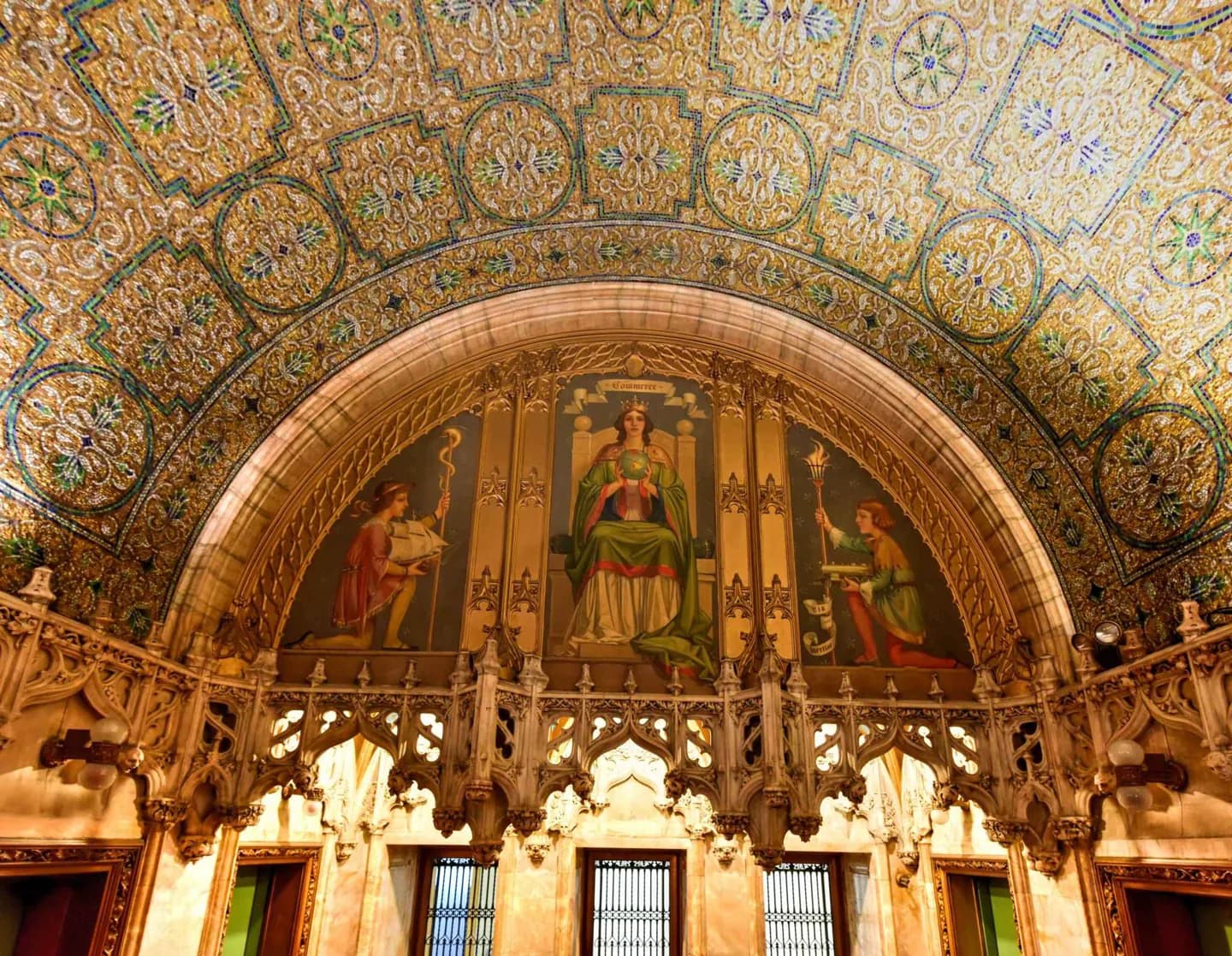
Why go
The tower rewards looking above street level: long vertical piers carry the eye toward a richly detailed crown, and its pale terra-cotta surface disguises the modern office structure beneath. Across from the low City Hall, it makes the leap from civic monument to commercial skyscraper especially easy to see.
What to look for
- Gothic ornament concentrates around the tower’s highly visible crown.
- Pale glazed terra-cotta panels give the exterior a stone-like appearance.
- Unbroken vertical piers accentuate the building’s upward movement.
The full story
Frank Woolworth commissioned Cass Gilbert in 1910 to design a corporate headquarters on Broadway. The initial proposal was far shorter than the tower eventually built. As the project grew, it became an architectural statement about commercial ambition rather than simply a place to house offices. The building opened in 1913 and remained the world’s tallest until rival New York towers overtook it in 1930. Gilbert’s Gothic vocabulary made this new building type seem connected to older monumental architecture. A contemporary nickname, the Cathedral of Commerce, captured that deliberate resemblance. Yet much of the apparent masonry decoration was manufactured glazed terra-cotta. Ornament at the crown was enlarged so that it could be read from the pavement far below. That adjustment matters when looking up: details that seem proportionate from the street were designed specifically for an unusually tall commercial building.
Useful to know
- View the facade from the City Hall surroundings as part of a Lower Manhattan architecture walk.
- Plan an exterior stop; enter only for a separately confirmed event or visit.
Your next visit
Estimated · Declared scenario and planning estimates; no live opening, weather, queue or booking service.
Outdoor visit · 30–45 min
World planning estimate; admission, opening, visit duration and access need checking.