
Why go
Read the city through places you can still visit: Terra Amata for early settlement, Cimiez for Roman Cemenelum, and the Promenade des Anglais for the winter visitors who gave it a name. This context helps you divide time between the coast, the hill and the museums instead of seeing Nice only as a seaside stop.
The full story
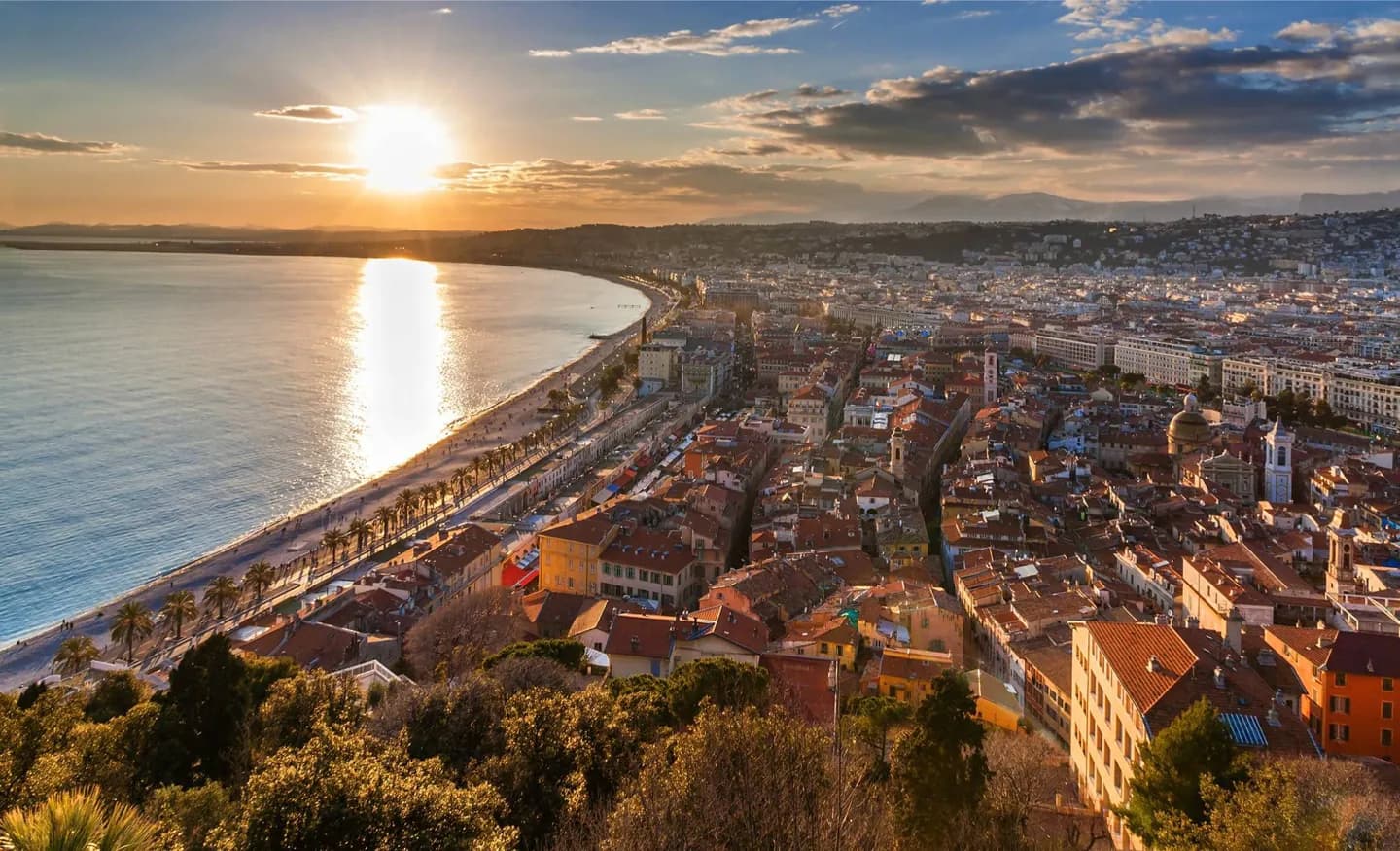
Nice occupies a Mediterranean coast where successive settlements left traces in different parts of the city. Terra Amata preserves evidence of very early human activity. Greeks from Massilia, now Marseille, established Nikaia; the Roman town of Cemenelum developed separately on the hill at Cimiez. That split is still useful for a visitor: the ancient remains are uphill, while the waterfront is the familiar image of modern Nice. Nice later belonged to Savoy and the Kingdom of Sardinia before becoming part of France in 1860. The change helps explain a city whose local history does not fit a simple French seaside story. In the eighteenth century, British aristocratic families began spending winters here. The Promenade des Anglais takes its name from those visitors and makes the resort chapter visible along the shore. For a different strand of the city's identity, look to its museums. Artists including Henri Matisse and Marc Chagall were drawn to the light and landscape around Nice. A day in Cimiez or a museum visit gives that artistic connection more substance than the coastal view alone.