
Why go
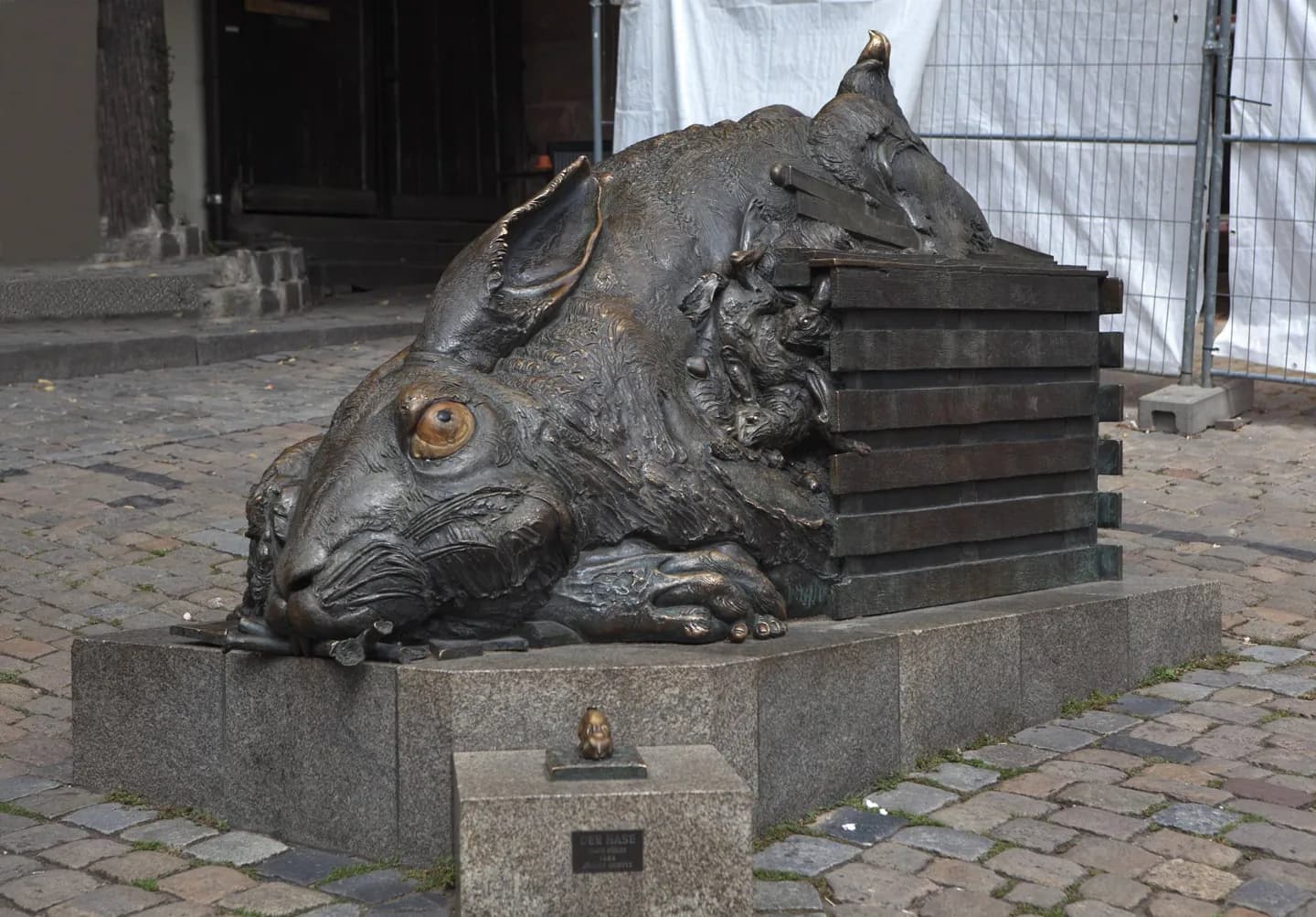
Albrecht Dürer, the printer Anton Koberger, and the makers of the Nuremberg Chronicle show how art and printed knowledge met here. Their work offers a useful counterpoint to the Imperial Castle: Nuremberg's influence came from skilled people and books as well as from imperial gatherings.
The full story
Nuremberg was an important place for printing, art, and scientific work in the late Middle Ages and Renaissance. Anton Koberger printed the Nuremberg Chronicle in 1493, combining extensive text with woodcut images. Its production drew on local artists and a network of people who wrote, translated, financed, and distributed books. Albrecht Dürer, born in Nuremberg, made prints that carried his work widely; he also produced star charts in 1515 with Johannes Stabius. Regiomontanus had earlier worked on astronomy in the city, and the main part of Copernicus's work was printed here in 1543. Sculpture adds another strand: Veit Stoss, Adam Kraft, and Peter Vischer are associated with Nuremberg. So is the tradition of the Meistersingers, later represented by Hans Sachs in Wagner's opera. These are different forms of making, but they share a city where craft, image, and ideas crossed paths. Start with Dürer and the Chronicle if you want the clearest connection between what was made locally and what circulated across Europe.