
Why go
The court was designed before the first case began. Its four Allied powers supplied judges and prosecutors, and its charter defined the charges for major European Axis war criminals. Knowing this structure helps you understand who made decisions in the courtroom and why Nuremberg was selected.
The full story
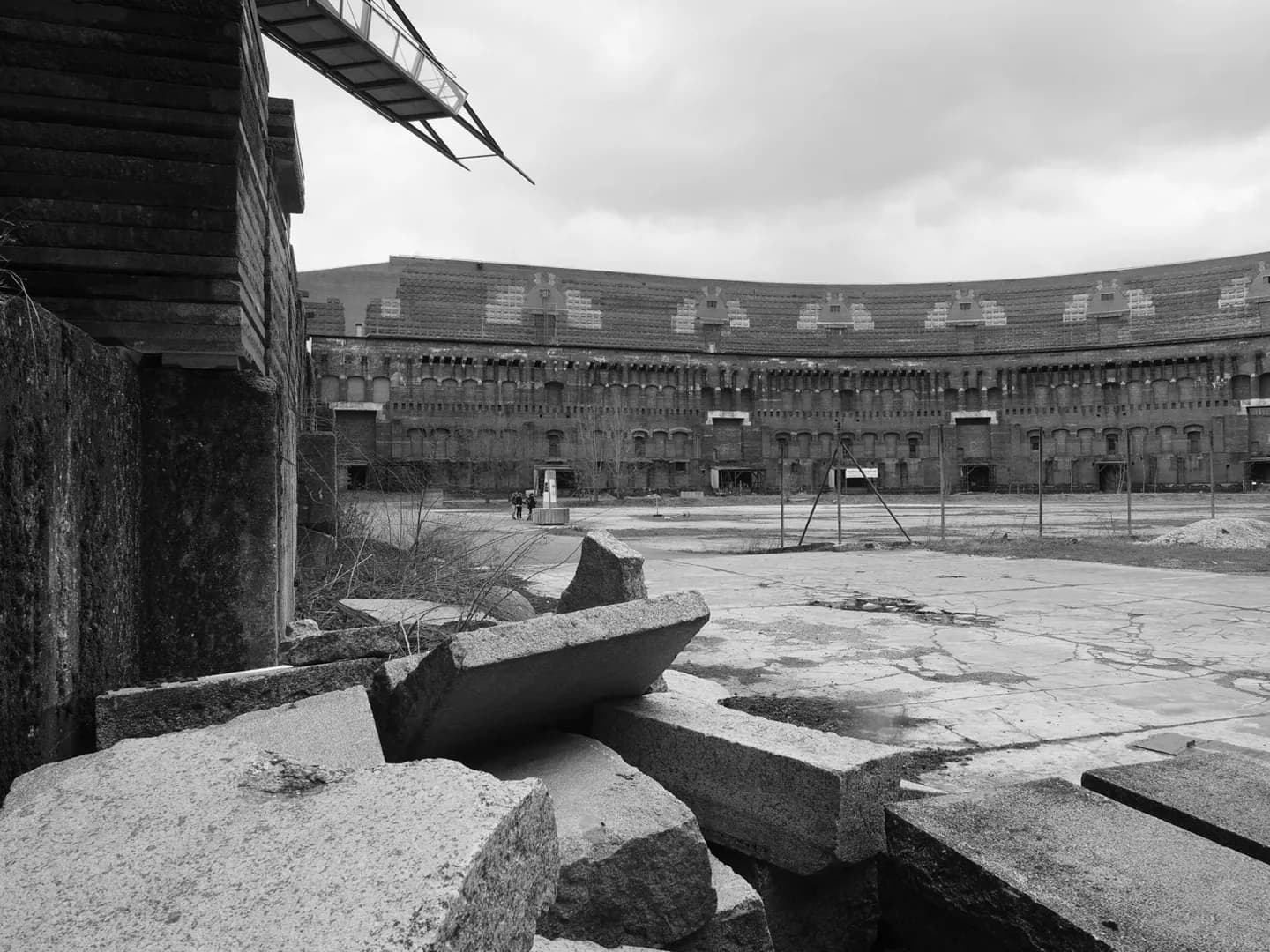
The United States, United Kingdom, Soviet Union, and France agreed the London Charter on 8 August 1945. It set the legal basis for the International Military Tribunal and defined its task of trying major European Axis war criminals. Each power supplied a judge and an alternate, as well as a prosecution team. The tribunal's structure reflected cooperation among the wartime allies, even though their legal systems and political aims differed. Nuremberg was chosen for practical and symbolic reasons. The Palace of Justice was spacious and largely intact after bombing, with a prison connected to the court complex. The city had also hosted Nazi Party rallies and the Reichstag session that passed the Nuremberg Laws. Placing the trial here confronted that political history in the same city. Berlin was considered, but the first major trial took place in Nuremberg. At the Palace of Justice, the physical courtroom and the tribunal's four-power design belong to one story: a court created by the victors to hear evidence against individual Nazi leaders.