
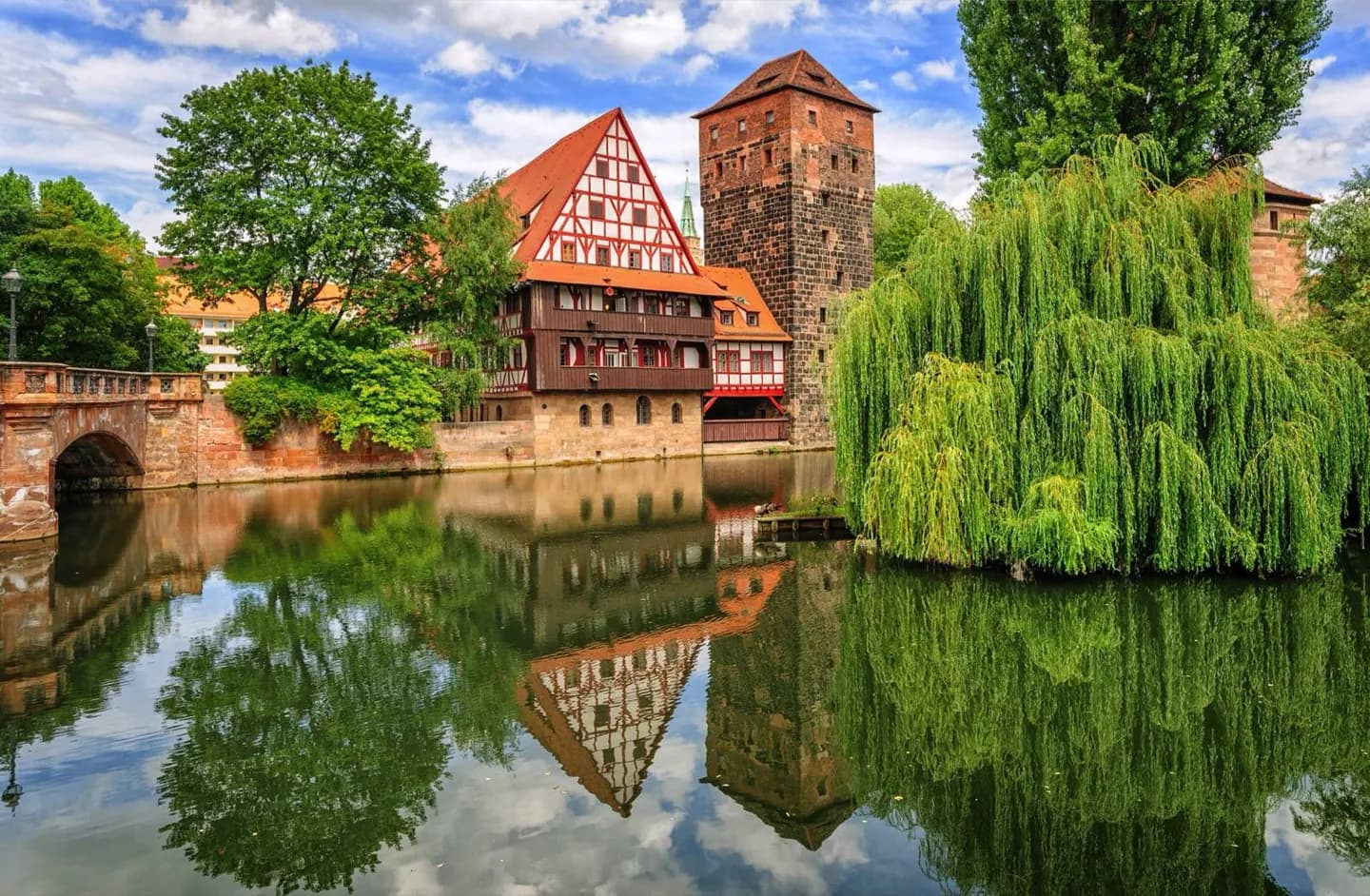
Why go
The castle's rocky setting is part of one explanation for the name Nuremberg. Noris belongs to Renaissance and later writing instead: a Latinizing nickname became a personified city figure. Knowing the difference gives the castle and images of Noris separate meanings when you encounter them.
The full story
There is no single settled explanation for the name Nuremberg. One proposed origin connects it with a word for the rock on which the castle was built; another links it to a personal name, Noro. The city's name grew around the castle and its settlement, but the competing theories should remain theories. Noris entered the story much later. In the early sixteenth century, the humanist poet Helius Eobanus Hessus used a Latinizing form of the city's name in the phrase 'Noris amoena.' He drew on Latin names used for Nuremberg in chronicles. In 1650, the physician Johann Helwig used Noris as the name of a nymph in a poem. The figure then became a symbol of the city. When you see the castle and an image called Noris, you are looking at two different layers of local identity: a medieval settlement tied to a rocky stronghold and a literary personification created centuries afterward.