
Why go
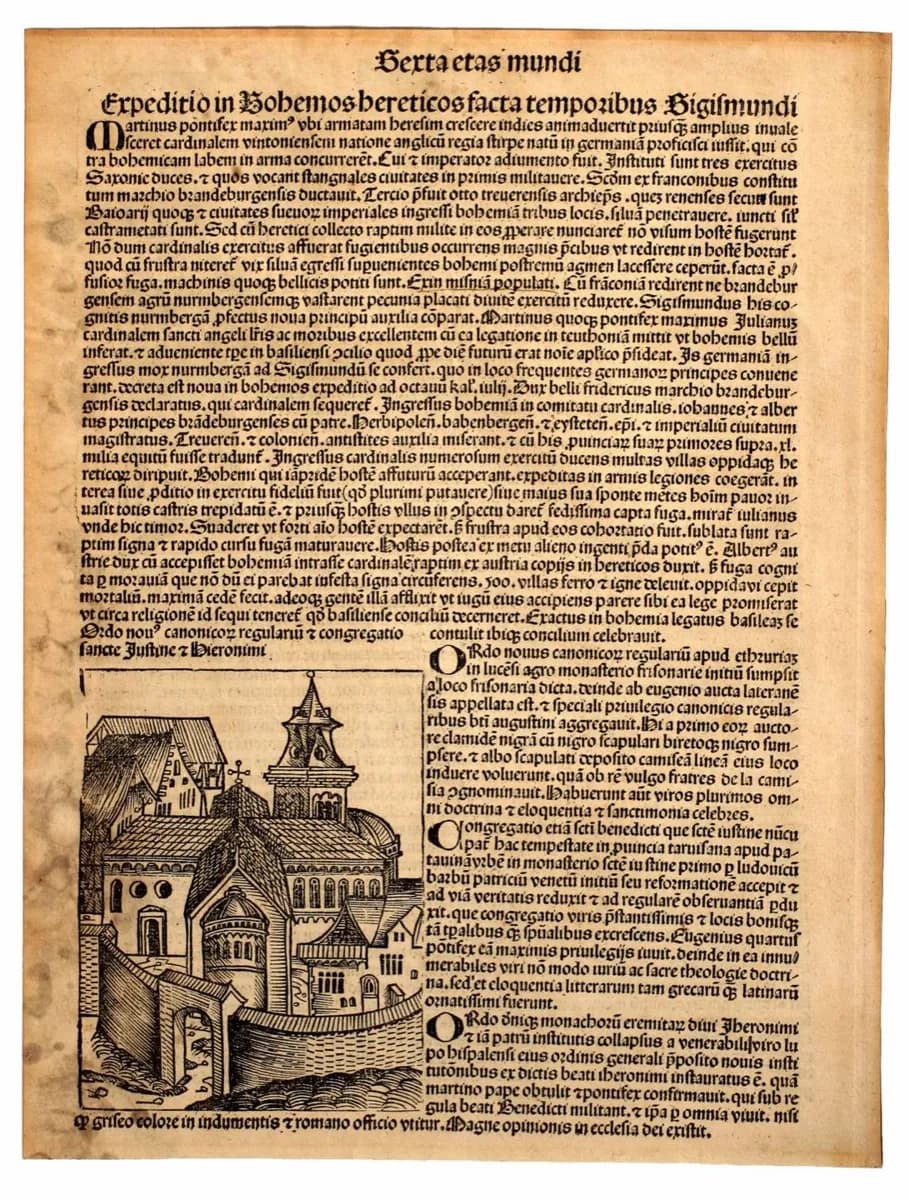
The Chronicle is a concrete way to understand Nuremberg's printing culture. Hartmann Schedel compiled the text; Anton Koberger printed Latin and German editions; artists prepared the woodcuts. Notice how images and writing share the page, carrying a view of the world through a commercial print shop.
The full story
The Nuremberg Chronicle appeared in 1493, near the beginning of European book printing. Hartmann Schedel assembled a world history that followed biblical chronology and included accounts and images of cities. A German version was translated by Georg Alt, and Anton Koberger printed both Latin and German editions in Nuremberg. The project was collaborative. Nuremberg merchants Sebald Schreyer and Sebastian Kammermeister commissioned the work, while Michael Wolgemut and Wilhelm Pleydenwurff oversaw its image design and woodcuts. Contracts set out the responsibilities of the patrons, artists, and printer. This makes the Chronicle more than a single author's book: it shows the city's craft and commercial networks working together. Its pages put text beside repeated and newly arranged woodcut images, allowing many readers to encounter a richly illustrated account of the world. When looking at a copy or reproduction, pay attention to the relationship between words and city images. The book explains how Nuremberg could turn local skill into an object circulated far beyond the city.