
Why go
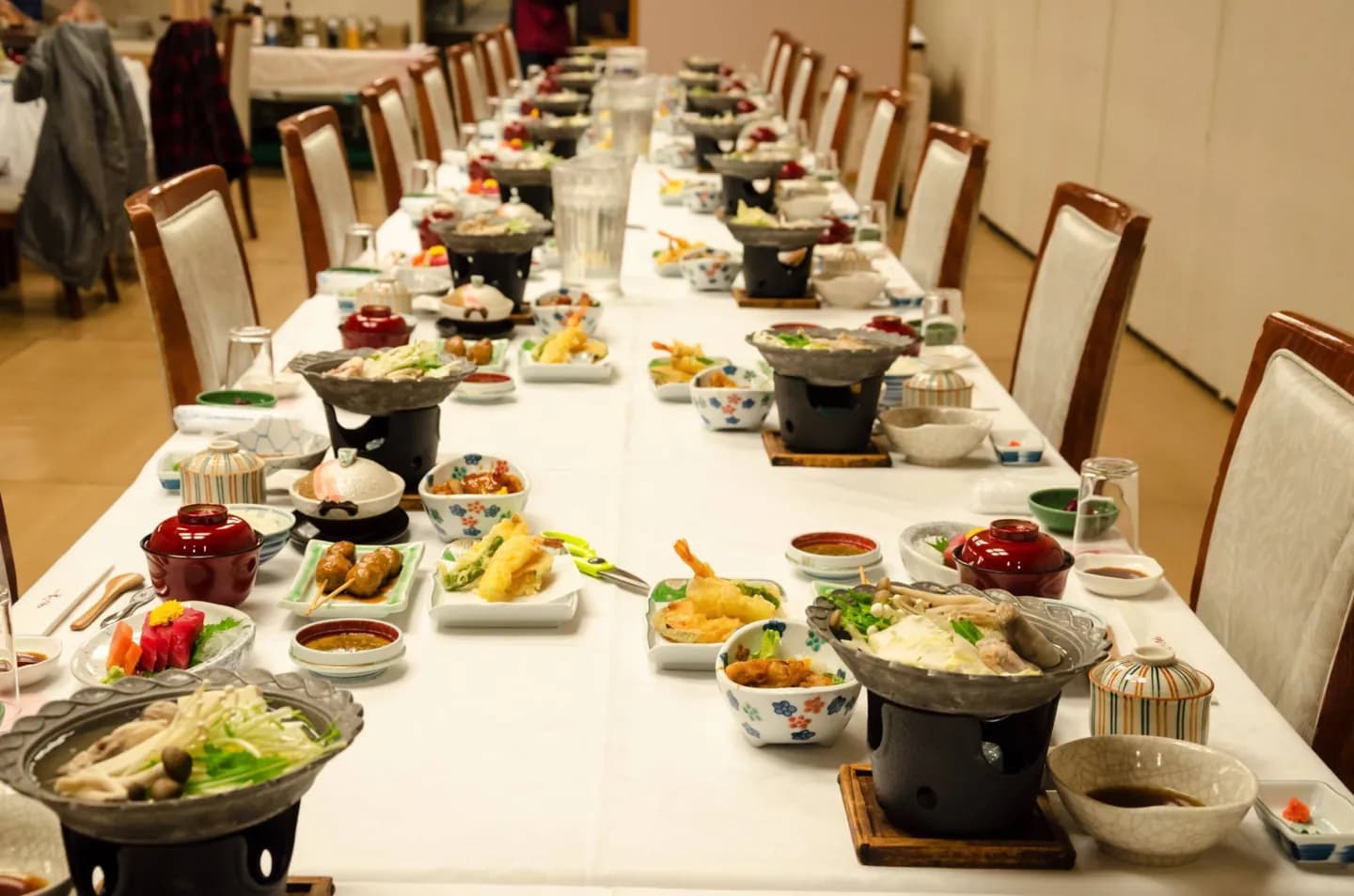
Japanese dining etiquette becomes clearer when you understand its purpose. Tatami rooms, shared dishes, bowls, chopsticks and set phrases all shape how a meal is paced and shared, especially in a home or traditional restaurant during a meal with others.
The full story
A traditional dining room may use a low table on tatami, where shoes are removed before stepping onto the mats. Seating can reflect the host and guest relationship, so wait to be shown where to sit. Before a meal, an oshibori towel is for cleaning hands rather than face or table. Itadakimasu is commonly said before eating, and gochisōsama deshita after the meal. Bowls of rice or soup may be lifted toward the mouth. Chopsticks are held near their upper end; do not leave them upright in rice or pass food directly from one pair of chopsticks to another, since both actions recall funeral rites. At a shared dish, use serving chopsticks when they are provided. These habits are less a test than a way to keep a meal considerate and easy to share. Watch the setting, follow the host’s lead, and ask staff when you are unsure.