
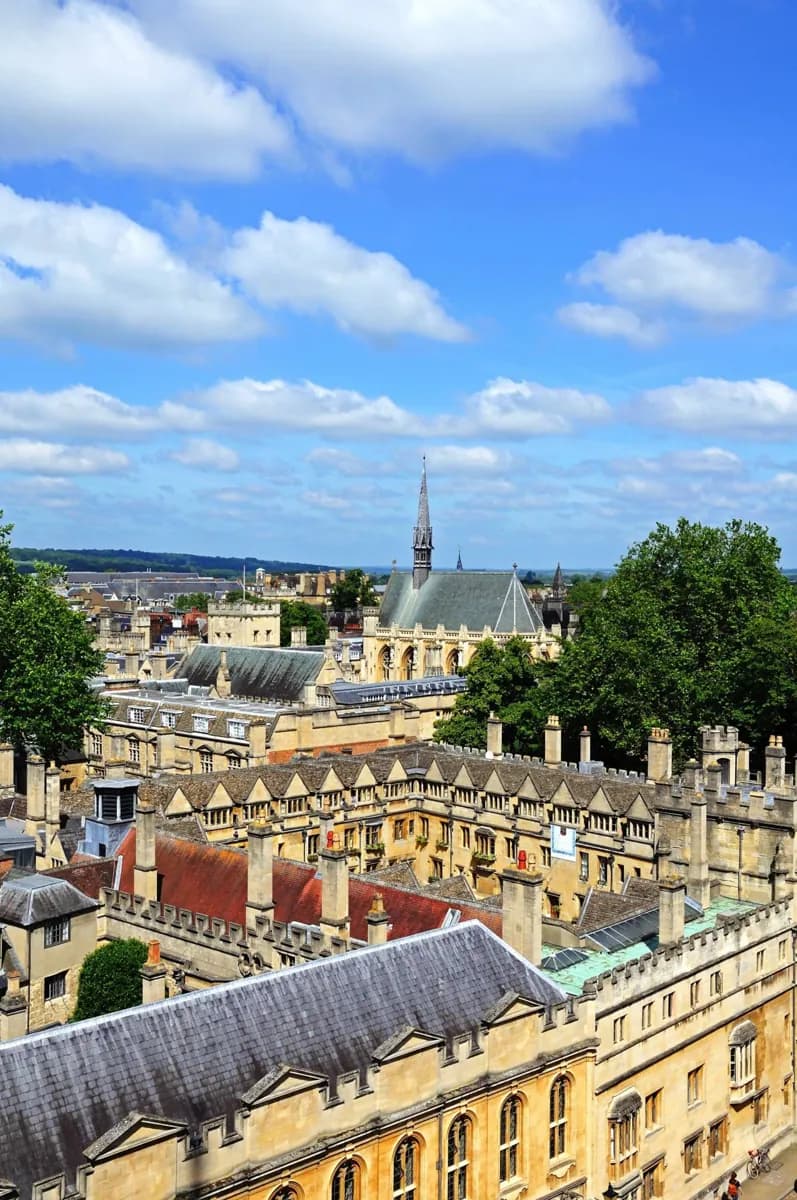
Why go
The Radcliffe Camera, Sheldonian Theatre and college walls give the centre its familiar silhouette, but the Covered Market and Town Hall reveal a city with its own civic life. Oxfordshire is the surrounding county; its distant towns and landscapes are separate trips, not extensions of a central Oxford stroll.
The full story
Oxford grew around river crossings and a market town, then acquired the colleges, libraries and ceremonial buildings that now shape its centre. The University of Oxford has no single campus. Its colleges and departments occupy many sites, so a walk around Radcliffe Square shows only part of it. The Bodleian Library, University Church of St Mary the Virgin and Sheldonian Theatre each served a different function in university life. Nearby, the Covered Market and Town Hall speak to Oxford’s trading and civic history. The city also grew beyond the old core through publishing, rail links and car production at Cowley. That wider story helps explain why Oxford is more than a group of medieval quads. Matthew Arnold’s phrase “city of dreaming spires” describes a view of its skyline, but the lived city includes residential districts and work beyond the university. For a first visit, begin with the close-set landmarks around Broad Street and Radcliffe Square, then follow the subject that interests you into a college, museum or neighbourhood.