
Why go
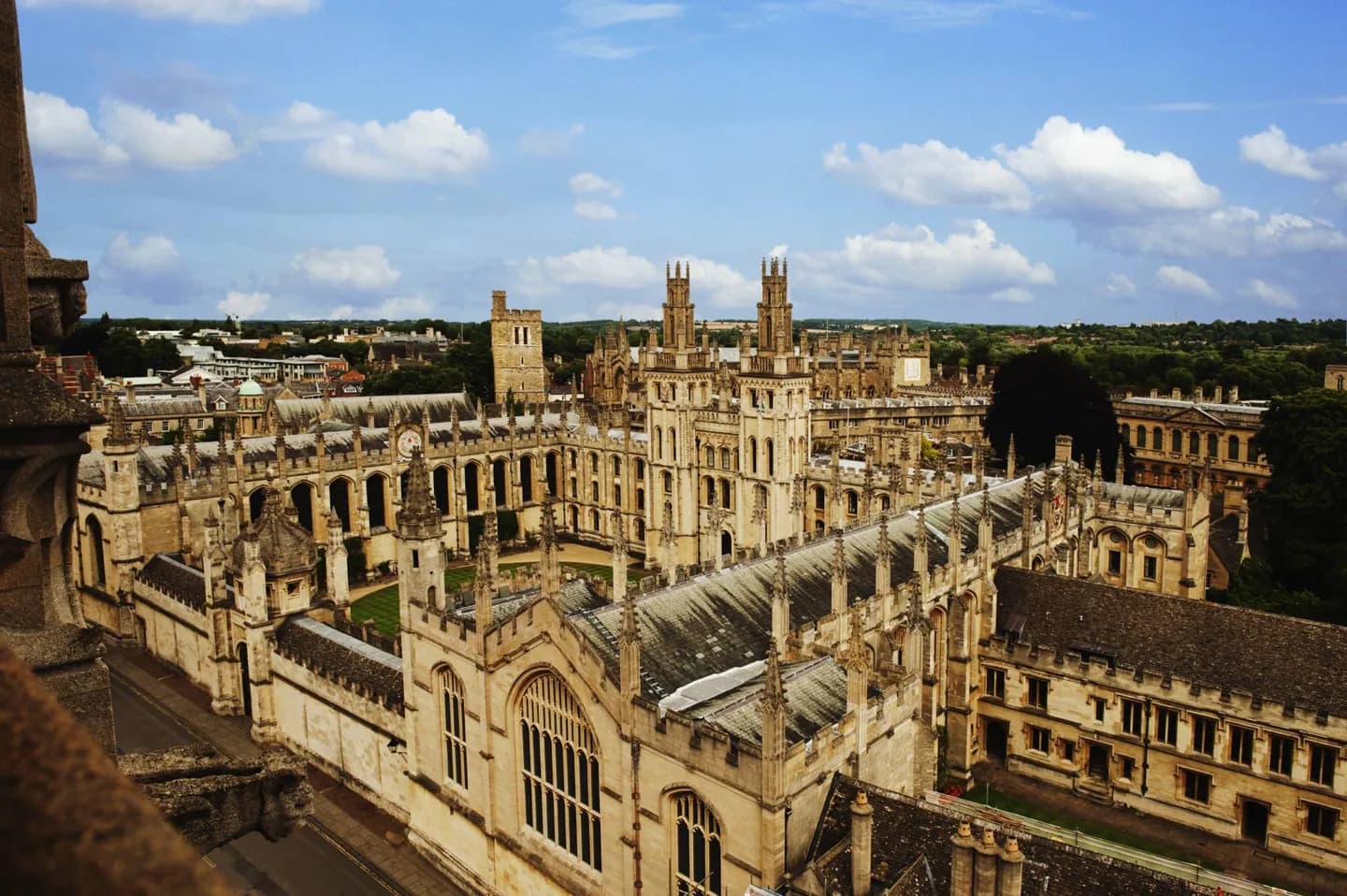
The city's history explains why a walk can move so quickly between civic Oxford and separate university colleges. St Frideswide's religious foundation, medieval town privileges and the rise of halls and colleges all left different kinds of traces. Christ Church and the older college areas become more meaningful when seen as parts of that longer growth.
The full story
The early settlement's name points to a ford, when crossing the rivers mattered to the town's position. A foundation associated with St Frideswide dates to the eighth century; Oxford appears in the Anglo-Saxon Chronicle in 912. Medieval Oxford was both a market and political town and a place of religious houses. The university appears in records from the twelfth century, but it did not begin as one enclosed campus. Teaching took place in halls before colleges became the more durable form of student community. St Edmund Hall preserves that older hall identity, while University College, Balliol and Merton belong to the first phase of college foundations in the thirteenth century. Oxford also became a crossroads with coaching inns; a railway connection to London followed in 1844. This distinction between town and university helps explain the city centre today: college gates and quadrangles sit among public streets, churches and civic buildings. A walk linking the older university area with St Aldate's and Christ Church reveals overlapping histories rather than a single building that stands for all of Oxford.
Useful to know
- Walk between public streets and selected college sites to see how the town and university developed together.