
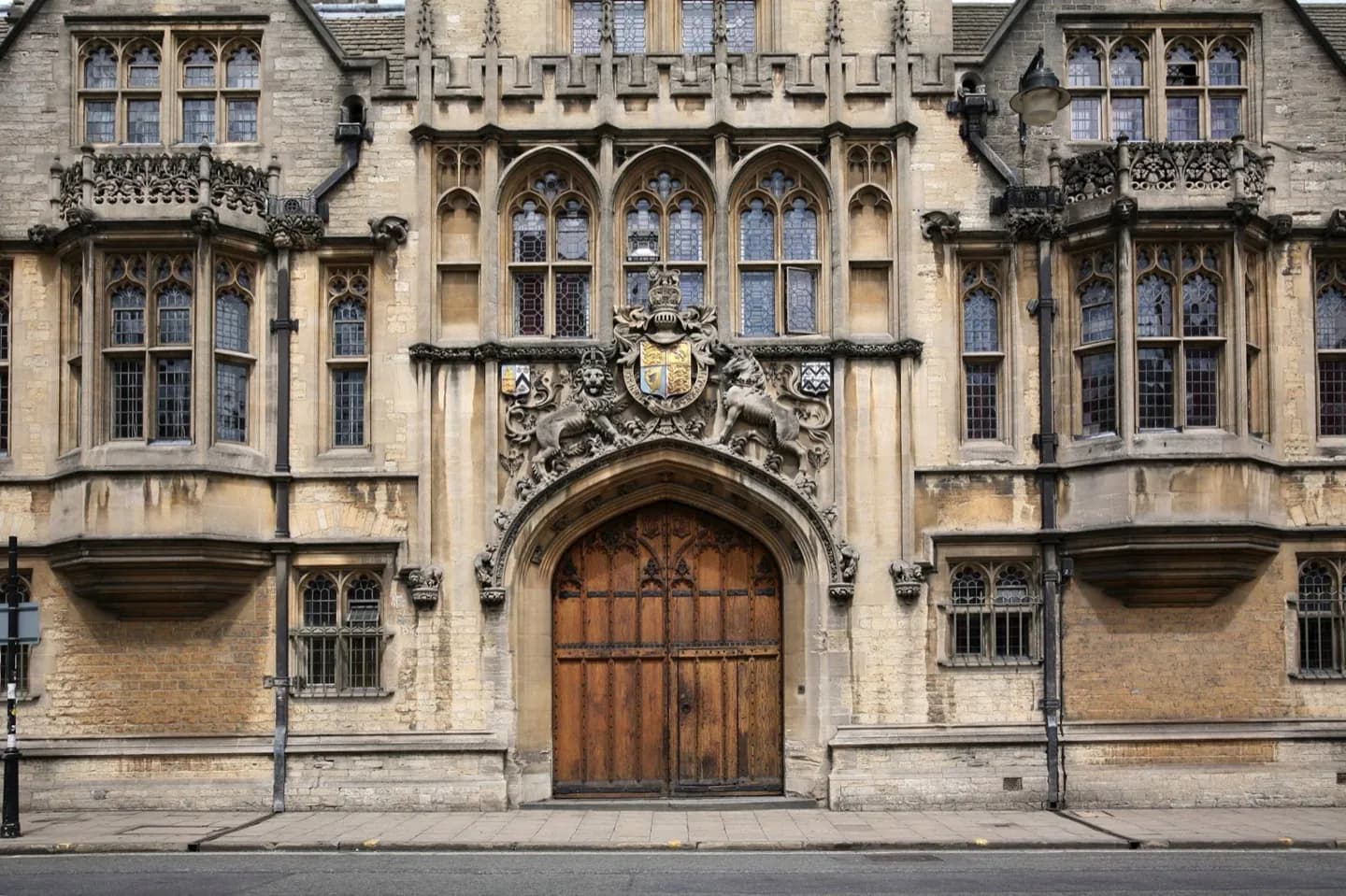
Why go
This history explains why Oxford’s old academic buildings hold several intellectual traditions at once: Renaissance language study, Reformation disputes, Royalist politics and experimental science. Wadham College and the Bodleian give those broad changes recognisable anchors. Their nearby sites make the changes easier to follow on foot.
The full story
Renaissance scholarship brought renewed attention to Greek and biblical texts at Oxford. Scholars including William Grocyn and John Colet belonged to this changing intellectual world. The English Reformation then altered the university’s religious setting; some Catholic scholars left for continental Europe. Teaching moved beyond its medieval habits even as religious divisions shaped who could study and take degrees. In the seventeenth century Archbishop William Laud codified university statutes and supported the University Press and Bodleian Library. Oxford’s university sided strongly with Charles I during the Civil War, while many in the town favoured Parliament. The university’s colleges were also places of scientific exchange. At Wadham College, John Wilkins guided meetings of a group that included Robert Boyle, Robert Hooke and Christopher Wren; this network helped lead towards the Royal Society. When you pass from the Bodleian’s scholarly buildings towards a college such as Wadham, the short walk spans changes in language study, religion, politics and science. None belongs to a single picturesque “old Oxford”: each changed what the university taught and whom it served.