
Why go
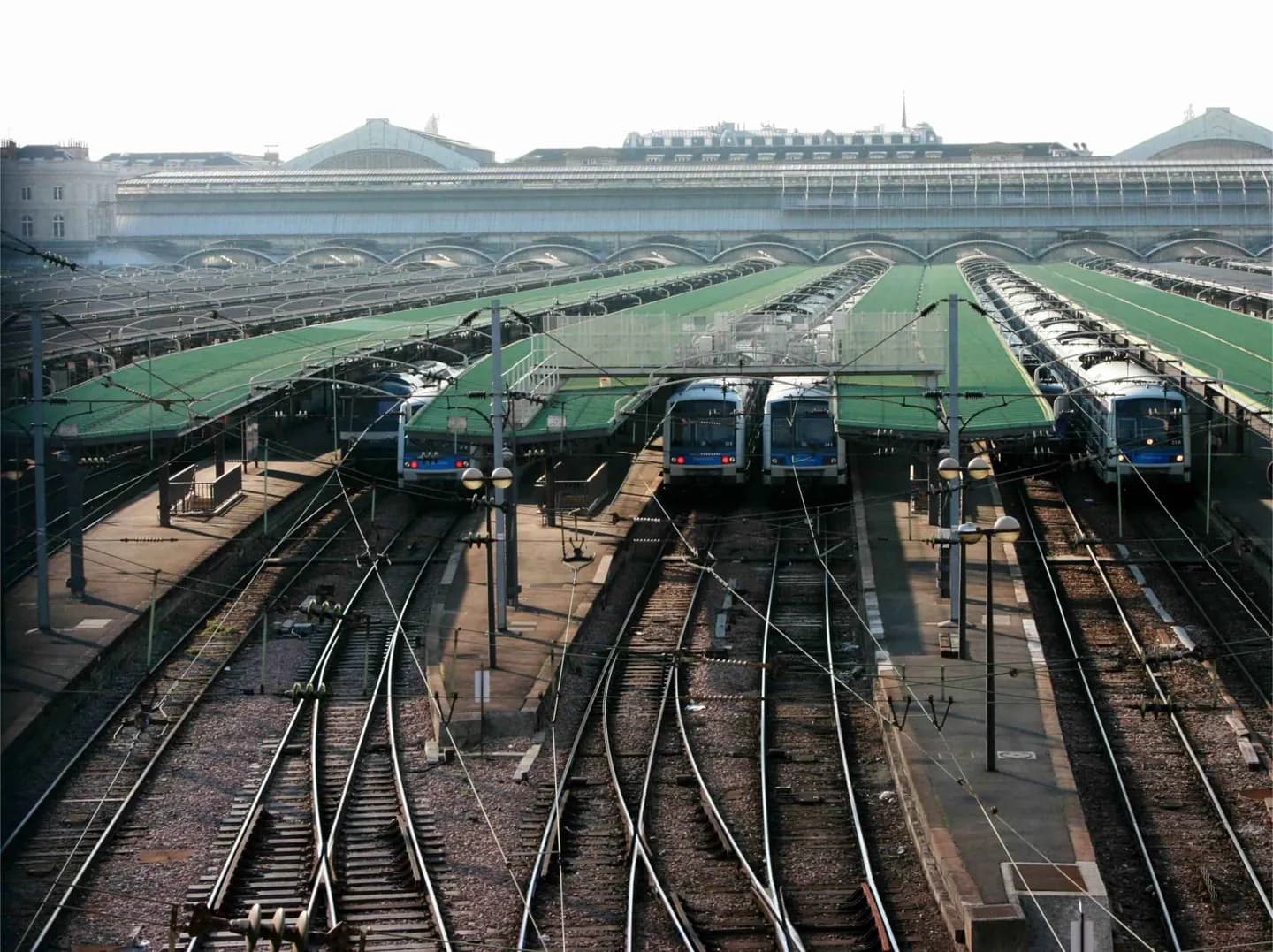
Gare du Nord, Gare de l'Est, Gare de Lyon, Gare Montparnasse, Gare d'Austerlitz, Saint-Lazare, and Bercy serve different directions. Their spread across the city makes the arrival station a practical part of trip planning, especially with luggage or a late connection.
The full story
Paris is a rail city with several termini rather than one central through-station. Each grew around a direction of travel: Gare du Nord and Gare de l'Est face northern and eastern routes, while Gare de Lyon, Gare Montparnasse, Gare d'Austerlitz, Saint-Lazare, and Bercy connect other parts of France and Europe. This pattern is useful once you plan around it. The station printed on your ticket tells you which side of Paris you will enter, and that may affect the best area to sleep on the first night or the time needed for a connection. The stations are linked by the city's transport network, but they are not interchangeable platforms within one building. A transfer can involve a separate urban journey and walking through a large station. Leave room for that change, especially when a trip combines an international arrival with another French rail leg.
Useful to know
- Identify your arrival station before booking accommodation, then map the last leg door to door.
- Build in time for changing between stations if your itinerary uses separate rail tickets.
- Check your operator's current luggage, ticket, and platform instructions before travel.