
Why go
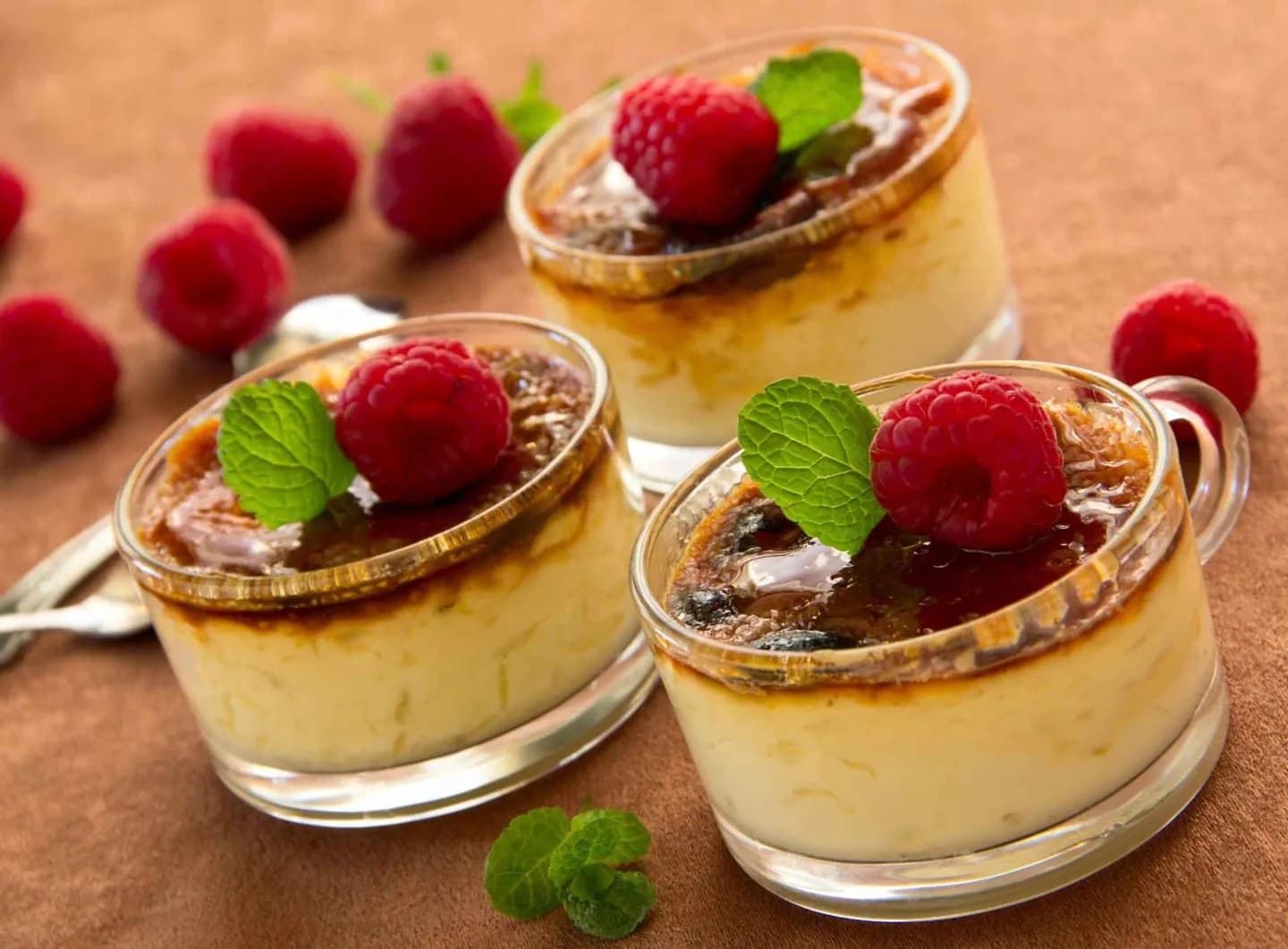
Choose it for a dessert where the finishing technique is central. Sugar is caramelized directly on top of the custard, creating the brittle surface that distinguishes it from other custards. Vanilla is traditional, though the base can carry other flavours.
The full story
The earliest known printed reference to crème brûlée appears in François Massialot’s 1691 cookbook, Cuisinier royal et bourgeois. An English translation in 1702 called it “burnt cream,” while Massialot later referred to a similar recipe as crême à l’Angloise. The dish then disappeared from French cookbooks until the 1980s, despite its present-day association with French dessert menus. Its structure remains straightforward: a rich custard, traditionally vanilla-flavoured, topped with a hard layer of caramel. The caramel is made on the custard itself, by sprinkling sugar over the surface and heating it under a broiler or with a torch. That final step creates the crisp disc that makes the dessert’s texture so recognizable. Breaking that surface is the defining contrast: brittle caramel gives way to cool, soft custard beneath.